

Categories
Arizona Luxury, Arizona Real Estate, Historic Preservation, Protected Architectural Features,, Home Buying Tips, Arizona Home Buying, luxury home buying guide, Luxury Property Due DiligencePublished November 19, 2026
What Buyers Should Know About Arizona Luxury Homes With Historic or Protected Design Features

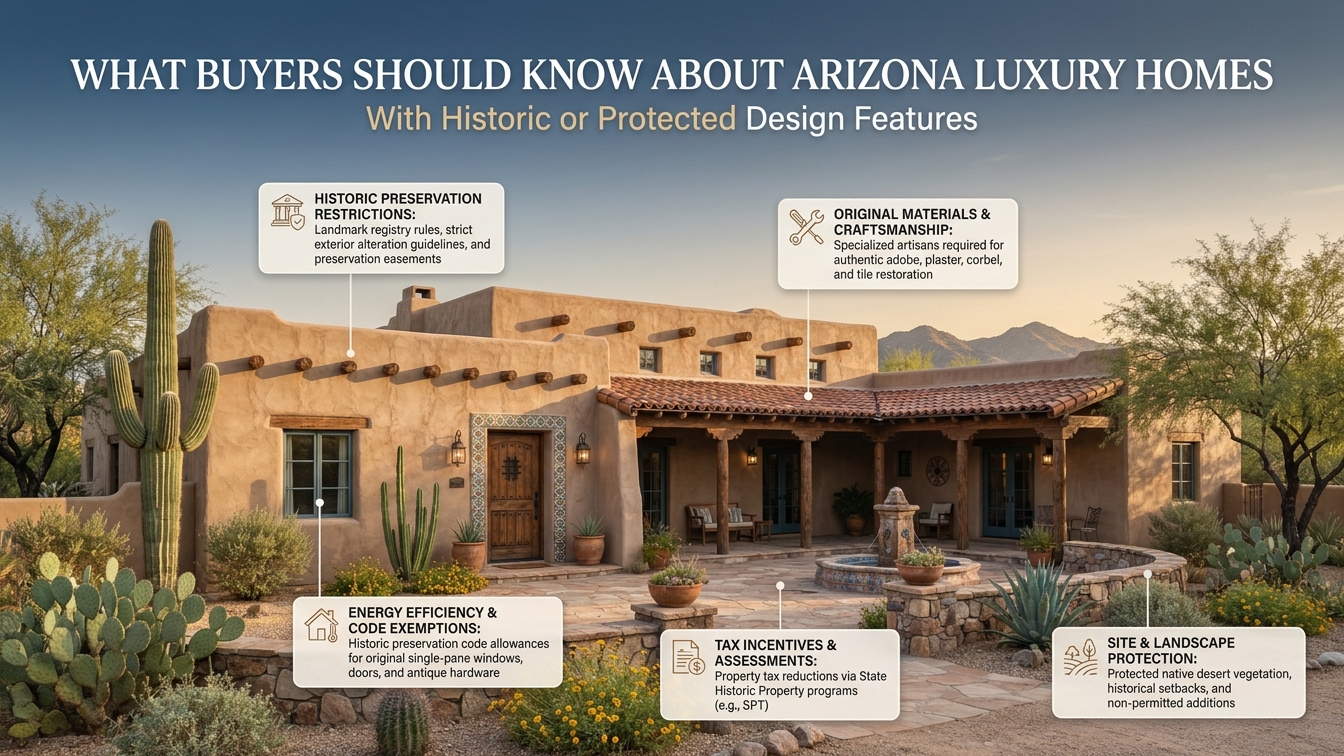
A luxury home with historic or protected design features can offer something that newer construction rarely replicates: architectural character, craftsmanship, cultural significance, and a distinctive connection to Arizona's history. From mid-century modern residences in Scottsdale to historically significant properties in Phoenix and carefully preserved estates throughout the Valley, these homes can appeal to buyers who appreciate distinctive architecture and timeless design.
However, purchasing a property with historic significance involves considerations beyond its appearance and market value. Certain architectural elements may be protected by local preservation ordinances, historic district guidelines, conservation easements, or agreements connected to tax incentives. These requirements can affect future renovations, exterior modifications, additions, demolition, and even the materials homeowners may use when maintaining the property.
Arizona's historic properties also vary considerably in how they are protected. A home listed on the National Register of Historic Places does not necessarily have the same restrictions as a property designated under a local historic preservation ordinance. A residence may also have historically significant architectural features without receiving formal historic designation.
For luxury buyers considering properties in Scottsdale, Paradise Valley, North Scottsdale, Phoenix, or the East Valley, understanding these distinctions is essential. Before purchasing, buyers should determine exactly what is protected, which authorities have jurisdiction, what modifications are permitted, and whether preservation obligations will affect their long-term ownership plans.
Here is what buyers should investigate before purchasing an Arizona luxury home with historic or protected design features.
1. Understand What Makes the Property Historically Significant
Not every older home is considered a historic property. Formal historic recognition generally involves evaluating a property's historical, architectural, cultural, or archaeological significance.
A residence may qualify for recognition because of its connection to an important historical period, a notable architect, a significant individual, a community's development, or an architectural style that represents a particular era.
In Arizona, buyers may encounter properties featuring:
- Mid-century modern architecture with original geometric forms and distinctive rooflines
- Historic Southwestern and Spanish Colonial Revival design elements
- Original adobe, masonry, or decorative stone construction
- Period-specific windows, doors, and architectural detailing
- Historically significant courtyards, gardens, and landscape features
- Original fireplaces, built-ins, cabinetry, and custom woodwork
- Architectural features associated with early Arizona residential development
- Properties connected to notable local events, individuals, or communities
The home's age alone does not determine whether it receives formal protection. Its architectural integrity, historical associations, and designation status are important factors.
Buyers should request documentation explaining the property's significance, including historic designation reports, architectural surveys, preservation plans, and available historical records.
Understanding why a property is considered significant helps buyers identify which features should be preserved and what responsibilities may accompany ownership.
2. Determine Whether the Property Has Local, State, or National Historic Designation
One of the most important steps is identifying the property's exact designation.
Historic recognition can occur at different government levels, and each designation may have different consequences for private property owners.
Local historic designation
Cities may establish historic registers, preservation districts, or zoning overlays that regulate exterior changes and other activities affecting designated properties.
For example, Scottsdale's Historic Preservation Program includes properties and districts recognized for their contributions to the city's history. The city reviews exterior alterations and demolition requests for properties on the Scottsdale Historic Register.
State historic designation
Arizona maintains historic preservation programs through the State Historic Preservation Office. State-level recognition may provide access to preservation assistance or certain financial incentives, depending on the property's eligibility and the program involved.
Buyers should determine whether the property is subject to a state historic property agreement or another preservation-related obligation.
National Register of Historic Places
A property may also be listed on the National Register of Historic Places because of its national historical or architectural significance.
However, National Register listing alone does not automatically impose the same local restrictions that accompany a municipal historic designation. Additional protections may apply when a project involves federal funding, permits, or other government actions, or when separate local or contractual restrictions exist.
The distinction matters because buyers should not assume that every historically recognized home is subject to identical renovation rules.
Before closing, obtain written confirmation of the property's designation status and identify the specific regulations or agreements that apply.
3. Investigate Restrictions on Exterior Renovations and Architectural Changes
Historic preservation requirements can affect how owners modify the exterior appearance of a property.
Luxury buyers who anticipate extensive remodeling should understand these restrictions before making an offer.
Depending on the applicable designation and preservation guidelines, proposed changes may involve review of:
- Exterior wall materials and finishes
- Original windows, doors, and architectural openings
- Rooflines, roof materials, and decorative features
- Exterior paint and masonry treatments
- Front entrances, porches, and covered patios
- Courtyard walls, gates, and historically significant fencing
- Garages, carports, and exterior additions
- Landscaping and other historically significant site features
In Phoenix, properties on the city's Historic Property Register may require a Certificate of No Effect or a Certificate of Appropriateness for certain exterior projects. The appropriate review depends on the proposed work and its potential impact on the property's historic character.
Scottsdale also maintains preservation review procedures for designated historic properties and districts.
These requirements can influence renovation schedules, design decisions, contractor selection, and project budgets.
A buyer who wants to replace original windows, create a contemporary exterior, or substantially expand a historic residence should determine whether the proposed work is permitted before purchasing.
4. Evaluate Whether Interior Features Are Also Protected
Many buyers assume historic preservation applies only to the exterior. That is not always a safe assumption.
Some properties have preservation plans, conservation easements, contractual restrictions, or other agreements that identify interior features requiring protection.
These may include:
- Original fireplaces and decorative surrounds
- Historic staircases and railings
- Custom cabinetry and built-in furniture
- Original flooring and decorative tile
- Handcrafted woodwork and ceiling treatments
- Period-specific lighting and fixtures
- Significant interior architectural layouts
- Original doors, hardware, and decorative glass
For example, a mid-century modern estate may have an open floor plan, custom cabinetry, and extensive glass walls that contribute significantly to its architectural identity.
Removing these features could affect the property's historical integrity or conflict with an applicable preservation agreement.
Buyers should request a copy of any preservation plan, easement, or designation documentation and ask which interior elements, if any, are specifically protected.
If the documents are unclear, a preservation architect or qualified historic property consultant can help identify potential restrictions before closing.
5. Review Historic Preservation Plans and Recorded Easements
A property's preservation obligations may not be fully explained by its listing description or public historic designation.
Some restrictions arise from recorded legal documents, including conservation easements, preservation easements, deed restrictions, and agreements associated with financial incentives.
A preservation easement may limit changes to designated architectural features, exterior appearance, landscaping, or other elements identified in the agreement.
These obligations can continue after ownership transfers, meaning the next buyer may inherit responsibilities established by a previous owner.
Buyers should request and review:
- Recorded preservation or conservation easements
- Historic designation reports
- Historic Preservation Plans
- Deed restrictions and recorded covenants
- Agreements connected to historic property tax programs
- Previous preservation approvals and conditions
- Documentation of approved renovations and additions
- Any outstanding compliance requirements
A real estate attorney and title professional should review applicable recorded documents and explain how they affect ownership and future improvements.
Do not rely solely on a seller's verbal explanation that a property has no restrictions. The recorded documents and relevant government records should support that conclusion.
6. Examine Original Materials and the Condition of Protected Features
Historic architectural materials can contribute substantially to a luxury home's character, but they may also require specialized maintenance.
Original materials may have been installed using construction methods that differ from those used in contemporary homes. Replacing or repairing them without understanding their characteristics can create additional problems.
During inspections, pay particular attention to:
Masonry and stonework: Look for cracking, deterioration, moisture intrusion, previous repairs, and inappropriate coatings.
Adobe and historic wall systems: Ask a qualified specialist to evaluate the condition of the materials, drainage, exterior finishes, and any previous modifications.
Original windows and doors: Examine frames, glazing, weather seals, hardware, and evidence of water intrusion or deterioration.
Roofing and structural details: Review the condition of original roof elements, framing, connections, and any modifications made over time.
Woodwork and built-ins: Look for water damage, insect activity, deterioration, and repairs that may have altered the original craftsmanship.
Historic flooring and tile: Check for cracking, uneven surfaces, loose materials, and damage caused by previous renovations.
Buyers should consider hiring inspectors and contractors with experience evaluating historic or architecturally significant properties.
A standard home inspection remains important, but it may not provide the specialized evaluation needed to assess every historic feature.
7. Understand How Arizona's Climate Affects Historic Materials
Arizona's desert climate can be challenging for older building materials, especially when a home has been exposed to decades of intense sunlight, temperature fluctuations, dust, and seasonal moisture.
Historic properties may contain materials that require particular care to maintain their appearance and performance.
Buyers should investigate:
- Sun exposure and deterioration of exterior finishes
- Cracking or movement in masonry and plaster
- Roof condition and protection against seasonal storms
- Drainage around foundations and courtyards
- Deterioration of exposed wood and decorative materials
- Window performance and weather sealing
- Previous repairs involving incompatible materials
- Moisture intrusion around older roof and wall connections
A property that has been maintained carefully may have preserved its original materials exceptionally well. Another home with similar architectural features may require substantial restoration.
The distinction can have a meaningful effect on future maintenance expenses.
Before closing, ask whether previous repairs followed preservation guidelines and whether any unresolved deterioration has been documented.
8. Investigate Previous Renovations and Whether They Received Proper Approval
A historic luxury home may have undergone several renovations over its lifetime. Some improvements may have been completed before the property received historic recognition, while others may have required formal review and approval.
Buyers should not assume that an existing feature is automatically compliant simply because it is already part of the home.
Request documentation for previous projects, including:
- Building permits and final inspections
- Historic preservation approvals
- Certificates of Appropriateness or Certificates of No Effect, where applicable
- Architectural plans and construction drawings
- Contractor invoices and restoration records
- Documentation of approved exterior materials
- Records of additions, structural changes, and major repairs
Compare the approved plans with the property's current condition.
If an addition, exterior modification, or replacement feature appears inconsistent with the preservation guidelines, ask the appropriate local authority whether the work was approved.
Unresolved compliance issues could complicate future renovations, property transfers, or efforts to obtain permits.
A qualified real estate attorney or preservation professional can help buyers understand the potential implications of undocumented work.
9. Consider the Cost and Availability of Specialized Restoration Contractors
Restoring a historic home can require more specialized knowledge than renovating a conventional luxury property.
Depending on the home's architectural features, buyers may need professionals experienced in traditional masonry, historic plaster, custom woodwork, period-specific windows, specialized roofing, or conservation techniques.
Some materials may be difficult to source, particularly when original components need to be repaired or replicated.
Before purchasing, buyers should determine:
- Whether qualified restoration contractors are available locally
- Whether replacement materials must meet preservation standards
- Whether custom fabrication will be necessary
- Whether specialized architectural plans are required
- Whether the project will need additional inspections or approvals
- Whether contractors have experience with the property's specific architectural style
Request preliminary estimates for known restoration needs rather than relying on general remodeling cost assumptions.
For a luxury property, the cost of preserving architectural authenticity can be an important part of the ownership budget.
10. Verify Eligibility for Historic Property Tax Benefits and Other Incentives
Some Arizona historic properties may qualify for financial incentives, but eligibility is not automatic.
The state has historic property tax programs that may provide reduced property tax assessments for qualifying properties. Certain programs require owners to enter into an agreement to maintain and preserve the property's historic characteristics for a specified period.
Buyers should understand the conditions before treating a potential tax benefit as part of the property's financial value.
Investigate:
- Whether the property currently participates in a historic property tax program
- Whether the existing agreement transfers to a new owner
- Whether the buyer must submit a new application
- Which architectural features must be maintained
- Whether proposed renovations require prior review
- Whether penalties or additional taxes could apply if program requirements are not met
- Whether other local or federal incentives are available for the intended project
Federal historic rehabilitation tax credits are generally designed for qualifying income-producing historic buildings rather than ordinary owner-occupied private residences. Buyers should not assume that a luxury home qualifies simply because it is historically significant.
Any potential tax benefit should be confirmed with the Arizona State Historic Preservation Office, the applicable county assessor, and a qualified tax professional.
11. Evaluate Whether Historic Restrictions Align With Your Lifestyle
A historic luxury property can be an excellent match for buyers who appreciate original architecture and are comfortable maintaining distinctive design features.
However, buyers should consider how preservation requirements fit their expectations for modern living.
For example, a buyer may want to:
- Install contemporary floor-to-ceiling windows
- Expand the kitchen or create a larger entertainment area
- Add a detached guest residence
- Build an outdoor kitchen or covered patio
- Modify an original courtyard
- Replace historic exterior materials
- Install solar panels or other energy improvements
- Add modern lighting, security, or smart-home systems
Some improvements may be possible with appropriate planning and approvals. Others may be limited by preservation guidelines or recorded agreements.
Buyers should also consider how much flexibility they want for future remodeling.
A property with original architectural details may be ideal for someone who values preservation, while a buyer seeking a completely contemporary renovation may find the restrictions less compatible with their plans.
The goal is not simply to determine whether the home is beautiful today, but whether its preservation requirements support the way the buyer intends to use and enjoy it.
12. Understand the Difference Between Historic Designation and Architectural Character
A home can have historically significant design features without being formally protected.
For example, a residence may have been designed by a notable regional architect, contain original mid-century modern details, or represent an important period in Arizona residential development.
However, these characteristics do not automatically mean the property is listed on a historic register or subject to preservation restrictions.
The reverse is also important: a property may be located within a designated historic district even if the individual home is not considered historically significant on its own.
In some local historic districts, design review may apply to exterior changes on properties throughout the district, including buildings that are not individually designated.
Buyers should therefore distinguish between:
- Architectural or historical interest
- Formal local historic designation
- Inclusion within a historic district
- State or national historic recognition
- Recorded preservation easements
- Separate contractual or deed restrictions
This distinction helps buyers understand whether preservation is primarily a matter of architectural value, a legal obligation, or both.
13. Review Insurance, Replacement Costs, and Long-Term Ownership Expenses
Historic luxury homes may require insurance coverage that accounts for specialized construction materials, custom craftsmanship, and restoration requirements.
A standard replacement-cost estimate may not fully reflect the expense of reproducing distinctive architectural elements or sourcing appropriate materials.
Buyers should speak with insurance professionals about:
- Replacement-cost valuation
- Coverage for custom or historic architectural features
- Roof and exterior material limitations
- Water damage and weather-related coverage
- Availability of qualified restoration contractors
- Whether specialized materials require additional documentation
- Any exclusions affecting older construction systems
It is also important to consider the property's ongoing maintenance budget.
Historic windows, masonry, roofing, woodwork, and decorative details may require periodic attention. If the home has extensive landscaping or historically significant outdoor features, those elements may add to the maintenance requirements.
A realistic ownership budget should account for both routine upkeep and the possibility of specialized restoration work.
14. Complete a Historic Property Due Diligence Review Before Closing
Purchasing a historically significant luxury home requires more than reviewing the seller's disclosures and completing a standard inspection.
Buyers should assemble a team capable of evaluating the property's physical condition, legal restrictions, renovation history, and long-term preservation responsibilities.
A comprehensive due diligence review should include:
- Confirming the property's local, state, and national designation status
- Identifying any historic district or zoning overlay
- Reviewing recorded easements and deed restrictions
- Obtaining the Historic Preservation Plan, if one exists
- Identifying protected interior and exterior features
- Reviewing permits and approvals for previous renovations
- Inspecting original architectural materials and structural elements
- Obtaining specialized restoration estimates where needed
- Confirming eligibility and obligations under tax incentive programs
- Consulting the appropriate city or preservation authority
- Reviewing insurance options and replacement-cost considerations
- Evaluating whether planned improvements are likely to be approved
Buyers should also consider including appropriate inspection, document-review, and other due diligence protections in their purchase contract, subject to the advice of their real estate and legal professionals.
The more clearly these issues are understood before closing, the easier it becomes to evaluate the property's true value and long-term ownership responsibilities.
The Murphy Group Arizona Perspective
Historic and architecturally significant homes can offer a remarkable combination of character, craftsmanship, and individuality. Their appeal often comes from details that cannot easily be recreated in modern construction.
However, a beautiful historic property should also make sense from a practical ownership perspective.
As Mary Murphy might emphasize, buyers should look beyond the architectural appeal and understand the complete property story. That includes its preservation status, renovation history, condition, neighborhood context, and the flexibility available for future improvements.
For buyers exploring luxury real estate in Scottsdale, Paradise Valley, North Scottsdale, or the East Valley, this is particularly important when comparing distinctive older residences with newly constructed homes.
The right property is not necessarily the one with the most elaborate historic details. It is the one whose architectural character, preservation responsibilities, condition, and long-term ownership requirements align with the buyer's priorities.
Frequently Asked Questions
1. Does buying a historic home in Arizona mean I cannot renovate it?
No. Historic properties can often be renovated, but the permitted work depends on the property's designation, applicable preservation rules, and any recorded agreements. Certain exterior modifications may require approval before construction begins.
2. Does National Register listing automatically restrict what I can do with my Arizona home?
Not necessarily. National Register listing alone generally does not impose the same direct restrictions as a local historic designation. However, local regulations, preservation easements, contractual agreements, or projects involving government funding or approvals may create additional requirements.
3. Are historic homes in Scottsdale subject to special renovation rules?
Some are. Scottsdale reviews exterior alterations and demolition requests for properties on its Historic Register. Owners of homes in designated historic districts may also need to follow applicable preservation guidelines and obtain the required approvals.
4. Can I replace original windows in a historic Arizona luxury home?
Possibly, but buyers should first determine whether the windows are protected or contribute to the property's historic character. Depending on the applicable rules, repairs, restoration, or historically compatible replacements may be required.
5. Are interior features protected in historic homes?
Some may be. Interior restrictions depend on the property's designation, preservation plan, easements, and other agreements. Buyers should review the actual documents rather than assume that all interior renovations are unrestricted.
6. Can I add a modern guest house or outdoor entertainment area to a historic property?
It depends on the property's location, zoning, preservation requirements, and any applicable neighborhood restrictions. A proposed addition may need historic design review, zoning approval, building permits, or other authorizations.
7. Do historic homes in Arizona qualify for property tax reductions?
Certain qualifying historic properties may be eligible for Arizona historic property tax programs. Eligibility depends on the program's requirements, and some arrangements involve long-term maintenance and preservation commitments. Buyers should verify the property's status and any obligations with the applicable county assessor and State Historic Preservation Office.
8. Should I hire a specialist to inspect a historic luxury home?
Yes. A standard home inspection is important, but a historic property may also benefit from evaluation by a preservation architect, structural engineer, restoration contractor, or other specialist familiar with its original construction materials and architectural features.
9. Can a historic designation affect a property's resale value?
It can influence buyer interest and the property's marketability, but the effect varies. Architectural uniqueness and preservation can appeal to buyers who appreciate historic character, while restrictions or restoration expenses may be concerns for buyers seeking extensive renovation flexibility.
10. What is the most important document to review before buying a protected historic property?
There is no single document that covers every situation. Buyers should review the property's designation records, Historic Preservation Plan, recorded easements, deed restrictions, applicable zoning requirements, and previous renovation approvals. A real estate attorney can help determine which documents create binding obligations.
The Bottom Line
Arizona luxury homes with historic or protected design features can provide a distinctive ownership experience, combining architectural character with a meaningful connection to the region's past. From preserved mid-century modern residences to properties with original Southwestern design elements, these homes can offer a level of individuality that is difficult to replicate.
However, buyers should understand that historic recognition may come with responsibilities. Preservation rules, recorded easements, specialized maintenance, renovation approvals, and tax program agreements can all influence how a property is owned and improved.
Before making a purchase, verify the home's designation, review all applicable restrictions, inspect its original materials, and determine whether your intended improvements are feasible.
With the right preparation and professional guidance, buyers can make a more informed decision while protecting the architectural qualities that make these properties exceptional.
Explore Arizona Luxury Real Estate With The Murphy Group Arizona
If you're considering a luxury home in Scottsdale, Paradise Valley, North Scottsdale, or the East Valley, The Murphy Group Arizona can help you look beyond the listing photos and consider the property, neighborhood, and long-term ownership experience.
From historic designation and protected architectural details to renovation approvals, preservation obligations, and long-term maintenance considerations, a thoughtful approach to due diligence can help you make a more informed decision.
Explore Arizona luxury real estate with The Murphy Group Arizona and discover your next exceptional property.
Website: www.mgsellsarizona.com

Mary Murphy
Team Leader | The Murphy Group - AZ | eXp Luxury | PLACE
or another way