

Categories
Arizona homebuyers, Arizona Luxury, Arizona Real Estate, Scottsdale Real Estate, Scottsdale Luxury Real Estate, Scottsdale Housing Market, Paradise Valley Luxury, Paradise Valley Real Estate, North Scottsdale real estate, East Valley Luxury, East Valley, East Valley real estate, luxury home buying guidePublished November 12, 2026
Buying a Luxury Estate With a Dedicated Car Collection Display Room

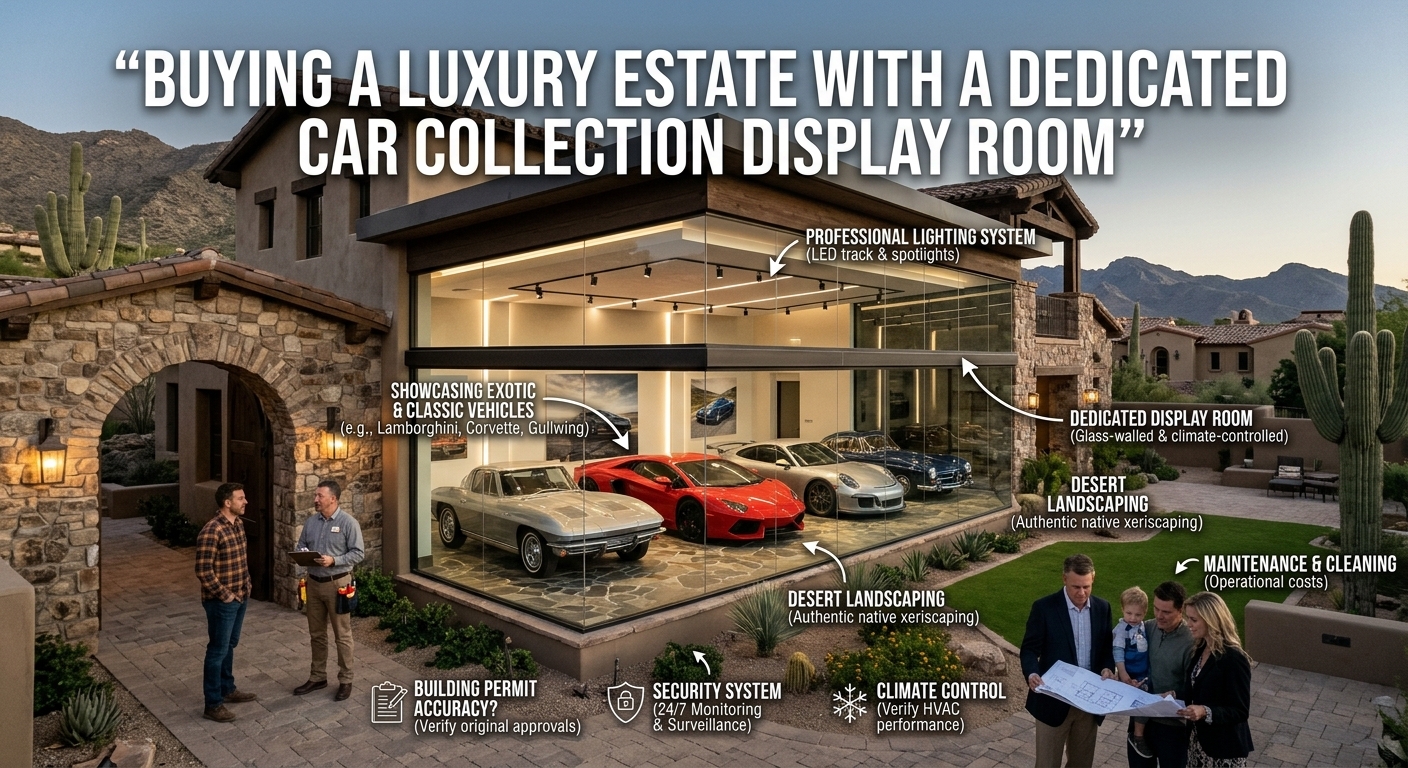
For an automotive enthusiast, a luxury estate with a dedicated car collection display room can offer something beyond conventional garage space. Instead of keeping prized vehicles tucked away in a standard garage, the property may feature a purpose-designed environment where automobiles become part of the home's architecture, interior design, and overall lifestyle.
In Arizona's luxury real estate market, these spaces can take many forms. Some estates feature glass-walled garages that allow vehicles to be viewed from the main living areas. Others incorporate gallery-style lighting, polished flooring, custom vehicle lifts, climate-controlled storage, and private access for collectors who regularly display, maintain, or rotate their vehicles.
In Scottsdale, Paradise Valley, North Scottsdale, and the East Valley, a dedicated automotive display room can be an especially distinctive feature of a custom-built residence. However, its visual appeal should not be the only consideration. A room designed to showcase a collection must also function as a safe, practical, and properly maintained space for valuable vehicles.
Before purchasing an estate with this feature, buyers should look beyond the glass walls and dramatic lighting. The room's construction, ventilation, environmental controls, security, vehicle access, and long-term maintenance requirements deserve careful attention.
1. Understand Whether the Room Is a Display Space, a Functional Garage, or Both
The first step is determining how the dedicated car collection room was designed to function.
A display room may resemble a private automotive gallery, with vehicles positioned behind glass walls and illuminated by architectural lighting. A functional garage, on the other hand, is generally designed around vehicle storage, movement, maintenance access, and everyday use. Some luxury estates combine both purposes, while others prioritize presentation over practicality.
Buyers should consider:
- Display capacity: How many vehicles can the room accommodate without making the space feel overcrowded?
- Vehicle dimensions: Can the room comfortably accommodate the longest, widest, or tallest vehicles in the collection?
- Movement and maneuvering: Is there sufficient clearance to move vehicles into and out of their designated positions?
- Door access: Are the garage doors wide and tall enough for the intended vehicles?
- Maintenance access: Can vehicles be inspected, cleaned, and serviced without disrupting the display arrangement?
- Future flexibility: Can the space accommodate additional vehicles or changes in the collection?
A room that looks impressive when staged with a few vehicles may not be practical for a collector with a larger or changing inventory.
Buyers should also distinguish between the number of display positions and the actual number of vehicles the room can safely store. A carefully designed space should account for doors opening, people walking around the vehicles, equipment storage, and access to exits.
2. Evaluate the Climate-Control System
Arizona's hot and dry climate makes environmental control an important consideration for a dedicated car collection display room.
High temperatures, direct sunlight, dust, and fluctuations in indoor conditions can affect a vehicle's interior materials, exterior finishes, rubber components, electronics, and other sensitive features. The specific risks vary depending on the vehicle's age, construction, storage requirements, and condition.
A climate-controlled room may help create a more consistent environment, but buyers should investigate what the system actually controls.
Ask whether the room has:
- Dedicated heating and cooling equipment
- Independent temperature controls
- Humidity monitoring or regulation, where appropriate
- Consistent air circulation
- Insulation suitable for the room's intended use
- Protection against excessive sunlight and heat gain
- Maintenance records for HVAC equipment
Do not assume that the home's central air-conditioning system adequately serves the display room. A large garage or glass-enclosed automotive gallery may have different cooling requirements from the property's ordinary living spaces.
Buyers should also ask whether the system operates continuously or only when the main residence is occupied. If the room is expected to maintain stable conditions while the owners are away, its controls, monitoring, and backup arrangements become particularly relevant.
An independent HVAC professional can assess whether the equipment is appropriately sized and functioning as intended.
3. Inspect Ventilation and Exhaust Management
A dedicated car collection display room may be visually integrated into the home, but it still needs to function as a space where vehicles can be moved and operated safely.
Even when vehicles are primarily displayed, engines may occasionally be started, vehicles may be driven in and out, and detailing or maintenance activities may take place. These activities can introduce exhaust fumes, fuel vapors, and other airborne contaminants.
Buyers should determine how the room is ventilated and whether its design is appropriate for the activities expected to take place there.
Important considerations include:
- Whether the room has mechanical ventilation
- Whether ventilation is independent from the home's living areas
- Whether air can move effectively throughout the space
- Whether exhaust fumes could enter adjacent rooms
- Whether any vehicle-starting or maintenance area has suitable exhaust management
- Whether the system has been inspected and maintained
A glass wall between a car display room and a living area may create a striking architectural feature, but visual separation does not automatically mean the space has appropriate air separation or ventilation.
Have a qualified mechanical or HVAC professional evaluate the system, particularly if the room connects directly to the residence.
4. Examine the Flooring and Structural Design
The floor is one of the most important components of a car collection display room. It must support the vehicles, accommodate movement, and withstand the demands of long-term use.
Luxury automotive spaces may feature polished concrete, specialized coatings, decorative tile, stone, or other premium finishes. While appearance matters, buyers should also consider durability, traction, cleaning requirements, and resistance to automotive fluids.
During the inspection, evaluate:
- Whether the flooring shows cracks, uneven areas, or signs of settlement
- Whether the surface is appropriate for vehicle weight and movement
- Whether the finish is resistant to oil, fuel, and other automotive fluids
- Whether the floor is easy to clean and maintain
- Whether drainage and spill management have been considered
- Whether the floor has been damaged by previous equipment or vehicle lifts
Buyers should also investigate the underlying structural design. A collection room holding several heavy vehicles may have different loading demands from an ordinary residential room.
If the property includes vehicle lifts, elevated display platforms, or suspended storage systems, a qualified structural professional should assess the supporting construction, installation documentation, and applicable load limitations.
A visually flawless floor should not replace an examination of the structure beneath it.
5. Review Lighting and Protection From Sunlight
Lighting can transform a car collection room into a private gallery. Carefully positioned fixtures can highlight body lines, paint finishes, wheel details, and interior features.
However, lighting should serve both presentation and practical purposes.
Consider whether the room includes:
- Even general illumination
- Adjustable accent lighting
- Task lighting for inspections and detailing
- Fixtures that minimize unwanted heat
- Controls that allow different lighting settings
- Protection against excessive direct sunlight
Large windows and glass walls can make the room feel open and visually connected to the estate. Yet Arizona's intense sunlight can introduce significant heat and ultraviolet exposure.
Buyers should examine the type of glazing, window orientation, shading systems, and any protective film or coating. Ask whether these features were selected specifically for the room's intended use.
A window treatment that looks attractive may not provide adequate protection for a collection of vehicles with sensitive paint, leather, trim, or other materials.
6. Assess Security Beyond the Main Garage Door
A valuable car collection may represent a substantial investment. For this reason, security should be considered an essential part of the property's design rather than an optional upgrade.
A dedicated display room may have glass walls, interior viewing areas, and prominent architectural features. These can enhance presentation, but buyers should evaluate whether the overall design also protects the vehicles.
Review the following:
- Garage door construction and locking mechanisms
- Access control for the display room
- Security cameras covering entry points and vehicle areas
- Alarm system coverage
- Motion detection and monitoring
- Exterior lighting around access points
- Secure pedestrian entrances
- Integration with the estate's broader security system
If the display room is visible from the street or neighboring properties, consider whether the design reveals the location or presence of valuable vehicles.
Ask whether the security system is monitored, whether equipment is current, and whether the existing owner can provide service records. Buyers should also confirm which systems and equipment will remain with the property.
7. Consider Vehicle Access, Driveway Geometry, and Site Layout
A beautiful car collection room is less useful if vehicles cannot enter or leave it comfortably.
The entire route from the street to the display room should be evaluated. This includes the driveway, gates, turning areas, slopes, garage approach, and door openings.
Pay particular attention to:
- Driveway width and turning radius
- Gate clearance and access-control systems
- Steep transitions or changes in grade
- Low overhead features
- Tight corners and narrow passages
- Vehicle lift or ramp access
- Space for trailers or vehicle transport equipment, if needed
Low-clearance sports cars and specialty vehicles may require more careful access planning than ordinary passenger vehicles.
Buyers should also consider whether delivery trucks, enclosed vehicle transporters, or service vehicles can access the property without damaging landscaping, hardscaping, or driveway surfaces.
If the estate is located on a hillside or within a gated community, access restrictions and site conditions may deserve additional review.
8. Investigate Electrical Capacity and Electric Vehicle Charging
Modern car collections may include electric vehicles, plug-in hybrids, and vehicles that require specialized battery-maintenance equipment.
A dedicated display room should therefore be evaluated for its electrical capacity and charging infrastructure.
Ask whether the room has:
- Appropriate electrical service for its intended equipment
- Dedicated circuits for charging stations
- Professionally installed charging equipment
- Adequate outlets for detailing and maintenance tools
- Proper lighting and equipment connections
- Documentation for electrical upgrades
Do not assume that a standard outlet or an existing charging station is suitable for every vehicle. Charging requirements depend on the vehicle, charging equipment, electrical service, and installation.
A licensed electrician can evaluate the property's electrical panel, available capacity, wiring, grounding, and charging installations.
Buyers should also consider whether future upgrades may be necessary if the collection changes or expands.
9. Review Fire Safety and Separation From Living Areas
A car collection room connected to a luxury residence raises important questions about fire safety and the separation of garage-related hazards from occupied living spaces.
Vehicles contain fuel, batteries, lubricants, plastics, and other materials that should be considered when evaluating the room's design. The specific fire-protection requirements depend on the building's design, applicable codes, permits, and the room's intended use.
During due diligence, ask about:
- Fire-rated doors or separation assemblies, where required
- Smoke detection and alarm coverage
- Fire-protection systems installed in the room
- Separation between the display area and living spaces
- Storage arrangements for fuel, chemicals, and automotive products
- Permits and inspection records for relevant improvements
Buyers should not assume that an ordinary residential garage and a purpose-built automotive display room have identical requirements.
If the room includes a workshop, fuel storage, battery-charging area, or other specialized use, have the relevant systems reviewed by qualified professionals and confirm applicable requirements with the local building or fire authority.
10. Verify Permits, Improvements, and Any Change in Use
Some car collection display rooms are part of the estate's original architectural design. Others may have been created through renovations or conversions of existing garage space.
The distinction matters.
A former garage that has been converted into a gallery may have different ventilation, electrical, structural, or occupancy characteristics from a room originally designed for automotive storage.
Before purchasing, request available documentation for:
- Original construction plans
- Building permits
- Final inspections or approvals
- HVAC and electrical upgrades
- Vehicle lift installations
- Structural modifications
- Garage door and access changes
- Fire-safety improvements
- Any change in the room's intended use
For properties in Scottsdale, Paradise Valley, Phoenix, or other East Valley communities, buyers should confirm applicable requirements with the jurisdiction responsible for the property. Local rules and approval processes may differ.
If the room was built or modified without clear documentation, that should be investigated before closing rather than treated as a minor paperwork issue.
11. Understand Insurance and Ongoing Maintenance Costs
A dedicated car collection display room may involve ongoing expenses beyond those associated with a conventional garage.
The room may require specialized HVAC servicing, lighting maintenance, security monitoring, floor care, and periodic inspection of electrical or mechanical systems.
Buyers should also distinguish between insuring the residence and insuring the vehicles themselves. A homeowners policy may not provide the specialized coverage needed for a valuable automobile collection.
Before closing, discuss the property and collection with appropriate insurance professionals.
Questions to raise include:
- How will the display room affect the home's insurance considerations?
- Are there requirements for monitored security or fire-protection systems?
- Does the insurer have specific conditions for vehicle storage?
- Are the vehicles covered under separate collector-car policies?
- Are there restrictions concerning vehicle use, mileage, or storage?
- What documentation or appraisals may be needed to insure the collection?
The answers will depend on the property, the vehicles, the insurer, and the coverage selected.
Buyers should obtain insurance guidance before relying on assumptions about coverage or cost.
12. Evaluate Whether the Space Can Adapt to a Changing Collection
A dedicated car collection room is often designed around the current owner's preferences. That does not necessarily mean it will suit the next owner's collection.
A buyer may own a combination of classic automobiles, modern performance vehicles, electric vehicles, or limited-production models. Each may have different dimensions, access needs, storage preferences, and maintenance requirements.
Consider whether the room can accommodate:
- Vehicles with different heights and widths
- Future additions to the collection
- Changes in display arrangements
- Different lighting preferences
- Updated charging equipment
- Additional security features
- New detailing or maintenance equipment
Also consider whether the room can serve another purpose if the buyer's needs change. A flexible design may provide more long-term value than a highly customized space that is difficult to adapt.
The goal is not simply to purchase a room that looks impressive today. It is to acquire a property with a space that can continue to support the owner's lifestyle over time.
13. Consider How the Display Room Fits Into the Overall Estate
The dedicated car collection room should complement the property rather than feel disconnected from the rest of the residence.
In some estates, the display room is positioned near the main entrance, allowing vehicles to become part of the home's visual identity. In others, it is tucked into a private wing with direct access to a motor court or secondary garage.
Buyers should consider how the room relates to:
- Main living and entertaining spaces
- Guest accommodations
- Private offices or lounges
- Outdoor entertaining areas
- The property's motor court
- Service and maintenance areas
- Residential privacy and circulation
A glass-walled display room overlooking a great room may create a dramatic architectural statement. However, buyers should decide whether they want the collection to be a visible part of everyday living or a more private feature of the estate.
The best design is the one that supports the owner's preferences while preserving the comfort, privacy, and functionality of the residence.
The Murphy Group Arizona Perspective
A dedicated car collection display room can be one of the most memorable features of an Arizona luxury estate. It combines architecture, personal interests, and the practical requirements of preserving valuable vehicles.
However, the quality of the space cannot be judged by its appearance alone.
As Mary Murphy might emphasize, purchasing an exceptional property means looking beyond the features that immediately capture attention. Buyers should consider how the home functions, how its specialized spaces are maintained, and whether the property will continue to support their lifestyle over time.
For an automotive collector, that means evaluating the display room as both a showcase and a functional part of the estate. The room should offer appropriate access, environmental control, security, ventilation, and flexibility—not simply an impressive backdrop for the vehicles.
In Arizona's luxury market, a thoughtful evaluation can help buyers appreciate the feature while understanding the responsibilities that come with owning it.
Frequently Asked Questions
Is a car collection display room the same as a luxury garage?
Not necessarily. A luxury garage may prioritize vehicle storage and convenience, while a display room is often designed to present vehicles as part of the home's architecture. Some estates combine both functions, but buyers should verify the room's actual capacity, systems, and intended use.
Should a car collection display room in Arizona be climate-controlled?
Climate control can be beneficial, particularly when the room contains vehicles with sensitive interiors, finishes, or components. Buyers should evaluate temperature management, humidity considerations, insulation, and air circulation with a qualified HVAC professional.
Can a glass-walled car display room protect vehicles from Arizona's heat?
Glass walls can create an attractive display, but their performance depends on the glazing, orientation, shading, insulation, and overall design. Buyers should investigate heat gain and ultraviolet protection rather than assume that the glass provides adequate protection.
What should buyers inspect in a car collection display room?
Important areas include flooring, structural capacity, ventilation, HVAC equipment, lighting, electrical systems, security, fire safety, garage doors, and vehicle access. Permits and documentation for specialized installations should also be reviewed.
Can a luxury estate's car display room accommodate vehicle lifts?
Some rooms are designed to accommodate vehicle lifts, but installation requires appropriate structural support, clearance, electrical arrangements, and professional assessment. Buyers should request installation documentation and have the equipment and supporting structure inspected.
Does a dedicated car collection room increase a luxury home's value?
It may make an estate more appealing to a particular group of buyers, especially automotive enthusiasts. However, its effect on market value depends on the property's overall quality, location, design, condition, and the level of demand for this specialized feature.
Should the vehicles be included in the home's insurance policy?
Vehicle coverage should be discussed separately with an insurance professional. Collector automobiles may require specialized policies with terms suited to their value, use, storage, and condition. Buyers should not assume that homeowners insurance automatically covers the collection.
The Bottom Line
A luxury estate with a dedicated car collection display room can offer a distinctive combination of architectural design, personal expression, and automotive convenience. For the right buyer, it can transform vehicle storage into an experience that is integrated into the home.
But an impressive display is only part of the equation. Buyers should carefully evaluate the room's climate control, ventilation, flooring, structural capacity, lighting, security, electrical systems, fire safety, and vehicle access. They should also review permits, maintenance records, and insurance considerations before making a purchase decision.
In Scottsdale, Paradise Valley, North Scottsdale, and the East Valley, the most rewarding luxury property is one that brings together exceptional design and practical long-term functionality.
Explore Arizona Luxury Real Estate With The Murphy Group Arizona
If you're considering a luxury home in Scottsdale, Paradise Valley, North Scottsdale, or the East Valley, The Murphy Group Arizona can help you look beyond the listing photos and consider the property, neighborhood, and long-term ownership experience.
From dedicated car collection display rooms and custom garages to specialized home systems, security features, and property maintenance considerations, a thoughtful approach to due diligence can help you make a more informed decision.
Explore Arizona luxury real estate with The Murphy Group Arizona and discover your next exceptional property.
Website: www.mgsellsarizona.com

Mary Murphy
Team Leader | The Murphy Group - AZ | eXp Luxury | PLACE
or another way