

Categories
Arizona Luxury, Arizona Real Estate, Scottsdale Real Estate, Paradise Valley Luxury, Paradise Valley Real Estate, North Scottsdale homes, luxury home buying guide, East Valley, East Valley Luxury, East Valley real estatePublished October 7, 2026
Why Some Luxury Homes Are Built for Entertaining—but Not for Everyday Living

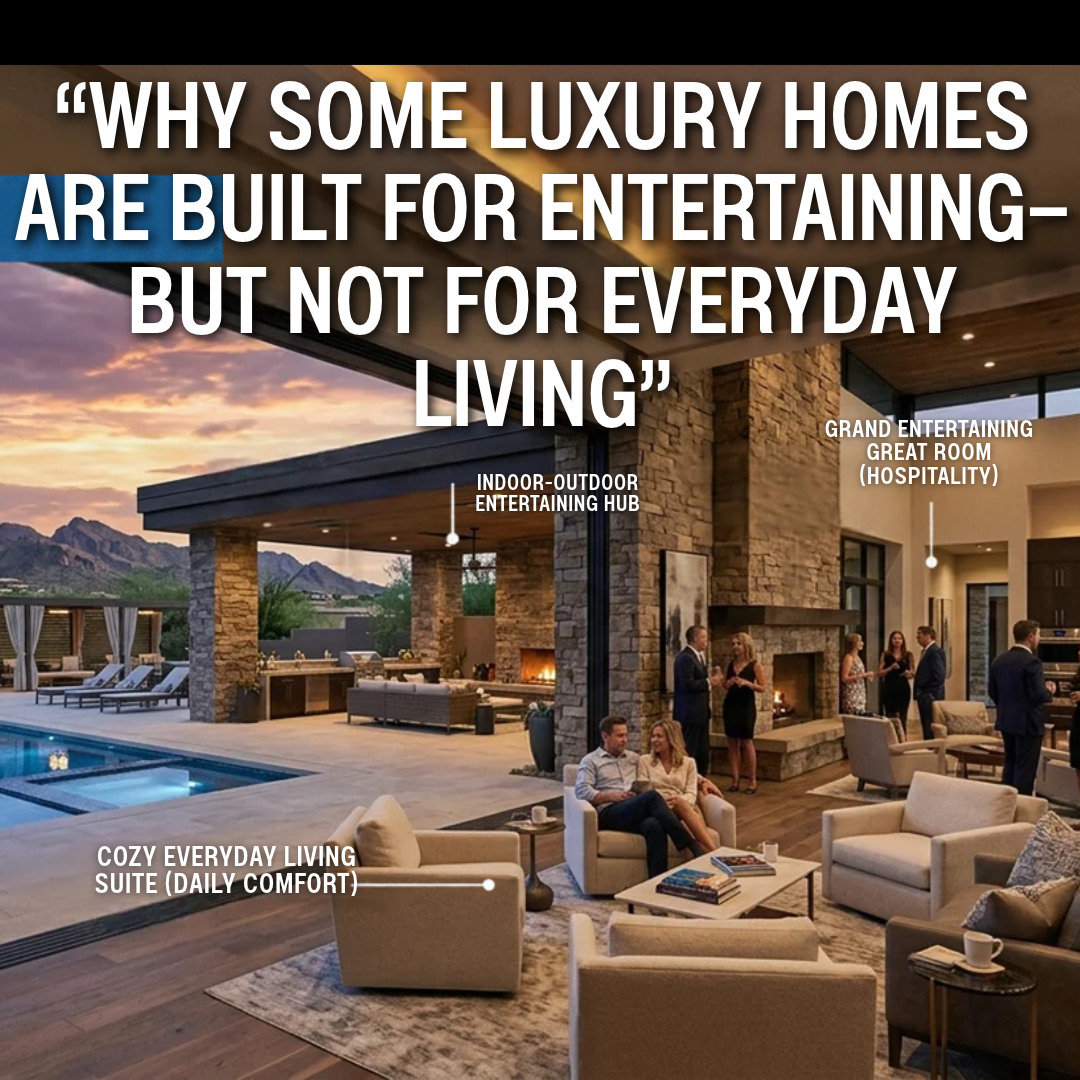
Some luxury homes are designed to make an unforgettable first impression.
The dramatic entry.
The oversized great room.
The statement kitchen.
The expansive dining area.
The resort-style pool.
The outdoor kitchen.
The fire features.
The massive patio.
The home theater.
Everything appears ready for a spectacular evening with dozens of guests.
But there is another question luxury buyers should ask before falling in love with the property:
How does this home work on an ordinary Tuesday?
Because entertaining and everyday living are not always the same thing.
A floor plan that works beautifully for a large party may feel inconvenient when only two or four people live there.
A massive formal kitchen may be impressive but inefficient for making breakfast.
An enormous great room may look spectacular but leave the family without a comfortable everyday gathering space.
A dramatic primary suite may provide privacy but be inconveniently far from the rest of the home.
And a home designed around entertaining may prioritize the experience of guests over the routines of the people who live there every day.
For luxury buyers, this distinction matters.
A home can be spectacular for entertaining and still be surprisingly difficult to live in.
The best luxury properties do both.
🥂 1. Entertaining and Everyday Living Require Different Things
A successful party often benefits from:
- Open spaces
- Large kitchens
- Multiple seating areas
- Easy access to outdoor spaces
- Guest bathrooms
- Dramatic lighting
- Bars
- Pool areas
- Large dining rooms
Everyday life often requires something different.
You need:
- Efficient storage
- Convenient laundry
- Practical kitchens
- Comfortable seating
- Easy bedroom access
- Functional bathrooms
- Quiet areas
- Organization
- Privacy
- Simple circulation
The challenge is creating a home where these two experiences can coexist.
🍳 2. The Show Kitchen May Not Be the Everyday Kitchen
A dramatic luxury kitchen can be one of the most impressive rooms in the house.
Oversized islands.
Multiple ovens.
Professional appliances.
Statement countertops.
Custom cabinetry.
But ask how the kitchen actually functions when no one is entertaining.
Where do everyday groceries go?
Is the refrigerator conveniently located?
Can two people prepare breakfast without getting in each other's way?
Is there enough space for small appliances?
Is the pantry practical?
Can dishes move easily from the dishwasher to storage?
Sometimes a kitchen designed to impress guests isn't necessarily designed around everyday routines.
🥐 3. A Hidden Prep Kitchen Can Change Everything
Some luxury homes solve the entertaining-versus-everyday problem with a secondary prep kitchen or back kitchen.
This can allow homeowners to keep the main kitchen visually polished while everyday food preparation happens elsewhere.
A prep area may provide:
- Additional refrigeration
- Extra storage
- Small appliances
- Food preparation space
- Dishwashing capacity
- Pantry access
For buyers who entertain frequently, this can be a significant advantage.
But it is still important to evaluate whether the secondary kitchen is genuinely functional or simply another luxury feature added to the floor plan.
🛋️ 4. The Great Room Isn't Always the Best Everyday Room
A huge great room can look spectacular.
But size isn't automatically comfort.
Ask:
Where would you actually sit on a normal evening?
If the answer is somewhere other than the primary living area, that's worth noticing.
A giant room may be designed around visual impact and large gatherings.
Everyday life may work better with smaller, more intimate spaces where people can read, watch television, work, talk, or relax.
The most livable luxury homes often provide both.
🧭 5. Traffic Flow Can Change When There Are No Guests
During an open house, people naturally circulate through a property.
But imagine the same home with only the residents inside.
Where does everyone walk?
Where do children go?
Where do people enter after parking?
Where do groceries come in?
Where do shoes, bags, packages, and everyday belongings go?
A floor plan designed for entertaining may encourage guests to move through the most impressive areas of the house.
Everyday residents need convenient routes that may be much less glamorous.
🚪 6. The Main Entrance May Not Be the Most Practical Entrance
A dramatic front entrance can be beautiful.
But it may not be where residents actually enter.
The everyday entrance might be through:
- The garage
- A side door
- A mudroom
- A service entrance
Look at that entrance carefully.
Is there storage?
A place to sit?
Room for bags?
Easy access to the kitchen?
Space for deliveries?
A home can have an extraordinary front door and a frustrating everyday entrance.
🛍️ 7. Grocery Flow Is a Surprisingly Useful Test
One of the easiest ways to evaluate everyday functionality is to imagine bringing groceries home.
Where does the car park?
How far is the garage from the kitchen?
Are there stairs?
Is the pantry nearby?
Can groceries move directly into refrigeration?
Is there an elevator?
Does the route pass through entertaining spaces?
This may seem mundane.
That's exactly why it is useful.
Luxury should make ordinary tasks easier, not just extraordinary occasions more impressive.
🧺 8. Laundry Can Reveal Whether the Home Works Day to Day
Entertaining spaces receive attention.
Laundry spaces often don't.
But laundry happens far more frequently than large parties.
Ask:
- Where is the laundry room?
- Is it near the bedrooms?
- Is there enough folding space?
- Is there linen storage?
- Is there a second laundry area?
- How far must laundry travel?
A beautiful home can still feel inefficient if basic household routines require unnecessary movement.
🛏️ 9. Bedroom Privacy Matters After the Guests Leave
During a party, bedroom separation can be an advantage.
But everyday residents also need privacy.
Consider the location of:
- Children's bedrooms
- Guest suites
- The primary bedroom
- Home offices
- Secondary living areas
Can someone watch television without disturbing someone sleeping?
Can guests stay comfortably without taking over the family's private space?
Does the primary suite feel like a retreat or simply another room connected to the entertaining wing?
🚿 10. Bathroom Placement Can Reveal the Real Floor-Plan Logic
A luxury home may have numerous beautiful bathrooms.
But where are they located?
Is there a convenient powder room near the living areas?
Can outdoor guests access a bathroom without walking through the home?
Is the primary bathroom conveniently connected to the bedroom?
Are children's bathrooms positioned logically?
A bathroom's location can affect both entertaining and everyday convenience.
🏊 11. Pool Access Should Work for More Than Parties
A resort-style backyard is one of Arizona luxury real estate's most desirable features.
But ask how the pool works on an ordinary afternoon.
Can residents access it easily?
Where are towels stored?
Is there a nearby bathroom?
Where do wet swimsuits go?
Is there an outdoor shower?
Can children move between indoor and outdoor spaces safely?
Does the pool area require guests to pass through formal living areas?
The best outdoor spaces are designed for both large gatherings and casual daily use.
🌵 12. Arizona's Indoor-Outdoor Lifestyle Makes This Especially Important
Arizona luxury homes often blur the boundary between interior and exterior spaces.
That creates incredible entertaining possibilities.
But it also creates practical considerations.
Dust.
Heat.
Pool traffic.
Outdoor equipment.
Sun exposure.
Wet towels.
Outdoor dining.
Pets.
Children.
Daily movement between air-conditioned rooms and outdoor spaces.
A floor plan should make that transition feel natural.
🍷 13. Bars and Beverage Areas Aren't Necessarily Everyday Features
A beautiful wet bar can be an impressive entertaining feature.
But consider how often it will actually be used.
Could the same space provide additional storage?
Could it support coffee preparation?
Could it function as a small beverage station?
Could it be integrated into the everyday kitchen flow?
Luxury buyers should consider whether specialty spaces are genuinely useful to their lifestyle or simply impressive additions to the property.
🎬 14. The Home Theater May Not Be the Most Used Room
A dedicated theater can be spectacular.
But many households may spend more time in a smaller family room or casual media space.
Ask yourself:
Where would you actually watch a movie on a Wednesday night?
The answer can tell you something about how the home supports everyday behavior.
🧑💻 15. Work and School Needs Can Get Overlooked
Luxury homes built around entertaining may devote significant space to formal dining, bars, lounges, and guest areas.
But modern households may need:
- Home offices
- Study areas
- Homework spaces
- Video-call rooms
- Quiet workspaces
A property that works beautifully for a 50-person gathering may not have a comfortable place for someone to take a private work call.
🧸 16. Family Life Requires Different Kinds of Space
Families don't live like parties.
Children need storage.
They need accessible bathrooms.
They need places for backpacks.
They need casual gathering areas.
They need convenient bedroom layouts.
Parents may want visibility between certain spaces.
A home designed around formal entertaining may create beautiful spaces that are rarely used by the people who actually live there.
🔇 17. Everyday Living Needs Quiet Zones
Entertaining creates energy.
Everyday life also requires escape.
Look for quiet spaces where residents can:
- Read
- Work
- Relax
- Exercise
- Take a phone call
- Sleep
- Spend time alone
A luxury home should ideally offer both social energy and private retreat.
🧳 18. Guest Space Shouldn't Take Over the Entire Home
Guest suites are valuable.
But consider how much of the property is dedicated to occasional use.
If half the home's best spaces are designed primarily for guests who visit a few times a year, ask whether the remaining spaces adequately support the people who live there every day.
The ideal balance depends on the buyer.
But it should be intentional.
🧹 19. Maintenance Is Part of Everyday Living
Large entertaining spaces can require significant upkeep.
More outdoor areas mean more cleaning.
More glass means more maintenance.
More landscaping means more care.
More pools and water features mean more equipment.
More specialty materials can mean more specialized maintenance.
Before purchasing, ask:
How much work is required to keep this home looking the way it does in the listing photographs?
A property can be beautiful and still be labor-intensive.
📦 20. Storage Often Becomes the Missing Piece
Luxury homes sometimes devote enormous amounts of space to entertaining while underestimating storage.
But everyday life creates clutter.
Seasonal decorations.
Luggage.
Sports equipment.
Pool supplies.
Linens.
Cleaning products.
Pet items.
Outdoor furniture.
Household purchases.
Storage is what allows the rest of the home to remain beautiful.
🚗 21. Parking Should Work for Residents, Not Just Guests
A large driveway may accommodate a party.
But everyday residents have different needs.
Where do household vehicles go?
Is there covered parking?
Is there room for larger vehicles?
Can residents easily enter and exit the garage?
Where do guests park without blocking residents?
Can service providers access the property without disrupting everyone else?
Good parking design supports both everyday routines and entertaining.
🔄 22. Flexible Spaces Can Solve the Entertaining Problem
The strongest luxury floor plans often include rooms that can change roles.
A formal dining room can become a home office.
A lounge can become a library.
A guest suite can support multigenerational living.
A media room can become a children's playroom.
A second kitchen can support everyday meal preparation.
Flexibility helps a home remain useful after the party ends.
🪟 23. Large Windows Can Be Beautiful but Require Thoughtful Living Spaces
Floor-to-ceiling glass can create extraordinary views.
But consider what happens beyond the photographs.
Does the room become too warm?
Is glare an issue?
Are window treatments practical?
Does furniture placement work?
Can residents comfortably use the room throughout the day?
In Arizona, the relationship between glass, sunlight, shade, and interior comfort deserves particular attention.
🌡️ 24. Comfort Shouldn't Be Sacrificed for Drama
A dramatic room can be visually impressive.
But everyday comfort matters.
Pay attention to:
- Temperature
- Airflow
- Acoustics
- Lighting
- Sun exposure
- Furniture placement
- Privacy
A room that photographs beautifully but feels uncomfortable for daily use isn't necessarily successful design.
🧩 25. Look for the "Between the Rooms" Spaces
Some of the most useful areas aren't technically destination rooms.
They're the spaces between them.
Mudrooms.
Hallways.
Drop zones.
Pantries.
Linen closets.
Transition areas.
Service corridors.
These spaces determine how smoothly the home functions.
A luxury floor plan should not only have impressive rooms.
It should have thoughtful connections between them.
🕰️ 26. Imagine the Home on an Ordinary Tuesday
This may be the most useful test of all.
Forget the housewarming party.
Forget the holiday dinner.
Forget the pool gathering.
Imagine an ordinary Tuesday.
Someone is working.
Someone is making breakfast.
Someone is doing laundry.
Someone is coming home from school.
A package arrives.
A grocery delivery shows up.
Someone wants to relax.
Someone else wants quiet.
Where does everyone go?
If the home still feels comfortable in that scenario, it is probably doing something right.
🧠 27. Ask Which Spaces You'll Actually Use
During a luxury showing, it is easy to be impressed by the number of rooms.
But ask yourself:
Which rooms will I use every week?
And:
Which rooms will I probably use only a few times each year?
The answer can help you evaluate whether the home's square footage is being allocated according to your actual lifestyle.
More rooms aren't necessarily better.
More useful rooms are better.
📊 28. Compare Entertaining Space With Everyday Space
When evaluating a luxury home, consider the balance.
How much space is dedicated to:
Entertaining?
How much is dedicated to:
Everyday living?
How much is dedicated to:
Storage and service?
How much is dedicated to:
Privacy and retreat?
A well-balanced home doesn't have to divide those categories evenly.
It should reflect the buyer's lifestyle.
🏡 29. The Best Luxury Homes Do Both
The goal isn't to criticize homes designed for entertaining.
Exceptional entertaining spaces can be a major part of luxury living.
The key is integration.
The best homes allow a family to enjoy a quiet evening and then host a large gathering without feeling like they are using two completely different houses.
They provide:
- Grand spaces
- Comfortable spaces
- Private spaces
- Functional spaces
- Flexible spaces
That's what creates a property that feels complete.
🔎 30. Evaluate the Home as an Owner, Not a Guest
Perhaps the most important mindset shift is this:
Don't tour the home as a guest. Tour it as the person who has to live there.
Walk through the garage.
Open the closets.
Look at the laundry room.
Stand in the kitchen.
Follow the grocery route.
Imagine cleaning the pool.
Think about putting away luggage.
Imagine having a quiet morning.
Imagine a busy weekday.
Then imagine hosting 30 people.
A luxury home should ideally perform well in both scenarios.
💬 A Murphy Group Perspective
“A luxury home should be impressive when you entertain, but it should also feel natural when it's just your family at home. The best properties balance beautiful gathering spaces with the practical details that support everyday routines. Buyers should think beyond the first impression and imagine what living in the home will actually feel like day after day.”
— Mary Murphy, The Murphy Group
The most successful luxury properties aren't designed only for special occasions.
They're designed for the life that happens between them.
📊 The Bottom Line
Some luxury homes are extraordinary at entertaining.
They have the space.
The views.
The pools.
The kitchens.
The outdoor living.
The dramatic architecture.
But buyers should not confuse spectacular entertaining potential with everyday livability.
Before purchasing, ask:
Where will we actually spend most of our time?
How easy is it to bring groceries into the kitchen?
Is the everyday kitchen practical?
Where does laundry happen?
Where do everyday belongings go?
Are there quiet spaces?
Is there enough storage?
How does the home handle work, school, and family routines?
Can guests enjoy themselves without taking over private areas?
How much maintenance does the property require?
And perhaps most importantly:
"Would I still love this floor plan if I never hosted another party?"
That question can reveal a great deal.
Because a luxury home should certainly be capable of creating memorable moments.
But it should also make ordinary moments feel effortless.
The best luxury home isn't simply the one that impresses your guests. It's the one that makes you happy to live there when no one else is watching.
📲 Explore Arizona Luxury Homes Designed for Real Life
If you're considering a luxury home in Scottsdale, Paradise Valley, North Scottsdale, or the East Valley, The Murphy Group can help you evaluate more than the features that create a strong first impression.
Understanding floor-plan flow, everyday functionality, storage, privacy, entertaining spaces, outdoor living, maintenance, and long-term lifestyle fit can help you determine whether a property truly works for the way you want to live.
Because the right luxury home should be ready for your biggest celebrations.
But it should be even better on an ordinary Tuesday.

Mary Murphy
Team Leader | The Murphy Group - AZ | eXp Luxury | PLACE
or another way