

Categories
Arizona Luxury, Arizona Real Estate, Scottsdale Real Estate, Scottsdale Housing Market, Paradise Valley Luxury, Luxury Trends 2026Published June 23, 2026
Why Luxury Buyers Are Prioritizing Flexibility Over Formality in Home Design

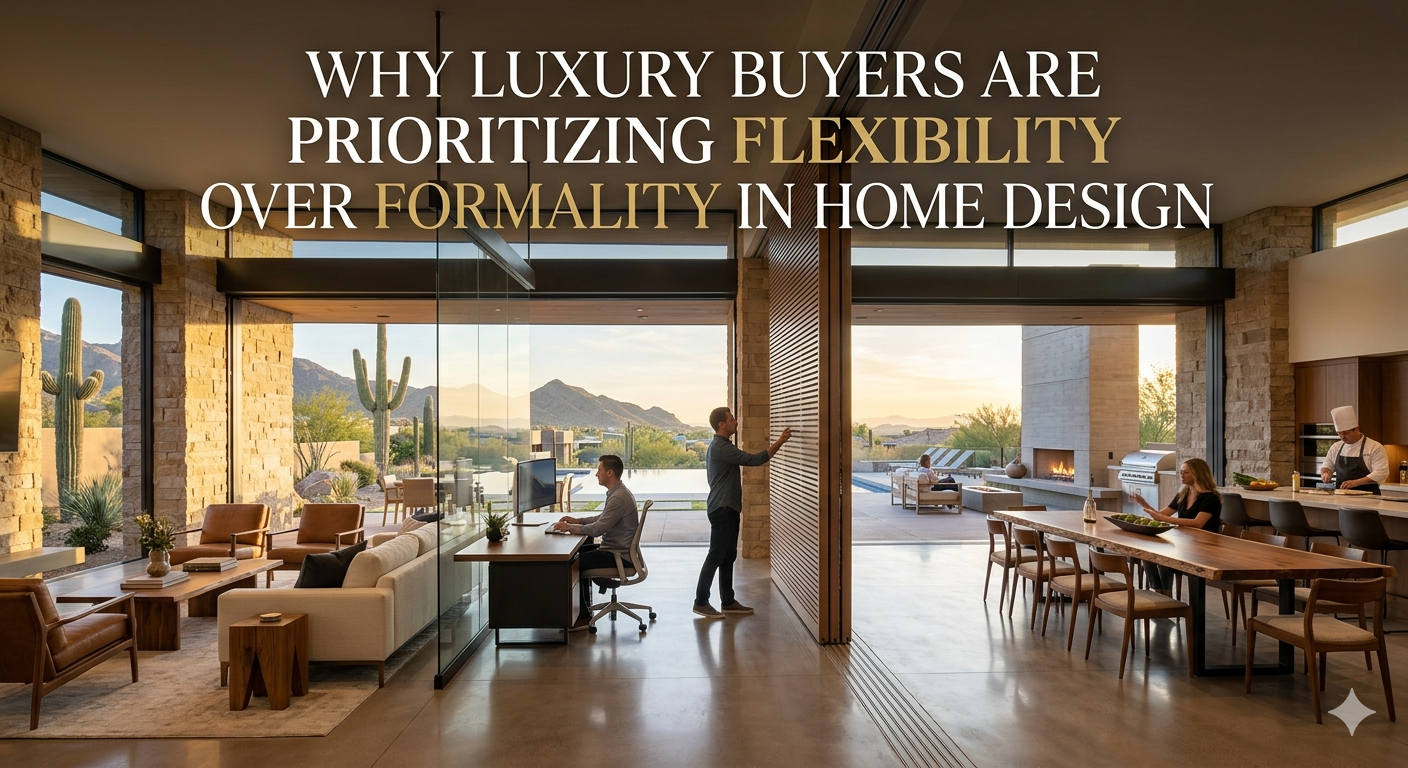
Luxury homes used to follow a predictable formula: formal living rooms, separate dining spaces, dedicated offices, and clearly defined zones for every function.
That model is quickly fading.
Today’s high-end buyers are prioritizing something very different:
Flexibility over formality.
In Arizona’s luxury markets—especially Scottsdale, Paradise Valley, and fast-growing East Valley communities—homes are being designed to adapt to daily life rather than dictate it.
As Mary Murphy of The Murphy Group explains:
"Luxury buyers don’t want rooms they only use a few times a year. They want spaces that work every single day in different ways."
🏡 The Decline of Formal Living Spaces
Traditional luxury homes often included:
- Formal living rooms
- Separate dining rooms
- Closed-off kitchens
- Single-purpose offices
But many buyers now see these spaces as underutilized.
The shift is driven by a desire for homes that feel:
- More lived-in
- More connected
- More functional
- Less restrictive
🔄 1. Multi-Use Spaces Are Becoming Essential
Modern luxury homes increasingly feature adaptable rooms that can shift purpose.
Examples include:
- Dining rooms that convert into workspaces
- Guest rooms that double as fitness or wellness areas
- Lounges that function as entertainment hubs
- Flex rooms designed for evolving family needs
The goal is simple: no wasted space.
🧑💻 2. Remote Work Changed Everything
The rise of hybrid and remote work permanently altered design expectations.
Buyers now want:
- Private yet flexible office spaces
- Sound-controlled work zones
- Rooms that don’t feel isolated from the home
- Spaces that can transition after work hours
A rigid “home office” is no longer enough.
🌴 3. Indoor-Outdoor Flow Requires Adaptability
Arizona’s climate makes indoor-outdoor living a priority.
Flexible design supports:
- Sliding walls and glass doors
- Convertible patios and living rooms
- Outdoor dining that shifts between casual and formal use
- Seamless transitions for entertaining
Spaces must adjust to weather, time of day, and occasion.
🧘 4. Wellness Spaces Are Multipurpose by Nature
Luxury wellness features rarely serve just one function.
For example:
- Yoga rooms double as meditation or reading spaces
- Spa bathrooms function as daily retreats
- Fitness rooms integrate recovery, sauna, and stretching zones
Wellness design naturally favors flexibility over rigidity.
🍽️ 5. Kitchens Are Becoming Social Hubs
The modern luxury kitchen is no longer purely functional.
It now serves as:
- A gathering space
- An entertainment zone
- A casual dining area
- A workspace for informal interaction
This shift eliminates the need for separate formal dining rooms in many homes.
🎬 6. Entertainment Spaces Must Evolve With Technology
Media and entertainment rooms are no longer static.
They now support:
- Streaming and gaming setups
- Multi-purpose lounge seating
- Convertible lighting and acoustics
- Flexible seating arrangements for events
Rooms must evolve with changing technology and usage patterns.
🏠 7. Buyers Prefer “Living Space Density,” Not Room Count
Luxury buyers are increasingly focused on how efficiently a home functions.
Instead of asking:
- How many rooms does it have?
They ask:
- How usable is every square foot?
A 4,000-square-foot flexible home can feel more valuable than a 6,000-square-foot formal layout.
🌅 8. Lifestyle Fluidity Is Now a Core Design Principle
Modern luxury living is not structured around rigid schedules.
Homes must support:
- Work during the day
- Family time in the evening
- Entertaining on weekends
- Quiet retreat at night
Flexibility allows one space to support multiple lifestyles seamlessly.
🌄 9. Arizona Living Naturally Supports Flexible Design
Arizona homes are uniquely positioned for this trend because of:
- Strong indoor-outdoor living culture
- Large lot availability
- Emphasis on entertaining
- Year-round usability of outdoor spaces
This encourages layouts that blur traditional boundaries.
🧠 10. Emotional Comfort Now Outweighs Formal Impression
Buyers increasingly prioritize how a home feels over how it presents.
Flexible homes tend to feel:
- More relaxed
- More personal
- Less performative
- More aligned with daily life
This emotional comfort is becoming a defining luxury feature.
📈 Why Formal Spaces Are Fading in Value
Formal rooms often lose appeal because they:
- Sit unused most of the year
- Reduce usable square footage
- Limit layout flexibility
- Feel outdated to younger buyers
As preferences evolve, flexibility becomes a stronger resale driver.
💼 How The Murphy Group Evaluates Functional Design
The Murphy Group helps buyers identify homes that support modern living patterns rather than outdated design expectations.
Their evaluation includes:
- Floor plan adaptability
- Multi-use space potential
- Work-from-home integration
- Indoor-outdoor flexibility
- Long-term livability assessment
As Mary Murphy notes:
"The best luxury homes aren’t defined by formal spaces—they’re defined by how effortlessly they adapt to real life."
📊 The Bottom Line
Luxury home design is shifting from formality to flexibility.
The most important features today include:
👉 Multi-use spaces
👉 Adaptable floor plans
👉 Work-from-home readiness
👉 Indoor-outdoor flow
👉 Wellness integration
👉 Lifestyle adaptability
Because in modern luxury real estate, value isn’t about how a home is structured—
👉 it’s about how well it adapts to everything life brings into it.
Mary Murphy
Team Leader | The Murphy Group - AZ | eXp Luxury | PLACE
or another way