

Categories
Arizona Luxury, Arizona Real Estate, Scottsdale Luxury Real Estate, Arizona Lifestyle, Paradise Valley Real Estate, Paradise Valley Luxury, North Scottsdale real estate, luxury home buying guide, East Valley Luxury, East Valley, East Valley real estatePublished September 23, 2026
What Luxury Buyers Should Know About Property Easements Before Purchasing an Arizona Estate

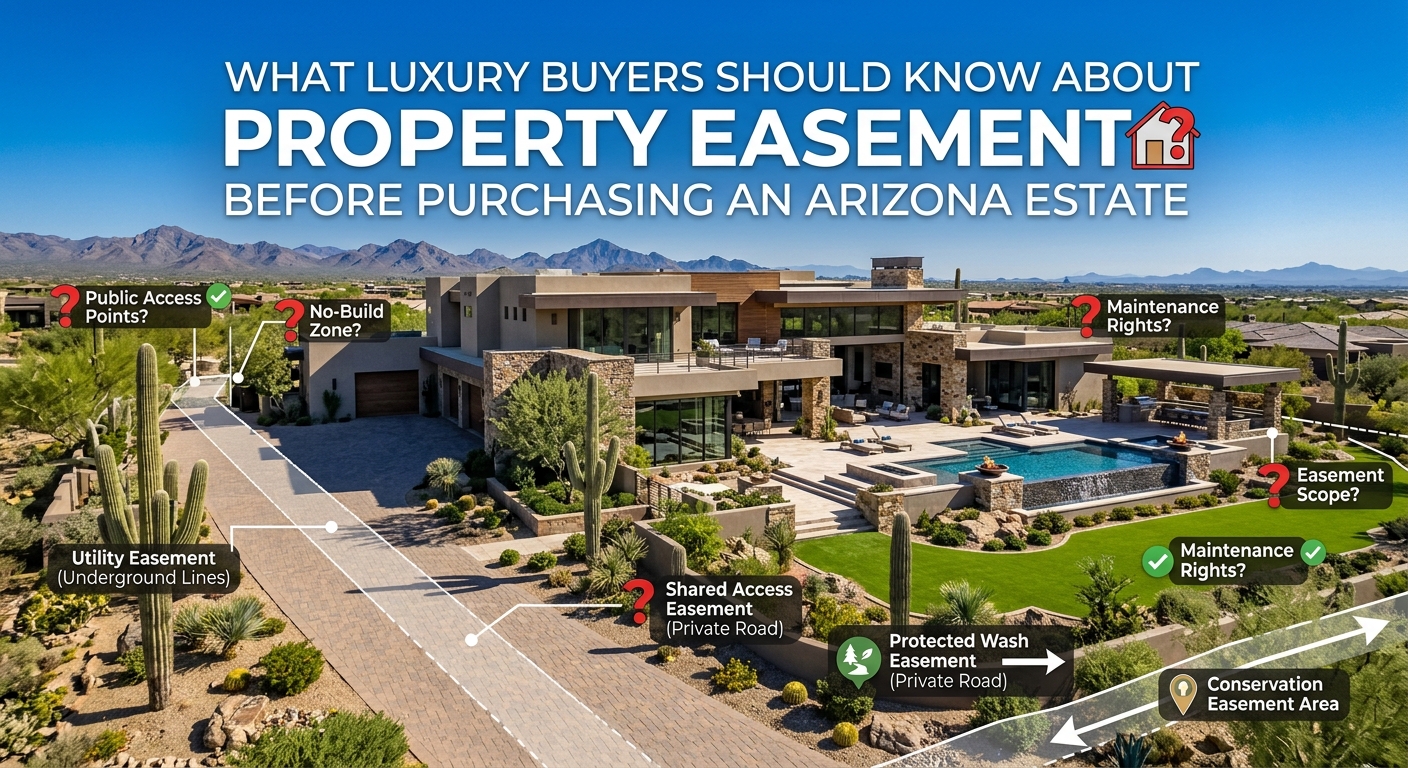
A luxury estate can offer impressive architecture, expansive grounds, privacy, resort-style amenities, and plenty of space.
But there may be something affecting the property that isn't immediately visible from the driveway, backyard, or listing photographs.
An easement.
An easement generally gives someone other than the property owner a defined right to use part of the property for a particular purpose. Depending on the property, that could involve access, utilities, drainage, roads, or other rights.
An easement doesn't automatically mean something is wrong with a property.
But it can matter significantly when a buyer has plans for the land.
That becomes especially important with Arizona estates where buyers may be considering additions such as guest houses, pools, detached garages, landscaping improvements, walls, outdoor entertaining areas, or other changes.
Arizona's Department of Real Estate advises buyers to review their title report or title commitment and the documents identified as Schedule B exceptions because those documents can include easements and other encumbrances that may affect property use.
For luxury buyers, the key question isn't simply:
“Does this property have an easement?”
It's:
“What does the easement allow, where is it located, and how could it affect the way I want to use this property?”
📜 1. Not All Easements Affect a Property in the Same Way
The word easement can sound more alarming than it actually is.
Some easements may have little noticeable effect on everyday ownership.
Others may be highly relevant to how a property is accessed, maintained, developed, or improved.
The important details include:
- Who benefits from the easement
- What rights are granted
- Where the easement is located
- What activities are permitted
- Who is responsible for maintenance
- Whether access is shared
- Whether future construction could be affected
The document creating the easement matters.
So does its physical location on the property.
🚗 2. Access Easements Can Affect How You Reach the Property
An access easement may provide a person or neighboring property with a right to travel across a portion of the land.
For an estate, the location can be particularly important.
Imagine discovering after closing that an access area crosses part of the land you envisioned using for:
- A new driveway
- A guest parking area
- Landscaping
- A privacy wall
- An outdoor entertainment space
The existence of an access easement doesn't necessarily prevent those improvements, but the specific rights contained in the easement document need to be understood before assuming what can be built or changed.
💧 3. Utility Easements Can Run Through Areas Buyers Want to Develop
Utility easements can be another important consideration.
They may relate to infrastructure serving the property or surrounding properties.
Depending on the specific easement, the rights may affect portions of the property used for:
- Electrical infrastructure
- Water lines
- Sewer infrastructure
- Drainage
- Telecommunications
- Other utilities
A buyer planning a major landscape redesign or construction project should understand where these areas are located.
A beautiful section of open land isn't necessarily unrestricted building space.
🏊 4. Think About Easements Before Planning a Pool
A luxury buyer may walk into a backyard and immediately imagine a pool, cabana, sports court, guest house, or expanded outdoor kitchen.
But before turning that vision into a construction plan, the buyer should understand the property's legal and physical constraints.
An easement could potentially affect where improvements can be placed.
That doesn't mean an improvement is automatically prohibited.
It means the buyer should investigate the easement and determine whether the proposed improvement is compatible with the rights contained in the recorded document and any applicable regulations or community restrictions.
The dream should be evaluated against the actual property rights before construction begins.
🏗️ 5. Future Development Is Where Easements Can Become Especially Important
This is particularly relevant for luxury estates because buyers may purchase significant acreage with plans for future improvements.
Before assuming that unused land can be developed, consider:
Where are the easements?
What rights do they create?
Are there restrictions on structures?
Does the easement provide access for vehicles or equipment?
Could maintenance or repair work require access to that portion of the property?
Would a proposed improvement interfere with those rights?
These questions can be much more important than simply knowing the total acreage.
🗺️ 6. Look at the Easement on the Property—Not Just on Paper
Reading the recorded document is essential.
But buyers should also understand where the easement actually sits on the land.
A survey or other appropriate property documentation can help connect the legal description with the physical property.
For example, an easement shown along a remote edge of a large estate may have a very different practical impact from one running directly through a backyard or driveway.
Arizona's Department of Real Estate notes that questions about title commitments and Schedule B documents may be addressed with the title or escrow officer, legal counsel, or a surveyor.
For a significant luxury purchase, understanding both the legal document and the physical location is important.
🏡 7. A Large Lot Doesn't Automatically Mean Unlimited Flexibility
One of the attractions of an Arizona estate can be the amount of land.
But acreage alone doesn't tell the whole story.
A property's usable area can be influenced by:
- Easements
- Setbacks
- Zoning requirements
- HOA or community restrictions
- Drainage considerations
- Utility infrastructure
- Access requirements
- Existing structures
This is why buyers should distinguish between total acreage and land that can realistically support their intended use.
🔐 8. Privacy Should Be Considered Too
Privacy is often a major reason buyers pursue luxury estates.
An easement may not necessarily compromise privacy, but the rights associated with it can be relevant.
For example, ask whether the easement allows:
- Regular vehicle access
- Pedestrian access
- Utility maintenance
- Service access
- Shared driveway use
- Access by neighboring property owners
Then consider where those rights are exercised.
A buyer may be comfortable with a shared driveway at the front of the property but have different concerns if access crosses a private outdoor area.
🛠️ 9. Maintenance Responsibilities Matter
Another question is often overlooked:
Who maintains the area covered by the easement?
Depending on the specific agreement, maintenance responsibilities may be assigned to one party, shared, or otherwise defined.
This can become relevant for:
- Private roads
- Shared driveways
- Drainage areas
- Landscaping
- Utility corridors
- Gates
- Access routes
Buyers should review the actual easement documents and related agreements rather than assuming responsibility based on appearance alone.
📄 10. Start With the Title Commitment
One of the most important documents in the purchase process is the title commitment.
Arizona's Department of Real Estate explains that the title report or commitment identifies documents that are exceptions to title insurance, including potential easements, encumbrances, and liens. It also advises buyers to receive and review the listed documents rather than relying only on the summary.
For a luxury buyer, that means the review shouldn't stop at seeing the word “easement.”
The next step is understanding the document behind it.
Look at:
- The parties involved
- The purpose
- The legal description
- The affected area
- The rights granted
- Any limitations
- Maintenance obligations
- Recording information
🔎 11. Don't Assume the Listing Tells You Everything
Real estate photography and marketing materials are designed to showcase the property's features.
They generally aren't a substitute for reviewing title documents.
An expansive backyard can look completely unrestricted in a photograph.
A wide driveway can look entirely private.
An open side yard can appear perfect for an addition.
But the legal rights affecting those areas may not be visible.
That is why serious due diligence matters, particularly when a buyer has specific plans for the property.
🧱 12. Ask Before You Fall in Love With a Future Improvement
Luxury buyers often purchase with a vision.
Maybe the plan is to build:
- A detached guest house
- A larger garage
- A pool house
- A sports court
- A private garden
- A new driveway
- A larger outdoor kitchen
- Additional walls or gates
Before assuming the property can accommodate those plans, investigate the restrictions that apply to the land.
An easement may be only one part of the analysis.
Zoning, setbacks, HOA rules, building codes, permits, utilities, and other requirements may also matter.
The goal is to understand the property's actual possibilities, not simply its visual potential.
⚖️ 13. Get the Right Professionals Involved
Easements are legal property interests.
For that reason, buyers should not rely solely on a casual interpretation of a title exception.
Depending on the circumstances, useful professionals may include:
- The buyer's real estate professional
- Title or escrow professionals
- A qualified surveyor
- An attorney experienced in real estate matters
- Appropriate contractors or specialists when future construction is being considered
The Arizona Department of Real Estate specifically identifies title/escrow professionals, legal counsel, and surveyors as potential resources for questions about title commitments and Schedule B documents.
❓ 14. Questions Luxury Buyers Should Ask
Before purchasing an Arizona estate, consider asking:
1. Does the property have any recorded easements?
2. Who benefits from each easement?
3. What exactly does each easement permit?
4. Where is each easement located?
5. Is the easement visible on a survey or other property documentation?
6. Could it affect planned construction or landscaping?
7. Who is responsible for maintenance?
8. Does anyone else have access rights across the property?
9. Are there related agreements or amendments?
10. Has the easement ever caused a dispute or practical issue?
11. Does the title insurance policy address the easement?
12. Do the buyer's intended improvements require additional review or approval?
These questions can help turn an abstract title issue into something much easier to understand.
💬 A Murphy Group Perspective
“With an estate property, buyers aren't only purchasing the house—they're purchasing the land and the rights associated with that land. Understanding those rights before closing can help buyers make decisions based on the property's actual potential.”
— Mary Murphy, The Murphy Group
An easement isn't automatically a negative.
The important consideration is whether the rights associated with it align with how the buyer intends to use the property.
📊 The Bottom Line
An Arizona luxury estate can look completely private and unrestricted from the street.
But property rights aren't always visible.
Easements can affect access, utilities, maintenance, privacy, and future improvements. Their impact depends on the specific language of the recorded documents and where those rights apply.
That's why buyers should review the title commitment, examine the underlying easement documents, understand their location, and seek appropriate professional guidance when questions arise.
The Arizona Department of Real Estate's buyer guidance emphasizes reviewing the documents listed as title exceptions because they can affect how a property may be used.
Before purchasing an estate, don't just ask:
“How much land am I buying?”
Also ask:
“What rights exist over this land—and how could they affect the way I plan to use it?”
That question can be an important part of understanding the property beyond what the listing photos show.
📲 Explore Arizona Luxury Real Estate With the Details in Mind
If you're searching for a luxury home in Scottsdale, Paradise Valley, North Scottsdale, or the East Valley, The Murphy Group can help you evaluate the property beyond its most obvious features—from lot characteristics and access to privacy, outdoor living, potential improvements, and overall livability.
The goal isn't simply to find an estate that looks exceptional.
It's to understand the property you're actually buying.

Mary Murphy
Team Leader | The Murphy Group - AZ | eXp Luxury | PLACE
or another way