

Categories
Arizona Luxury, Arizona Real Estate, luxury home design, Luxury Home Features, North Scottsdale real estate, East Valley Luxury, East Valley, East Valley real estatePublished November 19, 2026
What Luxury Buyers Should Know About Arizona Homes With Retractable Glass Walls

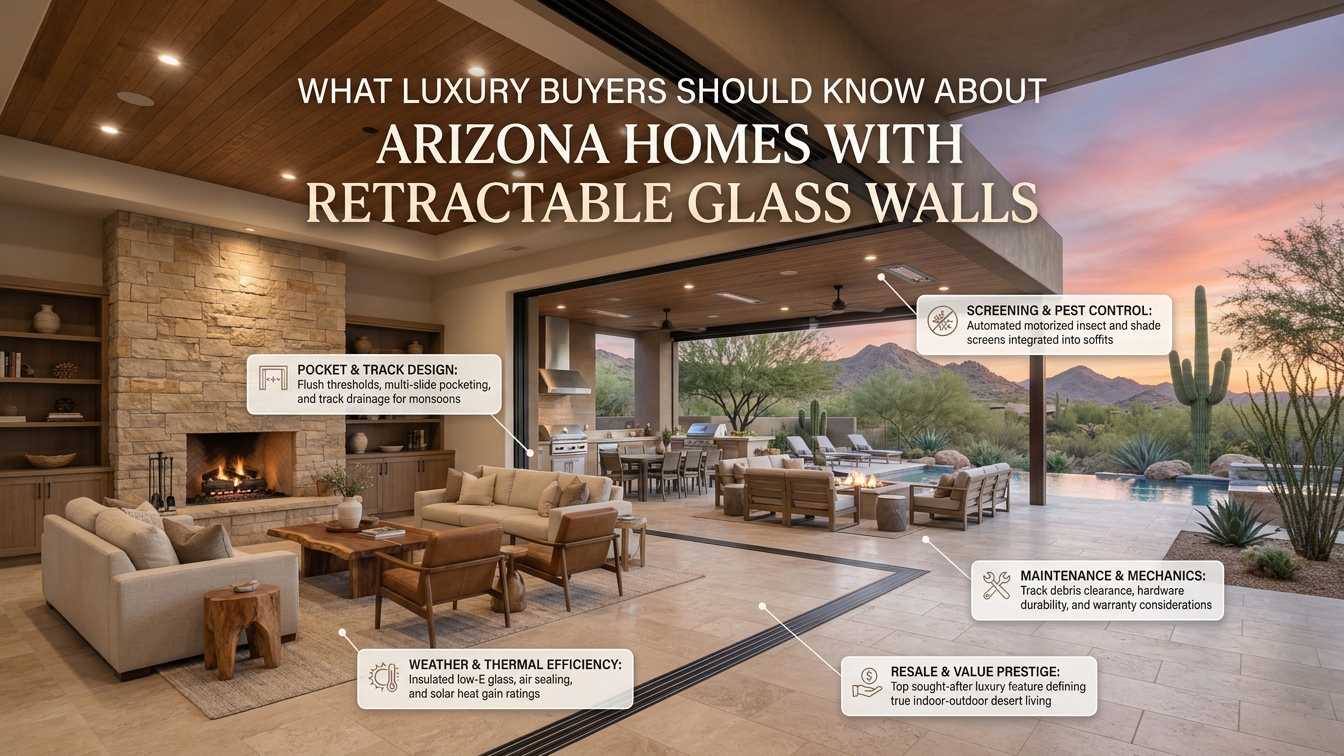
Retractable glass walls have become a defining feature of many contemporary luxury homes. By allowing large sections of glass to slide, fold, or disappear into designated wall pockets, these architectural systems can create a seamless transition between indoor living spaces and outdoor entertaining areas.
In Arizona's luxury real estate market, this feature is particularly appealing. With expansive desert views, mountain backdrops, landscaped courtyards, and outdoor living spaces, homeowners often want to enjoy the surrounding environment without sacrificing the comfort and sophistication of an interior living area.
In Scottsdale, Paradise Valley, North Scottsdale, and the East Valley, retractable glass walls may connect great rooms to covered patios, kitchens to outdoor dining areas, or primary suites to private terraces. When fully opened, they can make an entire residence feel more expansive and connected to its surroundings.
However, retractable glass walls are more than oversized windows. They are specialized architectural systems involving substantial glass panels, tracks, rollers, seals, locking mechanisms, structural openings, and sometimes motorized controls.
For luxury buyers, the visual impact should be only the beginning of the evaluation. The quality of the installation, performance under Arizona's climate conditions, maintenance requirements, security, and long-term operating costs all deserve attention before purchasing.
1. Understand the Type of Retractable Glass Wall Installed
Not all retractable glass walls operate in the same way. The system installed in a home can affect how much of the opening can be exposed, how the panels move, and what maintenance the property requires.
Common configurations include:
- Bi-fold glass walls: Multiple panels are connected with hinges and fold together toward one or both sides of the opening.
- Multi-slide glass doors: Large panels slide along parallel tracks and may stack behind one another.
- Pocketing glass walls: Panels slide into a concealed wall cavity, creating a wider unobstructed opening.
- Lift-and-slide systems: Specialized hardware lifts panels slightly before they move along their tracks.
- Motorized retractable systems: Electrically operated panels open and close through integrated controls.
Each system has different hardware, operating characteristics, and installation requirements.
Buyers should identify the manufacturer, model, configuration, installation date, and available product documentation. If the seller has manuals, warranty information, or service records, request copies during due diligence.
Understanding the specific system will help buyers determine which professionals can inspect it and whether replacement parts and qualified service providers are available.
2. Inspect the Glass Panels for Damage and Deterioration
The glass is the most visible component of the system, but it should not be evaluated solely on appearance.
Large glass panels can be expensive to replace, especially when they are custom-sized, insulated, tinted, laminated, or part of a specialized architectural assembly.
During the property inspection, examine each panel for:
- Cracks, chips, and edge damage
- Scratches or surface deterioration
- Signs of impact
- Cloudiness or discoloration
- Moisture or condensation between insulated glass panes
- Damaged coatings
- Evidence of previous glass replacement
Buyers should also ask what type of glass is installed.
Depending on the location and system, the assembly may use tempered safety glass, laminated glass, insulated glazing, or other specialized configurations. These products serve different purposes, and their suitability depends on the opening, design, and applicable building requirements.
A qualified glazing professional can help identify the glass specification and assess whether the panels appear appropriate for the installation.
3. Evaluate Performance Against Arizona's Intense Sunlight
One of the biggest considerations for luxury homes with extensive glass is solar exposure.
Arizona's strong sunlight can contribute to interior heat gain, glare, and ultraviolet exposure. A large retractable glass wall facing west or southwest may experience particularly intense afternoon sun.
Buyers should investigate how the glass system manages these conditions.
Important considerations include:
- Whether the glass has a low-emissivity coating
- Whether the assembly uses insulated glazing
- Solar heat gain characteristics
- Visible light transmission
- Ultraviolet protection
- Window orientation
- Exterior shading
- Interior shade or blind systems
The amount of sunlight entering a home depends on more than the glass specification. Overhangs, landscaping, orientation, and surrounding structures can all influence performance.
Buyers should ask whether the current owner has experienced uncomfortable afternoon temperatures, excessive glare, or noticeable cooling differences when the panels are closed.
If the home has extensive retractable glass walls, an HVAC professional may also need to assess whether the cooling system is appropriately designed for the property's glass area and solar exposure.
4. Check the Track System and Operating Hardware
A retractable glass wall is only as functional as the system that supports and moves its panels.
Tracks, rollers, hinges, guides, and locking components can experience wear over time, particularly in homes where the panels are frequently opened and closed.
During an inspection, observe whether:
- Panels move smoothly
- Tracks are free of debris and obstructions
- Rollers operate without unusual noise
- Hinges show signs of wear
- Panels remain properly aligned
- Locks engage securely
- Handles and operating mechanisms function correctly
- Panels close without excessive force
A panel that sticks, scrapes, or requires unusual effort may indicate an adjustment issue, worn hardware, track damage, or a problem with alignment.
Do not force a panel that appears stuck. This can cause additional damage to the system.
Buyers should ask for maintenance records and have a qualified door-system technician inspect any unusual operating behavior.
5. Examine Weather Seals and Water Intrusion Protection
Arizona is known for its dry climate, but seasonal monsoon storms can bring intense rainfall and wind-driven moisture.
Large retractable glass openings can be more vulnerable to water intrusion if the seals, drainage details, or installation are not performing properly.
Pay close attention to:
- Weatherstripping around the panels
- Gaskets between adjoining glass sections
- Seals along the frame
- Threshold conditions
- Drainage channels
- Weep openings, where provided
- Evidence of water staining
- Deterioration around adjacent flooring and walls
Look for signs of moisture near the bottom of the opening, especially where the glass system meets the interior floor.
A flush threshold can create a particularly attractive transition between indoor and outdoor spaces, but it should be properly designed to manage water.
Ask the seller whether the home has experienced water intrusion during heavy rain or whether the glass wall has required previous seal replacements.
A qualified glazing or building-envelope professional can evaluate the assembly and determine whether the water-management details are functioning as intended.
6. Review Structural Support Around the Large Opening
Retractable glass walls often require wide openings that can significantly influence a home's structural design.
Unlike a conventional window or smaller door, a multi-panel glass system may span a substantial portion of an exterior wall. The surrounding structure must support the loads above and around the opening while accommodating the door system's installation requirements.
Buyers should investigate:
- The structural design of the opening
- Header or beam specifications
- Support columns, where applicable
- Evidence of settlement or movement
- Cracks around the frame
- Signs of frame distortion
- Previous structural modifications
- Documentation for the original installation
A system that has become difficult to operate may have a hardware issue, but it may also be affected by movement in the surrounding structure.
If there are visible cracks, unusual gaps, or alignment problems, a structural engineer may need to assess the opening.
For a custom-built luxury estate, request the original construction plans and any engineering documents related to the glass-wall installation.
7. Consider Energy Efficiency and HVAC Performance
Retractable glass walls can create beautiful indoor-outdoor spaces, but large glass areas may affect a home's energy performance.
When the panels are closed, the glass assembly becomes part of the building envelope. Its thermal performance, air leakage characteristics, and solar heat gain can influence how hard the cooling system needs to work.
Buyers should consider:
- The glazing's insulation characteristics
- Air leakage around panel joints
- Weather-seal condition
- Solar heat gain
- Thermal performance of the frame
- Compatibility with the home's HVAC design
- Availability of exterior shading
- Historical utility costs
Ask the seller for electricity bills covering both summer and milder months, if available. These records can help buyers understand the property's cooling expenses, although usage patterns and thermostat settings will affect the comparison.
It is also worth determining whether the home has separate HVAC zones for large entertaining spaces or rooms with extensive glass exposure.
A qualified HVAC professional can evaluate whether the existing system appears appropriate for the home's layout and glass installations.
8. Inspect the Drainage and Threshold Design
The area where retractable glass walls meet the floor deserves special attention.
Some luxury systems use recessed tracks or flush thresholds to create a nearly uninterrupted transition between interior and exterior flooring. While visually appealing, these details require appropriate drainage and water-management design.
Buyers should examine:
- Whether the threshold is level and properly installed
- Whether exterior paving slopes away from the opening
- Whether water can collect near the track
- Whether drainage channels are clear
- Whether the system has appropriate drainage provisions
- Whether adjacent flooring shows signs of moisture damage
- Whether exterior surfaces direct runoff toward the house
A patio that slopes toward a glass opening can create problems during heavy rainfall, particularly if the drainage system is inadequate.
This is especially relevant for homes with large outdoor entertaining areas, pool decks, or extensive hardscaping.
A drainage professional or qualified contractor can evaluate the surrounding surfaces and determine whether water is being directed away from the residence.
9. Evaluate Security and Locking Mechanisms
Retractable glass walls often create larger openings than conventional exterior doors. Their security should therefore be evaluated carefully.
A visually impressive glass system does not automatically provide the same security characteristics as a conventional solid entry door.
Review:
- Multi-point locking systems
- Panel-to-panel locking mechanisms
- Reinforced frames
- Locking pins and security bolts
- Glass specifications
- Alarm contacts
- Integration with the home's security system
- Access controls for motorized systems
Buyers should also determine whether the glass walls can be secured independently from the main home security system.
For estates with extensive outdoor entertaining spaces, multiple access points, or glass walls facing secluded patios, a security professional may be able to recommend improvements based on the property's layout.
The objective is to balance architectural openness with appropriate protection for the residence.
10. Review Motorized Controls and Smart-Home Integration
Some luxury homes feature motorized retractable glass walls that can be operated through wall-mounted switches, remote controls, or integrated smart-home systems.
These systems can add convenience, particularly when the openings are large or contain numerous panels.
However, motorization introduces additional components that require maintenance.
Buyers should verify:
- Whether the system is fully motorized or manually operated
- Whether the motors operate smoothly
- Whether remote controls are included
- Whether wall switches function correctly
- Whether safety sensors are installed, where applicable
- Whether the system integrates with home automation
- Whether manual operation is possible during a power interruption
- Whether software, controllers, or subscriptions require updates
If the glass walls are integrated with a smart-home platform, ask whether the system can be transferred to the new owner.
Request documentation for the automation equipment, including operating instructions, warranty information, and service contacts.
Buyers should also determine whether the glass wall can be operated independently if the broader home automation system experiences an interruption.
11. Assess Wind Exposure and Weather Conditions
Arizona homes can experience intense wind conditions, particularly during seasonal storms.
Large glass panels may be exposed to wind pressure when closed, while open panels may be vulnerable to movement or impact if they are not properly secured.
Buyers should understand the system's design limitations and the manufacturer's operating instructions.
Ask about:
- The glass system's documented performance ratings
- Frame and anchoring specifications
- Wind-related limitations
- Panel securing mechanisms
- Manufacturer guidance for storm conditions
- Previous wind-related damage or repairs
The home's location also matters. A property on an elevated hillside or exposed desert lot may experience different wind conditions from one surrounded by neighboring structures.
Buyers should not assume that every retractable glass system has the same wind-performance characteristics.
The original specifications and the professional's assessment should guide the evaluation.
12. Consider Privacy and Exterior Visibility
Retractable glass walls can make an interior space feel larger and more connected to the outdoors. However, they can also expose significant portions of the home to neighboring properties or public viewpoints.
This is especially important in luxury estates where privacy is a central part of the property's appeal.
Consider:
- Whether neighboring homes overlook the glass walls
- Whether the main living areas are visible from the street
- Whether outdoor entertaining spaces are exposed
- Whether landscaping provides adequate screening
- Whether automated shades or curtains are installed
- Whether exterior lighting creates nighttime visibility
A home may appear private during a daytime showing but feel considerably more exposed after sunset when interior lighting is switched on.
Buyers should visit the property at different times of day when possible and consider whether the existing window treatments provide sufficient privacy.
13. Understand Maintenance and Replacement Costs
Retractable glass walls are specialized architectural systems. Their maintenance requirements can be different from those of ordinary windows and sliding patio doors.
Potential maintenance needs include:
- Track cleaning and lubrication
- Roller adjustments or replacement
- Weatherstripping replacement
- Lock and handle servicing
- Motor maintenance
- Glass replacement
- Seal and gasket repairs
- Frame and finish maintenance
- Drainage channel cleaning
The cost of replacement can vary significantly depending on panel dimensions, glass specifications, manufacturer availability, and whether the system uses custom components.
Before purchasing, ask for the original installation documents, warranties, maintenance records, and any previous repair invoices.
It is also wise to confirm whether qualified service providers are available for the specific brand and model.
A system with limited parts availability may become more expensive to maintain over time, even if it currently operates well.
14. Verify Permits and Installation Documentation
Retractable glass walls may be installed during original construction or introduced as part of a later renovation.
If the opening was created or enlarged after the home was built, the work may have involved structural modifications, electrical changes, or alterations to the exterior building envelope.
Buyers should request available documentation, including:
- Original architectural plans
- Structural engineering documents
- Building permits for the installation or modification
- Final inspection records, where applicable
- Glass and frame specifications
- Manufacturer installation instructions
- Contractor invoices
- Warranty documents
- Records of repairs and replacements
Arizona follows a home-rule approach to building energy codes, meaning requirements and enforcement are jurisdictional rather than governed by one uniform statewide residential energy code. Buyers should confirm which locally adopted codes and amendments applied when the work was performed and what requirements apply to any future modifications.
The Arizona Department of Real Estate's Buyer Advisory also encourages purchasers to investigate repairs, remodeling, permits, and supporting documentation as part of due diligence.
For properties in Scottsdale, Phoenix, Paradise Valley, or other East Valley communities, the appropriate building department can help clarify which approvals were required for the specific project.
15. Evaluate the Indoor-Outdoor Living Experience
One of the greatest advantages of retractable glass walls is the ability to transform how a home is experienced.
A great room can open onto a covered patio. A kitchen can connect to an outdoor dining area. A primary suite can extend toward a private terrace or landscaped courtyard.
In Arizona, these arrangements can be especially appealing during comfortable mornings, evenings, and seasonal periods when outdoor living is a central part of the lifestyle.
However, buyers should consider whether the home's layout genuinely supports everyday use.
Ask yourself:
- Does the glass wall connect spaces that will regularly be used together?
- Is the outdoor area protected from excessive sun?
- Is there sufficient shade during warmer months?
- Does the outdoor space provide privacy?
- Are the flooring materials appropriate for the transition?
- Can the room remain comfortable when the panels are closed?
- Does the arrangement suit the household's entertaining habits?
A retractable glass wall should enhance the home's functionality rather than exist solely as a dramatic architectural feature.
16. Consider How the Feature May Affect Resale Appeal
Retractable glass walls can help distinguish a luxury home, particularly among buyers who value contemporary architecture and indoor-outdoor living.
In Arizona's luxury market, the ability to connect interior entertaining spaces with outdoor patios, pools, and landscaped courtyards can be an attractive design element.
However, the presence of retractable glass walls does not automatically translate into a predictable increase in resale value.
Their contribution to buyer appeal may depend on:
- Overall architectural quality
- The condition of the glass system
- The home's location and views
- The usability of the connected outdoor space
- Energy performance
- Privacy and security
- Maintenance history
- Local buyer preferences
A well-maintained system with clear documentation may provide greater confidence to future buyers than one with difficult-to-operate panels or unresolved water-intrusion concerns.
For sellers, maintaining the glass walls and keeping service records organized can help demonstrate that this specialized feature has been properly cared for.
The Murphy Group Arizona Perspective
Retractable glass walls can transform an Arizona luxury home by connecting interior living areas with the surrounding landscape. They can frame mountain views, open entertaining spaces toward private patios, and create a sense of openness that complements the region's distinctive architectural styles.
However, their value extends beyond appearance.
As Mary Murphy might emphasize, an exceptional home should combine thoughtful design with practical performance. For retractable glass walls, that means looking closely at the glass specifications, track systems, structural support, weather seals, drainage, security, and long-term maintenance.
In Arizona, buyers should also consider how the home's orientation, sun exposure, shading, and cooling systems work together with the large glass openings.
For those exploring luxury properties in Scottsdale, Paradise Valley, North Scottsdale, and the East Valley, careful evaluation can help determine whether a retractable glass wall is a well-designed feature that enhances everyday living or a specialized system that may require additional attention.
The best luxury homes are not simply beautiful to look at. They are thoughtfully designed to function well throughout the seasons.
Frequently Asked Questions
Are retractable glass walls suitable for Arizona's climate?
They can be, provided the glass system is appropriately specified and installed for the property's conditions. Buyers should evaluate solar heat gain, glazing performance, weather seals, shading, drainage, and HVAC capacity.
Do retractable glass walls make a home less energy-efficient?
Large glass openings can increase solar heat gain and heat transfer depending on their specifications, orientation, and installation. High-performance glazing, appropriate shading, properly maintained seals, and suitable HVAC design can help manage these effects.
What is the difference between folding and sliding glass walls?
Folding systems use connected panels that fold together, while multi-slide systems use panels that move along parallel tracks. Some sliding systems also use concealed wall pockets. Each design has different space, hardware, and maintenance requirements.
Can retractable glass walls leak during Arizona monsoon storms?
They can experience water intrusion if seals, thresholds, drainage systems, or installation details are compromised. Buyers should inspect the tracks, gaskets, surrounding flooring, and exterior drainage arrangements, especially after periods of heavy rainfall.
Do retractable glass walls require regular maintenance?
Yes. Tracks, rollers, hinges, seals, locks, and motorized components may require periodic cleaning, adjustment, lubrication, or servicing. Buyers should request manufacturer recommendations and previous maintenance records.
Are motorized retractable glass walls reliable?
Reliability depends on the equipment, installation, maintenance, and operating conditions. Buyers should test the system, review its service history, and confirm whether qualified technicians and replacement components are available.
What should buyers inspect before purchasing a home with retractable glass walls?
Important areas include the glass panels, tracks, rollers, hinges, locks, weather seals, drainage, structural opening, motorized controls, and surrounding finishes. A qualified glazing or door-system specialist may be appropriate in addition to a general home inspection.
Do retractable glass walls increase a luxury home's resale value?
They can improve a property's appeal to buyers who value modern architecture and indoor-outdoor living. However, their effect on market value depends on the home's overall quality, location, condition, energy performance, and buyer demand.
The Bottom Line
Retractable glass walls can be among the most striking features of an Arizona luxury residence. They create expansive openings, connect indoor and outdoor spaces, and allow homeowners to enjoy the surrounding desert landscape in a distinctive way.
But buyers should look beyond the architectural effect. Glass quality, track performance, weather seals, structural support, drainage, energy efficiency, security, and maintenance all deserve attention before purchasing.
Request installation documentation, review available warranties and service records, and arrange specialized evaluations when necessary. These steps can help buyers understand the condition of the system and anticipate the responsibilities that come with ownership.
In Scottsdale, Paradise Valley, North Scottsdale, and the East Valley, the most rewarding luxury property is one where distinctive architectural features are supported by dependable construction and thoughtful design.
Explore Arizona Luxury Real Estate With The Murphy Group Arizona
If you're considering a luxury home in Scottsdale, Paradise Valley, North Scottsdale, or the East Valley, The Murphy Group Arizona can help you look beyond the listing photos and consider the property, neighborhood, and long-term ownership experience.
From retractable glass walls and expansive indoor-outdoor living spaces to custom architectural features, energy performance, and property maintenance considerations, a thoughtful approach to due diligence can help you make a more informed decision.
Explore Arizona luxury real estate with The Murphy Group Arizona and discover your next exceptional property.
Website: www.mgsellsarizona.com

Mary Murphy
Team Leader | The Murphy Group - AZ | eXp Luxury | PLACE
or another way