

Categories
Arizona Luxury, Arizona Lifestyle, Arizona Real Estate, East Valley, East Valley Luxury, East Valley real estate, luxury home design, North Scottsdale homes, North Scottsdale real estate, Paradise Valley Luxury, Paradise Valley Real Estate, Scottsdale Luxury Real Estate, Scottsdale Real EstatePublished October 9, 2026
The Luxury Home “Storage Test”: How Much Space Does an Estate Really Need?

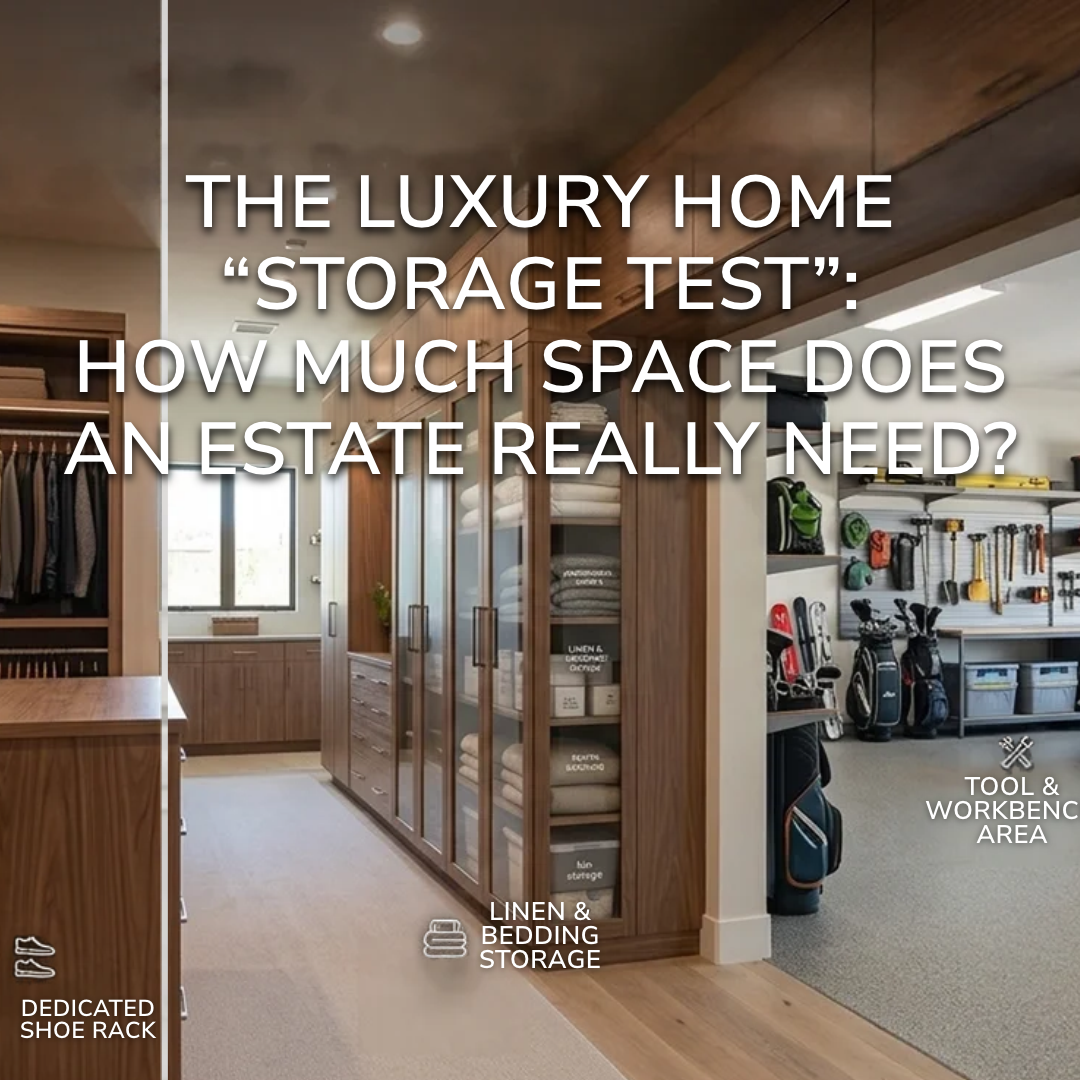
Luxury homes are often measured by the numbers that immediately impress buyers.
Bedrooms.
Bathrooms.
Garage spaces.
Lot size.
Pool size.
Ceiling height.
But there is another number that can quietly influence how enjoyable a large home is to own:
How much usable storage does it actually have?
A 7,000-square-foot estate can look enormous during a showing.
Yet if closets are awkward, the garage is crowded, the pantry is undersized, and there is nowhere to store seasonal or outdoor equipment, the home can begin to feel surprisingly constrained.
Meanwhile, another property with the same overall square footage may feel considerably more spacious simply because its storage has been thoughtfully distributed.
This is particularly important in Arizona luxury homes.
Large estates often come with pools, outdoor kitchens, extensive landscaping, multiple vehicles, golf equipment, guest accommodations, seasonal décor, specialty appliances, recreational gear, and other belongings that require dedicated space.
The question isn't simply:
“How many closets does this home have?”
The better question is:
“Can this home comfortably store the things required to live here without turning everyday living spaces into storage areas?”
That is the real storage test.
📦 1. Square Footage Doesn't Tell You How Much Storage You Have
Two homes can have the same square footage and dramatically different storage capacity.
One may have:
- Large closets
- Walk-in pantry
- Linen storage
- Mudroom
- Utility cabinets
- Oversized garage
- Dedicated equipment rooms
- Attic or secondary storage
The other may use more of its square footage for dramatic living spaces.
Neither approach is automatically wrong.
But buyers should understand the trade-off.
A beautiful home with limited storage may require more organization than expected.
🧥 2. Start With the Primary Closet
Luxury primary suites often feature impressive walk-in closets.
But size isn't the only consideration.
Look at:
- Hanging space
- Shelving
- Drawers
- Shoe storage
- Island storage
- Seasonal clothing capacity
- Luggage space
- Jewelry storage
- Laundry drop locations
An enormous closet with inefficient shelving may hold less than a smaller but better-designed space.
The goal isn't simply to have a large closet.
It is to have a closet that works.
👗 3. Think About Seasonal Storage
Arizona's climate may reduce the need for heavy winter wardrobes, but seasonal storage is still relevant.
Think about:
- Holiday decorations
- Guest bedding
- Seasonal clothing
- Outdoor cushions
- Patio accessories
- Special-event items
- Travel luggage
Where do these belongings go when they aren't being used?
If the answer is “somewhere in the garage,” look carefully at how much garage space is actually available.
🛏️ 4. Guest Rooms Need Storage Too
A guest bedroom may look beautiful with a perfectly staged dresser and nightstands.
But guests need somewhere to put their belongings.
Look inside the closet.
Is there enough hanging space?
Are there drawers?
Is there room for luggage?
Can guests unpack without taking over the room?
This becomes especially important in luxury homes designed for extended family or frequent visitors.
🧺 5. Linen Storage Is Easy to Underestimate
Large homes require a surprising amount of linens.
Think about:
- Bed sheets
- Towels
- Pool towels
- Guest linens
- Blankets
- Table linens
- Spare pillows
A home with several bedrooms and bathrooms can quickly accumulate a substantial linen inventory.
Dedicated linen closets can therefore be more valuable than buyers initially realize.
🧹 6. Cleaning Supplies Need a Home
Luxury homes require maintenance.
That means cleaning supplies need storage.
A well-designed property may have:
- Utility cabinets
- Cleaning closets
- Built-in storage
- Service areas
- Utility rooms
Without those spaces, supplies can end up scattered throughout the home.
That can create unnecessary clutter and make routine maintenance less efficient.
🍽️ 7. The Pantry Is Part of the Storage Test
A beautiful kitchen can still have inadequate storage.
Open the pantry.
Look beyond its appearance.
Ask:
Can this pantry support the way we actually shop and cook?
Consider space for:
- Dry goods
- Small appliances
- Bulk purchases
- Entertaining supplies
- Beverage storage
- Serving pieces
- Specialty cookware
A pantry that works for everyday groceries may not work for a household that frequently entertains large groups.
☕ 8. Small Appliances Can Consume More Space Than Expected
Coffee machines.
Blenders.
Mixers.
Air fryers.
Toasters.
Espresso equipment.
Specialty cooking appliances.
Luxury buyers often have kitchens with beautiful counters.
But where do all these appliances go?
If every appliance has to remain visible, even a large kitchen can begin to feel cluttered.
Dedicated appliance storage can therefore be an important part of a functional luxury kitchen.
🍷 9. Entertaining Creates Its Own Storage Needs
A home designed for entertaining needs more than a large dining room.
It may also require storage for:
- Serving platters
- Glassware
- Table linens
- Barware
- Extra chairs
- Outdoor entertaining pieces
- Seasonal decorations
If the home regularly hosts large gatherings, ask where those items are stored between events.
🏊 10. Pool Equipment Requires More Than a Pool
A resort-style backyard creates an additional storage category.
Think about:
- Pool toys
- Towels
- Floats
- Outdoor games
- Pool furniture
- Cleaning equipment
- Shade accessories
- Water-related supplies
Where do these things go?
A beautiful pool without practical storage can create clutter around the backyard or garage.
🌵 11. Arizona Outdoor Living Creates Additional Storage Demands
Arizona's indoor-outdoor lifestyle means many homes have extensive outdoor furnishings and equipment.
There may be:
- Patio cushions
- Outdoor rugs
- Grills
- Cooking equipment
- Sports gear
- Gardening supplies
- Decorative items
- Seasonal outdoor accessories
Some of these items need protection from the elements.
Dedicated outdoor storage can therefore be extremely valuable.
🚗 12. Don't Count Garage Spaces Without Evaluating Garage Storage
A six-car garage sounds impressive.
But how much of it is actually available for vehicles?
Look at:
- Built-in cabinets
- Wall shelving
- Ceiling storage
- Workbenches
- Refrigerators
- Freezers
- Golf equipment
- Bicycles
- Tools
- Sports equipment
A garage can technically accommodate six vehicles while functioning like a four-car garage once storage needs are considered.
⛳ 13. Specialty Hobbies Can Change the Storage Equation
Luxury buyers often have hobbies that require significant equipment.
Golf.
Cycling.
Tennis.
Boating.
Fitness.
Photography.
Hunting.
Collecting.
Travel.
Art.
The right amount of storage depends partly on what the household actually owns.
A buyer who plays golf every weekend may value dedicated equipment storage differently from someone who rarely participates in outdoor sports.
🧳 14. Luggage Storage Is an Often-Forgotten Need
Frequent travelers can accumulate several pieces of luggage.
Large suitcases can be difficult to store in ordinary closets.
Ask:
Where would all of our luggage go?
If the answer is under beds or in the garage, consider whether a more dedicated solution would make everyday life easier.
A well-designed estate may have oversized closets or secondary storage areas specifically suited for bulky belongings.
🏠 15. The Mudroom Can Be More Valuable Than It Looks
Mudrooms aren't only for cold-weather climates.
In Arizona, they can serve as transition spaces between the garage, outdoors, and main living areas.
They can provide places for:
- Shoes
- Bags
- Sports equipment
- Pet supplies
- Cleaning items
- Everyday household belongings
A practical drop zone can prevent these items from spreading into the kitchen and living areas.
🐕 16. Pets Create Their Own Storage Requirements
Pet owners may need space for:
- Food
- Crates
- Beds
- Toys
- Grooming supplies
- Cleaning products
- Outdoor equipment
In a large home, these items can become visually distracting if there isn't a logical place to store them.
A utility room, mudroom, laundry area, or dedicated cabinet system can help keep them organized.
🛠️ 17. Maintenance Equipment Needs Storage Too
Large properties require tools and maintenance supplies.
Think about:
- Filters
- Extension cords
- Hand tools
- Replacement bulbs
- Hardware
- Garden equipment
- Cleaning equipment
- Spare materials
These items shouldn't necessarily occupy valuable kitchen or bedroom storage.
A dedicated maintenance area can make long-term ownership considerably easier.
🌳 18. Landscaping Can Increase Storage Needs
An expansive Arizona property may have significant landscaping.
That can mean additional equipment and supplies.
Depending on the property, buyers may need space for:
- Gardening tools
- Hoses
- Pots
- Outdoor equipment
- Fertilizer
- Replacement materials
- Seasonal landscaping items
Even if landscaping is professionally maintained, the property may still require storage for everyday outdoor items.
🏡 19. Casitas Should Be Evaluated Separately
A detached casita can be an incredible luxury feature.
But if it is used for guests, family, or long-term occupancy, it needs practical storage too.
Look for:
- Closet space
- Bathroom storage
- Kitchen storage
- Linen storage
- Luggage space
- Utility storage
A casita that looks beautiful but has almost no storage may be less comfortable for longer stays.
🧳 20. Guest Storage Can Protect the Main House
Frequent guests often bring luggage and personal belongings.
If guest storage is inadequate, those items can spill into hallways, living rooms, or other spaces.
Dedicated guest closets and luggage areas can help preserve the home's organization while making visitors more comfortable.
🗄️ 21. Built-In Storage Can Be More Valuable Than Empty Square Footage
A large room doesn't necessarily provide useful storage.
Built-ins can turn otherwise unused areas into functional capacity.
Consider:
- Built-in cabinetry
- Window-seat storage
- Hallway cabinets
- Under-stair storage
- Custom shelving
- Bedroom built-ins
- Garage cabinetry
These features can increase usable storage without dramatically increasing the home's footprint.
📐 22. Pay Attention to Awkward Storage
Not all storage is equally useful.
A deep cabinet may be difficult to reach.
A narrow closet may waste vertical space.
A large attic may be difficult to access.
A garage cabinet may block a vehicle door.
When evaluating storage, think about usability, not just volume.
🪜 23. Vertical Space Can Be an Untapped Resource
Luxury homes with tall ceilings often have opportunities for vertical storage.
Look at:
- Tall cabinets
- Ceiling-height shelving
- Garage racks
- High utility cabinets
- Custom closet systems
Using vertical space effectively can significantly increase storage without sacrificing living areas.
🔐 24. Some Items Need Specialized Storage
Certain belongings require more than ordinary closet space.
Jewelry.
Wine.
Artwork.
Documents.
Collectibles.
Fine clothing.
Specialty equipment.
These may require climate control, security, or carefully designed storage systems.
Luxury buyers should consider whether the property can accommodate these needs appropriately.
🌡️ 25. Arizona's Climate Matters for Certain Stored Items
Not everything should be stored in a hot garage.
Extreme temperatures can affect certain belongings.
Depending on the item, buyers may need to think carefully about:
- Artwork
- Electronics
- Wine
- Photographs
- Wood items
- Certain fabrics
- Collectibles
- Sensitive equipment
A large storage area isn't necessarily appropriate storage.
The environment matters as much as the square footage.
🧱 26. Basement Storage Isn't Always an Option in Arizona
Unlike some markets, Arizona luxury homes generally cannot rely on traditional basements as a major source of household storage.
That makes other spaces more important.
Garages.
Attics.
Utility rooms.
Closets.
Cabinetry.
Dedicated storage rooms.
Outdoor structures.
Buyers should evaluate where the equivalent storage capacity comes from.
📦 27. Storage Should Be Distributed Throughout the Home
Not everything belongs in one giant storage room.
Everyday items should ideally be stored near where they are used.
Linens near bedrooms.
Cleaning supplies near service areas.
Kitchen equipment near the kitchen.
Pool supplies near outdoor spaces.
Tools near the garage.
Guest items near guest suites.
This reduces unnecessary movement and makes the home easier to operate.
🚪 28. The Location of Storage Can Matter More Than the Amount
Imagine having 500 square feet of storage.
But all of it is located at the far end of the garage.
That may not be as useful as having smaller amounts of storage distributed throughout the property.
Good storage reduces friction.
The right item should be easy to find and reasonably close to where it is needed.
🧹 29. Storage Helps Preserve the Luxury Experience
A luxury home can lose some of its visual impact when everyday belongings have nowhere to go.
Backpacks appear on counters.
Pool toys remain beside the patio.
Shoes collect near the entry.
Packages pile up.
Cleaning supplies occupy visible closets.
Seasonal decorations fill bedrooms.
Good storage allows the home to remain visually calm.
That matters because the feeling of luxury isn't only created by expensive materials.
It is also created by the absence of unnecessary clutter.
🔄 30. Think About How Your Storage Needs Could Change
Storage requirements aren't static.
A family may grow.
Children may leave home.
Hobbies may change.
A guest suite may become a home office.
A casita may become multigenerational living space.
A buyer may acquire more artwork or collectibles.
A property may eventually be used differently.
When evaluating an estate, consider whether the storage is flexible enough to adapt.
🧠 31. The "Closet-to-Possessions" Test
One useful exercise is to mentally inventory what you already own.
Think about:
Clothing.
Shoes.
Luggage.
Linens.
Kitchen equipment.
Sports gear.
Outdoor items.
Holiday decorations.
Tools.
Pet supplies.
Hobbies.
Then compare those needs with the actual storage available.
Don't assume you'll somehow find room later.
If your belongings already fill your current home, moving into a larger property doesn't automatically solve the problem.
The storage has to be appropriately distributed.
🧮 32. Don't Let the Storage Test Become a Square-Footage Competition
More storage isn't always better.
Too much storage can mean paying for square footage you rarely use.
The goal is balance.
You want enough space to comfortably store what you own and what you reasonably expect to acquire.
You don't necessarily need an enormous warehouse attached to your home.
The best storage is purposeful storage.
🏡 33. Evaluate Storage During the Showing, Not After Closing
Storage is easy to overlook when a home is beautifully staged.
Don't simply admire the closet doors.
Open them.
Open cabinets.
Look inside the pantry.
Walk through the garage.
Check the linen closets.
Look at the utility room.
Inspect outdoor storage.
Imagine where your belongings would actually go.
A home can look spacious while hiding surprisingly limited storage capacity.
🔎 34. Ask What the Current Owners Store Where
If possible, understanding how the current owners use the storage areas can provide valuable context.
Which closets are full?
Where is seasonal equipment stored?
Where do pool items go?
Where are tools kept?
How is garage space being used?
You don't need to replicate their organization.
But their setup can reveal which areas are genuinely useful and which may be insufficient.
💬 A Murphy Group Perspective
“Storage is one of those features buyers often appreciate more after they move in. A luxury home can have extraordinary living spaces, but if there isn't a logical place for everyday belongings, seasonal items, outdoor equipment, and household supplies, the home can quickly feel less functional. The goal isn't simply to have more storage—it’s to have the right storage in the right places.”
— Mary Murphy, The Murphy Group
The best luxury properties make it easy for homeowners to enjoy the beautiful spaces without constantly managing clutter behind the scenes.
📊 The Bottom Line
A luxury estate doesn't necessarily need the largest closets or the biggest garage.
It needs storage that matches the way its owners actually live.
Before purchasing, ask:
Where will our everyday belongings go?
Where will seasonal items go?
Where will luggage go?
Where will pool equipment go?
Where will sports and hobby equipment go?
Where will linens and cleaning supplies go?
Can the garage still accommodate our vehicles after storage needs are considered?
Are there enough practical storage spaces near the areas where items are used?
Can the storage adapt as our lifestyle changes?
And perhaps the most important question:
“If we moved everything we own into this house tomorrow, where would it all go?”
That question can reveal more than a closet count ever will.
Because the purpose of a luxury home isn't simply to give you more rooms.
It is to give you a home that works beautifully around the life you actually live.
The ultimate storage test isn't how much space an estate has. It's whether everything you need has a place—and whether that place makes everyday life easier.
📲 Explore Arizona Luxury Homes With Functionality in Mind
If you're considering a luxury home in Scottsdale, Paradise Valley, North Scottsdale, or the East Valley, The Murphy Group can help you look beyond square footage and visible amenities.
Understanding storage, closets, garages, utility areas, outdoor equipment space, guest accommodations, floor-plan flow, and long-term lifestyle needs can help you determine whether an estate truly fits the way you live.
Because the right luxury home shouldn't just have impressive spaces.
It should have a thoughtful place for everything that makes those spaces livable.

Mary Murphy
Team Leader | The Murphy Group - AZ | eXp Luxury | PLACE
or another way