

Categories
Arizona Luxury, Arizona Real Estate, East Valley, East Valley Luxury, High-Net properties, Paradise Valley Luxury, Luxury Market Insight & Buyer Guides, Luxury Market Insight & Buyer PsychologyPublished March 25, 2026
How to Compare Two Luxury Homes Without Emotional Bias

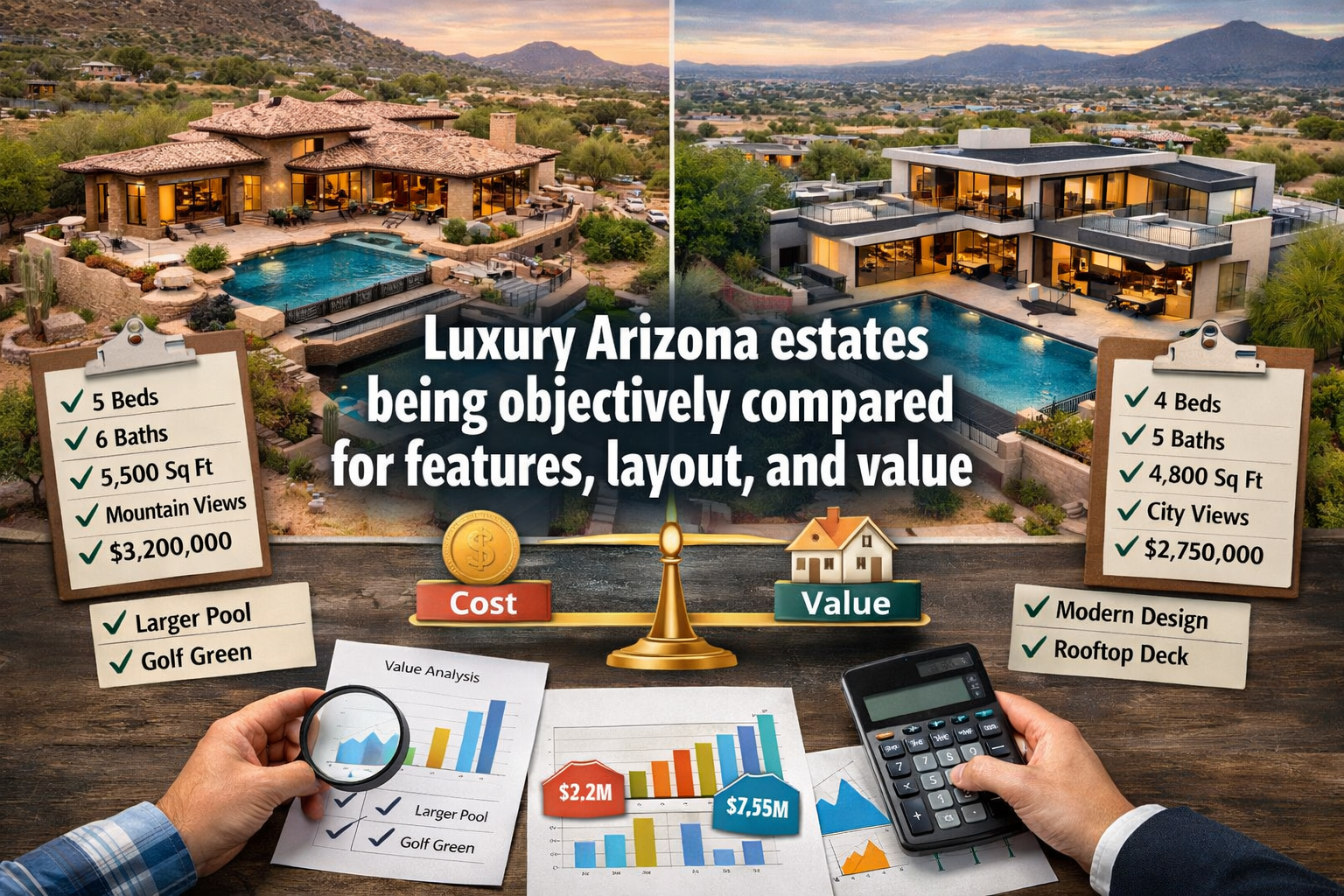
In Arizona luxury real estate, emotions run high.
High-net-worth buyers often fall in love with a feature, view, or design element—only to later realize it doesn’t support long-term livability or value. Comparing homes without emotional bias is a critical skill to avoid regret and make strategic decisions.
Mary Murphy of The Murphy Group explains:
“Luxury buyers can’t rely on gut reactions alone. Objective analysis—paired with clear lifestyle priorities—ensures they choose a home that delivers both emotional satisfaction and long-term value.”
🏡 1. Establish Objective Criteria First
Before touring, define non-negotiable factors:
- Floor plan and layout functionality
- Privacy and noise considerations
- Outdoor space usability and climate adaptation
- Location, views, and neighborhood amenities
- Budget and projected maintenance costs
Setting these standards first allows buyers to score homes consistently, avoiding decisions based solely on instant attraction.
🧠 2. Quantify Lifestyle Features
High-net-worth buyers often overvalue visual appeal. To counter this:
- Assign importance weights to features: kitchen flow, pool usability, master suite location
- Compare each home against a structured checklist
- Separate emotional reactions (wow factor) from functional assessment
This method ensures clear, rational evaluation without ignoring personal lifestyle needs.
🌄 3. Consider Long-Term Livability
Beyond aesthetics, assess:
- How the home works day-to-day
- Ease of entertaining or hosting family
- Storage, utility, and service flow
- Temperature comfort, orientation, and energy efficiency
Luxury buyers increasingly realize livability trumps show-stopping design when comparing properties.
📈 4. Integrate Market and Investment Perspective
Objective comparison includes financial considerations:
- Historical and projected appreciation
- Resale potential and market scarcity
- HOA rules, property taxes, and carrying costs
Even when buyers are emotionally drawn to one home, evaluating market fundamentals prevents overpaying or regret.
🔄 5. Step Back Between Tours
Emotional bias often emerges from immediate reactions:
- Pause a day or two after visiting a home
- Review your checklist and rankings objectively
- Discuss pros and cons with a trusted agent
Mary adds, “Sometimes the home you love most in the moment isn’t the one you’ll enjoy living in for years.”
🏁 Final Takeaway
Luxury buyers succeed when they balance emotion with structured evaluation.
By setting objective criteria, quantifying lifestyle needs, and factoring in long-term value, buyers can confidently compare Scottsdale, Paradise Valley, and East Valley homes—and make decisions they feel great about for years.
📲 Professional Guidance for Objective Comparison
Through personalized checklists, market insight, and lifestyle-focused strategies, The Murphy Group helps Arizona luxury buyers compare high-end homes objectively—without losing the joy of discovery.
Learn how to evaluate homes confidently at mgsells.com

Mary Murphy
Team Leader | The Murphy Group - AZ | eXp Luxury | PLACE
or another way