

Categories
Arizona Luxury, Arizona Real Estate, Scottsdale Real Estate, Scottsdale Housing Market, Paradise Valley Luxury, Home Buying TipsPublished June 18, 2026
How Privacy-Oriented Home Design Is Shaping Arizona's Next Generation of Luxury Homes

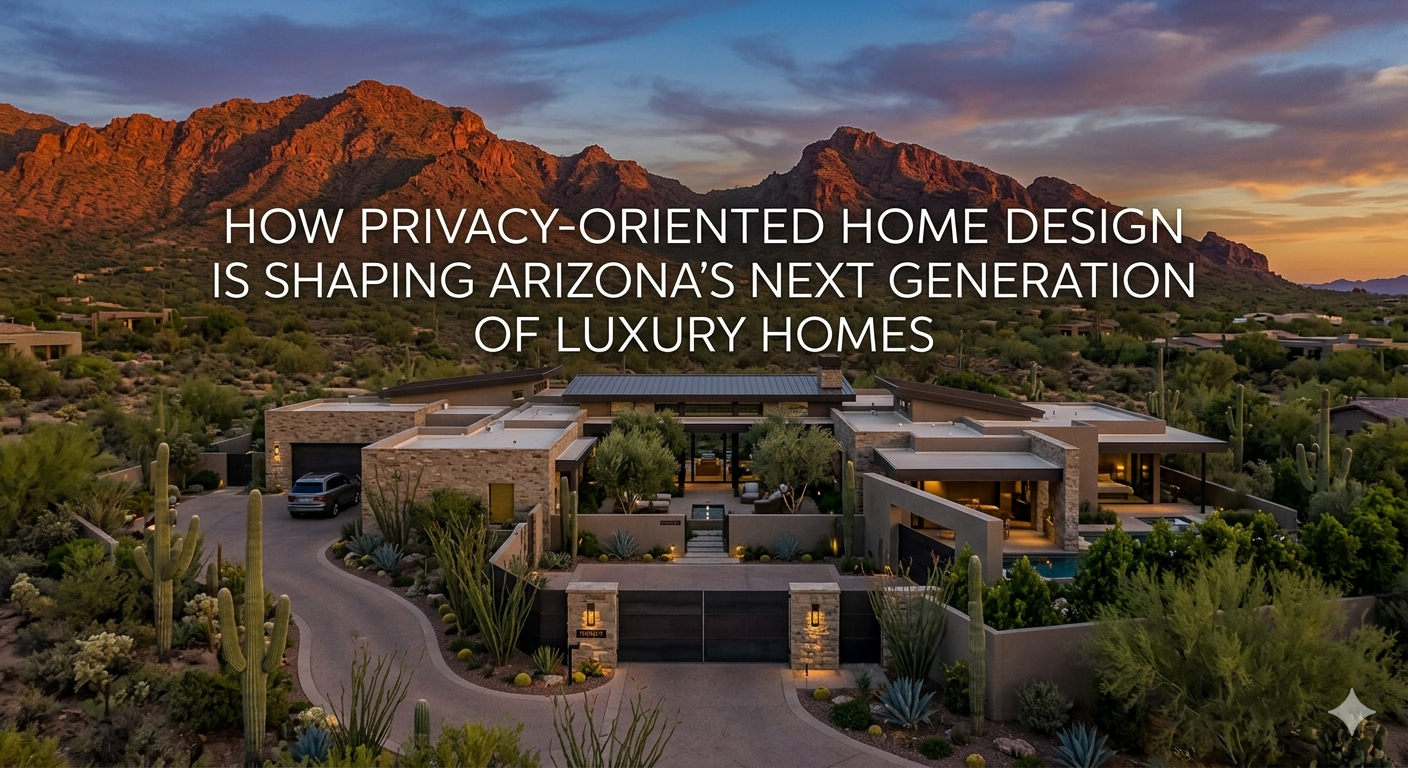
In today’s luxury market, visibility is no longer the ultimate status symbol.
Privacy is.
Across Scottsdale, Paradise Valley, and Arizona’s emerging luxury enclaves, high-net-worth buyers are reshaping demand around one central expectation:
👉 homes that feel secluded, controlled, and intentionally shielded from exposure.
This shift is influencing everything from architecture and landscaping to lot selection and technology integration.
As Mary Murphy of The Murphy Group explains:
"Luxury buyers are no longer asking just for views—they’re asking for views without exposure."
🏡 1. The Rise of “Invisible Luxury” Architecture
Modern luxury homes are being designed to reduce visibility from the outside in.
Key design strategies include:
- Low-profile street-facing facades
- Minimal front-window exposure
- Courtyard-centered layouts
- Split-wing floor plans for separation
- Subterranean or recessed living areas
The goal is simple: control sightlines at every angle.
🌵 2. Lot Positioning as a Privacy Tool
In Arizona luxury real estate, privacy begins with land selection.
High-value lot features now include:
- Elevated parcels above street level
- Cul-de-sac positioning
- Adjacent desert preserves
- Large setback requirements
- Natural terrain buffers
Buyers are prioritizing “hidden” geography over traditional curb appeal.
🌴 3. Landscaping as a Privacy Infrastructure
Desert landscaping is no longer just aesthetic—it’s functional screening.
Privacy-focused design uses:
- Mature desert trees for sightline blocking
- Layered cactus and shrub buffers
- Earth berms and elevation changes
- Strategic rock formations
- Natural fencing alternatives
This creates seclusion without visual heaviness.
🧠 4. Floor Plans Built Around Separation and Flow
Privacy-oriented homes often separate spaces by function and occupancy.
Common layouts include:
- Primary suites isolated from guest wings
- Dedicated office zones away from social areas
- Detached casitas for visitors or staff
- Multi-wing estate designs
- Separate entry points for service access
This allows multiple activities without overlap or disruption.
🔐 5. Smart Security as a Design Layer
Security is now integrated into architecture—not added afterward.
Luxury homes increasingly include:
- Discreet surveillance systems
- AI-powered perimeter monitoring
- Smart gate and access control
- Motion-based lighting zoning
- Remote monitoring via mobile systems
The focus is seamless protection without visual intrusion.
🪟 6. Glass Design Without Exposure
Arizona homes rely heavily on glass—but privacy concerns are reshaping its use.
Innovations include:
- One-way privacy glazing
- Strategic window angling away from neighbors
- Interior courtyards instead of exterior exposure
- Clerestory windows for light without visibility
- Automated shading systems
This balances openness with discretion.
🌅 7. Outdoor Living Designed for Seclusion
Outdoor luxury spaces are being redesigned for private enjoyment.
Key trends include:
- Enclosed courtyard pools
- Privacy walls integrated into landscape design
- Sunken seating areas
- Covered outdoor living rooms
- Layered elevation patios
Even outdoor entertainment is becoming inward-facing.
🏠 8. Gated Communities vs. Private Estate Independence
Buyers now weigh two forms of privacy:
Gated communities:
- Controlled access points
- Shared security infrastructure
- Community oversight
Private estates:
- Full autonomy and separation
- Larger lot sizes
- Natural buffer zones
Both are growing, but estate-style privacy is increasingly favored at the ultra-luxury level.
📍 9. Micro-Locations That Maximize Discretion
Certain Arizona micro-markets are especially aligned with privacy demand:
- North Scottsdale hillside estates
- Desert preserve-adjacent parcels
- Paradise Valley interior streets
- East Valley estate pockets with larger lots
These areas naturally reduce density and visibility.
🧘 10. Privacy as a Wellness Feature
Privacy is no longer just about security—it’s about lifestyle wellness.
Buyers associate it with:
- Lower stress environments
- Reduced visual noise
- Emotional calm and retreat
- Focused work-from-home conditions
- Greater family intimacy
Seclusion is becoming part of the luxury wellness equation.
📈 Why Privacy Demand Is Accelerating
Several macro trends are driving this shift:
- Increased wealth migration into Arizona
- Remote and hybrid work lifestyles
- Rising concerns over visibility and security
- Social media fatigue among affluent buyers
- Preference for quiet luxury over display
The result: privacy has become a primary value driver.
💼 How The Murphy Group Interprets Privacy in Luxury Homes
The Murphy Group evaluates privacy not as a feature—but as a system.
Their approach includes:
- Analyzing sightline exposure maps
- Evaluating neighbor proximity and elevation
- Assessing architectural concealment strategies
- Identifying long-term privacy risks from development
As Mary Murphy notes:
"True privacy isn’t just where a home sits—it’s how it feels when you are inside it."
📊 The Bottom Line
Privacy-oriented design is redefining Arizona luxury real estate.
It now influences:
👉 Architecture
👉 Lot selection
👉 Landscaping
👉 Technology
👉 Lifestyle experience
Because in the next generation of luxury homes, the most valuable feature isn’t what you can show—
👉 It’s what you can protect from view.
📲 Explore Private Arizona Luxury Estates
If you’re searching for a home designed around discretion, seclusion, and long-term privacy value, The Murphy Group can help you identify the most exclusive opportunities in Arizona.
👉 Start here: www.mgsellsarizona.com

Mary Murphy
Team Leader | The Murphy Group - AZ | eXp Luxury | PLACE
or another way