

Categories
Arizona Luxury, Arizona Real Estate, Scottsdale Real Estate, Scottsdale Luxury Real Estate, North Scottsdale Market Update, North Scottsdale real estate, Paradise Valley Luxury, Paradise Valley Real Estate, Luxury Homeowners, Luxury Property History, luxury home buying guide, home renovations, East Valley, East Valley Luxury, East Valley real estatePublished October 9, 2026
How Ownership History Can Influence the Story and Appeal of an Arizona Luxury Property

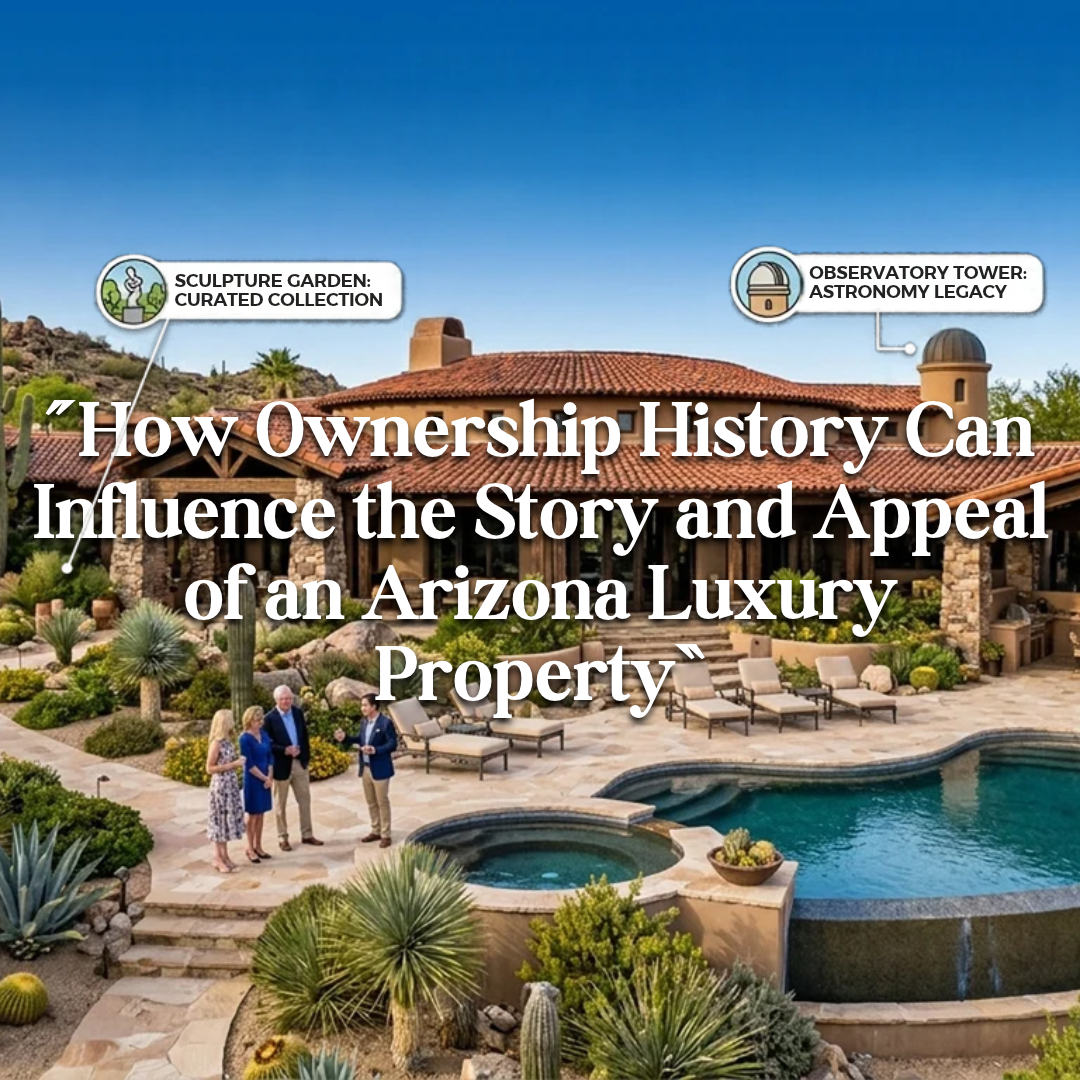
Some luxury homes impress buyers immediately.
The architecture makes a statement.
The landscaping feels established.
The interior reflects a distinctive design vision.
The outdoor spaces seem perfectly suited to Arizona living.
But behind every property is a story that photographs rarely tell.
Who built the home?
Why was it designed that way?
How many times has it changed hands?
Which owners invested in improvements?
Were original architectural details preserved?
How has the property been maintained over the years?
For luxury buyers, these questions can reveal another dimension of a property's appeal.
Ownership history isn't just a record of who held the keys. It can help explain how an estate became the property you see today.
That history may uncover thoughtful renovations, distinctive craftsmanship, long-term maintenance practices, or changes that deserve closer examination before a purchase.
Understanding the property's past won't guarantee its future performance or value. But it can help buyers make a more informed decision about the home they're considering.
🏡 1. The Original Owner May Explain the Home's Design
Some luxury estates were built around a very specific vision.
Perhaps the original owner wanted to maximize mountain views.
Maybe the home was designed for large gatherings, multigenerational living, or a private retreat.
Perhaps the owner commissioned custom architecture or specialized outdoor spaces.
Learning about the home's original purpose can help explain details that might otherwise seem unusual.
A separate guest wing, an oversized entertaining area, a dedicated library, or a particular arrangement of rooms may have been intentional rather than incidental.
The original design story can provide valuable context when deciding whether the home suits your lifestyle.
📐 2. Original Plans Can Reveal What Photographs Cannot
Listing photographs show the current appearance of a property.
Original plans, when available, can offer a different perspective.
They may help buyers understand:
- The original floor plan
- Structural layout
- Room dimensions
- Architectural intent
- Major additions
- Changes to interior circulation
- The relationship between indoor and outdoor spaces
These records can be especially helpful when a home has undergone several renovations.
Comparing original plans with the current layout may help identify changes worth discussing with the appropriate professionals.
🔨 3. Renovation History Can Tell You How the Property Evolved
A luxury estate may have been updated many times during its life.
One owner may have remodeled the kitchen.
Another may have expanded the primary suite.
A later owner may have added a guest house, renovated the pool, or upgraded the home's technology.
These changes can influence the property's current functionality and character.
But the important question isn't simply how much money was spent.
It's what changed, why it changed, and how the work was completed.
Where available, request documentation of major renovations, including permits, contractor information, warranties, and plans.
The details can help you distinguish between cosmetic updates and more substantial improvements.
💎 4. Custom Features May Reflect a Previous Owner's Priorities
Luxury homes often contain features that go beyond standard construction.
Custom cabinetry.
Handcrafted woodwork.
Specialty stone.
Imported tile.
Architectural metalwork.
Bespoke lighting.
Unique built-ins.
These details may reflect the preferences of an original owner or a later renovation.
Understanding when and how these features were introduced can help buyers appreciate the home's design while identifying any special care requirements.
Some custom features may be difficult or expensive to reproduce.
Others may need specialized maintenance.
Their appeal depends on both their craftsmanship and their suitability for the next owner.
🧰 5. Maintenance History Can Be More Valuable Than a Beautiful Upgrade
A recently remodeled bathroom can be impressive.
A new kitchen can transform the home.
But less visible records may tell buyers just as much about ownership.
Consider the maintenance history of:
- HVAC systems
- Roofing
- Plumbing
- Electrical systems
- Pool equipment
- Irrigation
- Exterior finishes
- Windows and doors
- Smart-home technology
Consistent maintenance documentation can help buyers understand how the property has been cared for.
Missing records don't automatically mean a home was neglected. They simply create questions that may require additional investigation.
🌵 6. Arizona's Climate Makes Property History Especially Relevant
Arizona homes experience environmental conditions that can influence maintenance and long-term performance.
Intense sunlight, seasonal heat, dust, monsoon storms, and local drainage conditions can affect different materials and systems.
A property's history may help explain how these factors have been managed.
For example, buyers may want to ask about:
- Roof inspections and repairs
- Exterior paint and finishes
- Window and door maintenance
- HVAC servicing
- Drainage improvements
- Pool equipment
- Irrigation repairs
- Landscape replacements
The goal isn't to assume a particular home has a problem.
It's to understand how the property has responded to its environment over time.
🏊 7. Outdoor Improvements Deserve Their Own Timeline
In Arizona luxury real estate, the property's outdoor environment can be nearly as important as the interior.
A pool may have been resurfaced.
A patio may have been expanded.
An outdoor kitchen may have been added.
Landscaping may have been redesigned.
A ramada, sport court, or detached structure may have been introduced.
Ask when these improvements were completed and whether documentation is available.
This information may help clarify the age of equipment, the scope of the work, and any maintenance or warranty considerations.
It can also help buyers understand how the outdoor experience has changed over time.
🏗️ 8. Additions Can Reveal Important Questions About the Property
A home that has grown over several decades may look cohesive today.
However, different sections may have been constructed at different times.
An addition could have introduced new systems, altered the floor plan, or changed the relationship between indoor and outdoor areas.
When reviewing ownership history, ask about substantial additions and whether the relevant permits and records are available.
Depending on the project, buyers may also need professional guidance regarding structural work, electrical systems, plumbing, and other building components.
The objective is to understand the property as it exists today—not simply as it was originally built.
📋 9. Permits and Records Help Put Improvements Into Context
A previous owner's description of a renovation is useful background, but documentation can provide additional clarity.
Depending on the property and project, relevant records may include:
- Building permits
- Approved plans
- Final inspection records
- Contractor invoices
- Warranties
- Equipment documentation
- Engineering reports
- Receipts for major improvements
Not every project will have the same documentation requirements, and the availability of older records can vary.
For significant work, buyers should consult the relevant local building department and qualified professionals to determine what records exist and what further review is appropriate.
🔄 10. Changes in Ownership Can Explain Changes in Lifestyle
Different owners may use the same property in very different ways.
One family may have prioritized entertaining.
Another may have preferred quiet, private spaces.
A later owner may have worked from home and added an office.
Someone else may have redesigned the grounds around wellness or recreation.
These changes can explain why a home contains particular rooms or amenities.
They can also help buyers identify which features align with their own needs and which might require modification.
The history isn't necessarily a reason to keep everything as it is.
It is a starting point for understanding the choices that shaped the property.
🪟 11. Original Character Can Be Part of the Home's Appeal
Some luxury properties retain architectural elements that give them a distinctive identity.
Original windows.
Custom staircases.
Decorative ceilings.
Specialty flooring.
Stonework.
Millwork.
Unique exterior details.
If these features have been preserved, they may contribute to the property's character.
Buyers should consider both their aesthetic value and their practical condition.
An original feature may be beautiful, but it could also require specialized restoration or maintenance.
Understanding its age, materials, and previous care helps put its appeal into perspective.
🏠 12. A Property's History Can Help Explain Its Floor Plan
The layout of a luxury estate may reflect the expectations of the period in which it was built.
Older homes might emphasize formal entertaining rooms.
Newer designs may focus more on open kitchens, flexible living spaces, or direct indoor-outdoor connections.
Renovations can create a blend of different design eras.
Ownership history may help buyers understand why the home is arranged as it is today.
More importantly, it can help them determine whether the existing layout works for their daily routines—or whether future changes might be desirable.
🌳 13. Landscaping Has a History, Too
Mature landscaping can make an estate feel established and private.
But the current landscape may have taken decades to develop.
Trees may have been planted by an original owner.
Privacy hedges may have been introduced later.
A garden may have been redesigned around a new pool.
Irrigation zones may have changed as the property evolved.
Ask whether landscape plans, irrigation records, or information about significant plantings are available.
Understanding the history can help new owners preserve the elements they value while making informed decisions about future changes.
🧾 14. Ownership History Can Help Identify Recurring Issues
A property's records may reveal recurring repairs or maintenance concerns.
For example, invoices and service reports might show repeated work involving a particular HVAC unit, drainage area, gate, pool component, or roof section.
A single repair does not necessarily indicate a larger problem.
However, a pattern may justify additional questions.
Review available records alongside the seller's disclosures, inspection findings, and advice from qualified specialists.
The purpose is to understand whether a concern was resolved, remains ongoing, or requires further investigation.
🔍 15. Don't Confuse a Long Ownership Period With Perfect Maintenance
A home that has been owned by the same person for many years may have a compelling story.
Long-term ownership can provide an opportunity to learn about the property's evolution and maintenance practices.
But the length of ownership alone doesn't establish the property's condition.
Similarly, a home that has changed hands several times isn't automatically a poor choice.
What matters more is the available evidence:
- Maintenance records
- Renovation documentation
- Inspection results
- Disclosures
- Equipment condition
- Professional evaluations
The ownership timeline is useful context, not a substitute for due diligence.
🏛️ 16. Understand the Property's Legal and Recorded History
For some buyers, understanding a luxury property's history also means reviewing relevant public records.
Depending on the property, research may involve recorded ownership transfers, title documents, permits, parcel information, and other available records.
This can help establish a clearer picture of the property's documented past.
However, public records may not tell the entire story. They may not capture every informal arrangement, maintenance decision, or improvement.
For questions about title, legal interests, or recorded restrictions, buyers should consult the appropriate title professional or real estate attorney.
📈 17. A Compelling Story Doesn't Guarantee Future Value
A luxury property may have an interesting history.
Perhaps it was designed by a notable architect.
Perhaps it contains distinctive original materials.
Perhaps its previous owners invested significantly in the grounds.
These details can add character and may appeal to certain buyers.
But a compelling story doesn't automatically guarantee a higher resale price or stronger appreciation.
Future value depends on many factors, including location, condition, design, market conditions, buyer demand, and the property's practical functionality.
The history should inform the decision—not replace a realistic assessment of the property.
📝 18. Create a Property Timeline Before You Buy
If you're seriously considering an estate, organize what you learn into a simple timeline.
For example:
| Period | What to investigate |
|---|---|
| Original construction | Builder, architect, plans, original design |
| Major renovations | Scope, contractors, permits, warranties |
| System replacements | HVAC, roof, plumbing, pool equipment |
| Landscape changes | Irrigation, trees, outdoor improvements |
| Recent ownership | Maintenance, repairs, upgrades, known issues |
The available information will vary from one property to another.
Even an incomplete timeline can help you identify gaps and ask more focused questions during due diligence.
🧭 19. Ask Whether the Home's Story Fits Your Plans
A property can be architecturally distinctive and still not be the right fit for every buyer.
Maybe the original layout no longer suits your needs.
Maybe the custom finishes require more upkeep than you want.
Maybe the outdoor environment is exactly what you've been looking for.
Maybe previous improvements have already addressed the changes you would otherwise have made.
Use the property's history to evaluate how well its existing features align with your priorities.
The question isn't whether the home has a fascinating past.
It's whether the property, as it stands today, works for the life you want to live.
💬 A Murphy Group Perspective
“Every luxury property has a story beyond what buyers see during a showing. Understanding how a home was built, maintained, and improved over time can help buyers appreciate its character while asking the right questions about its condition and future potential.”
— Mary Murphy, The Murphy Group
A property's history can add meaning to the buying experience.
But the most useful history is the kind that helps you understand the home clearly, from its distinctive features to the practical realities of ownership.
📊 The Bottom Line
A luxury property's ownership history can help explain how it became what it is today.
It may reveal:
- The original design vision
- Distinctive architectural features
- Major renovations and additions
- Maintenance practices
- Outdoor improvements
- Changes in layout and functionality
- Recurring issues worth investigating
- Records that can support future ownership
Not every property will have a complete history, and not every detail will affect its value.
But the more you understand about the estate's past, the better prepared you may be to evaluate its present condition and future potential.
Look beyond the finishes. Ask how the home evolved. Review the records. And let the property's history help you ask better questions before you make your decision.
📲 Explore Arizona Luxury Real Estate With the Full Story in Mind
If you're searching for a luxury home in Scottsdale, Paradise Valley, North Scottsdale, or the East Valley, The Murphy Group can help you look beyond the listing photographs and evaluate the broader property story.
From architectural character and renovation history to outdoor living, maintenance considerations, functionality, and long-term ownership questions, understanding the home in context can help you make a more informed decision.
Because the best way to appreciate a luxury property is to understand not only what it is today, but how it became that way.

Mary Murphy
Team Leader | The Murphy Group - AZ | eXp Luxury | PLACE
or another way