

Categories
Arizona Real Estate, Arizona Luxury, East Valley Luxury, East Valley real estate, Real Estate Due Diligence, Arizona architecture, North Scottsdale homes, Paradise Valley Luxury, Paradise Valley Real Estate, Scottsdale Luxury Real Estate, Scottsdale Real EstatePublished November 12, 2026
Buying an Arizona Luxury Property With a Private Bridge or Elevated Walkway

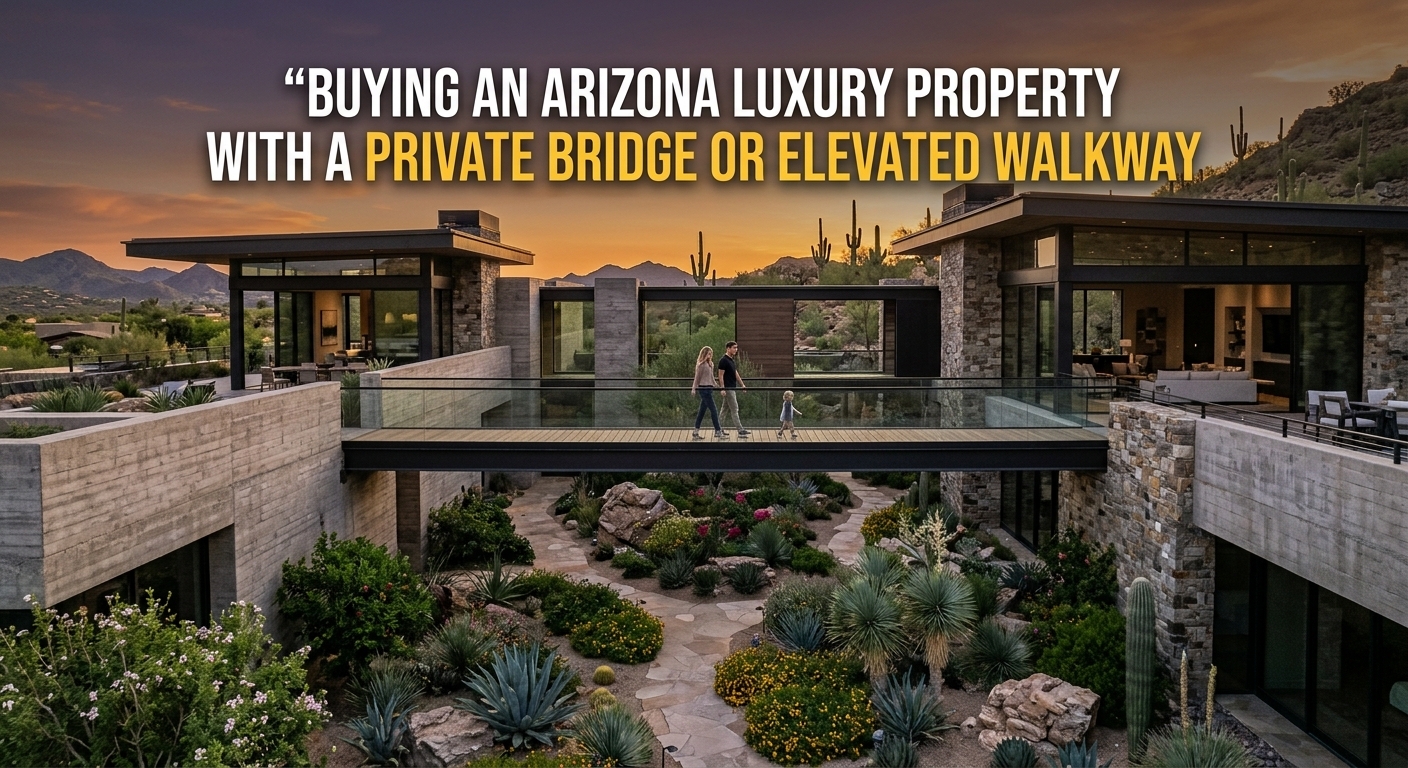
A private bridge or elevated walkway can give an Arizona luxury property a distinctive architectural character. Whether it connects two sections of a hillside estate, crosses a landscaped wash, links a guest residence to the main home, or provides access to an elevated outdoor retreat, this feature can turn an ordinary transition between spaces into an impressive design element.
In some luxury residences, bridges and elevated walkways are primarily functional. In others, they are carefully designed architectural features that create dramatic views, preserve the natural terrain, and connect indoor and outdoor living areas.
However, these structures deserve more than a visual inspection during the buying process.
An elevated walkway must be supported by an appropriate structural system, properly connected to the surrounding buildings or foundations, and designed to accommodate its intended use. A private bridge crossing a drainage area may also introduce questions about runoff, erosion, flood exposure, and maintenance access.
In Arizona, where properties may be built on sloping terrain, near natural washes, or across landscaped changes in elevation, understanding the design and condition of these features is particularly important.
For buyers considering luxury homes in Scottsdale, Paradise Valley, North Scottsdale, and the East Valley, a private bridge or elevated walkway should be evaluated as an important part of the property's overall construction, safety, and long-term ownership requirements.
Here are the key considerations to review before purchasing.
1. Understand the Purpose and Design of the Bridge or Walkway
Not every elevated walkway serves the same purpose. Before evaluating its condition, buyers should understand why it was built and how it fits into the property's layout.
Common examples include:
- Connecting walkways: Elevated paths that connect separate sections of a residence or different levels of a property.
- Private pedestrian bridges: Structures that cross a wash, landscaped channel, garden, driveway, or other gap.
- Hillside bridges: Walkways designed to provide access across sloping or uneven terrain.
- Architectural bridges: Features that connect two building sections while creating an open space beneath them.
- Garden bridges: Smaller structures that cross landscaped water features, dry creek beds, or decorative drainage areas.
- Elevated viewing platforms: Walkways that lead to terraces, observation areas, or outdoor entertaining spaces.
The intended use matters because a structure designed for occasional pedestrian access may have different requirements from one used frequently by residents, guests, or service personnel.
Buyers should also determine whether the bridge is essential for accessing a major part of the home or simply an optional architectural feature.
If it provides the only practical connection between two living areas, its condition and accessibility become especially important.
2. Evaluate the Structural Integrity of the Bridge
Although the structure may appear solid, its safety depends on more than the visible walking surface. The supporting beams, columns, connections, foundations, anchors, and other structural components all contribute to its performance.
A qualified structural engineer should evaluate the bridge when its design, age, condition, or available documentation raises questions.
Important areas to examine include:
Support beams and framing
Determine what materials support the walkway and whether the framing shows signs of deterioration, corrosion, cracking, deformation, or other visible damage.
Columns and supports
Check whether support columns are stable and properly connected to their foundations. Movement, settlement, or visible separation may warrant further investigation.
Connections and fasteners
Bolts, brackets, welds, anchors, and other connections should be reviewed for corrosion, loosening, damage, or signs of movement.
Foundations and footings
The supporting foundations should be evaluated for settlement, erosion, cracking, and exposure to water or shifting soil.
Walking surface
Inspect the deck, flooring, joints, and transitions for uneven areas, damaged materials, loose boards, or deterioration.
A bridge should not be considered structurally sound simply because it feels stable when someone walks across it. A professional assessment can help identify conditions that are not readily visible during a routine showing.
3. Identify the Materials Used in Construction
The materials used for a private bridge or elevated walkway can influence its durability, maintenance requirements, appearance, and long-term ownership costs.
Luxury properties may incorporate several materials depending on the architectural style and location of the structure.
Steel
Steel can provide strength and allow for visually striking designs with relatively slender structural elements. However, exposed steel components should be checked for corrosion, coating deterioration, and maintenance needs.
Concrete
Concrete bridges and walkways can offer a substantial appearance and durable walking surface when properly designed and maintained. Buyers should examine visible cracking, spalling, exposed reinforcement, and signs of water intrusion.
Wood
Wood can create a warm, natural appearance, particularly in garden and landscape settings. Its condition should be assessed for rot, insect damage, splitting, moisture exposure, and deterioration at connection points.
Stone and masonry
Stone may be used for walking surfaces, supports, walls, or architectural finishes. Buyers should distinguish between decorative stonework and the actual structural support system.
Composite materials
Some elevated walkways incorporate composite decking or specialty exterior materials. Buyers should identify the manufacturer, product specifications, installation details, and maintenance recommendations where available.
A bridge may combine several materials, so the inspection should consider how each component interacts with the others. For example, connections between steel supports and wood decking may require different maintenance attention than a structure built primarily from concrete.
4. Examine the Foundations and Surrounding Terrain
A private bridge does not function independently of the land supporting it.
Its foundations and surrounding terrain are important parts of the overall structure. This is particularly relevant for Arizona properties built on hillsides, uneven ground, or landscaped areas with substantial elevation changes.
Buyers should consider whether the structure is supported by:
- Concrete footings or piers
- Retaining walls
- Structural columns
- Anchored connections to buildings
- Engineered hillside foundations
- Other site-specific support systems
A walkway that crosses a landscaped depression may appear straightforward, but the ground beneath and around its supports could be affected by runoff or changes in drainage patterns.
For properties with significant slopes or complex terrain, buyers may benefit from reviewing available geotechnical reports, foundation documentation, and engineering plans.
The goal is to understand not only the condition of the bridge itself but also whether the land and support system remain suitable for its intended use.
5. Pay Close Attention to Arizona Drainage and Monsoon Runoff
Drainage deserves special attention when a private bridge crosses a wash, drainage channel, landscaped swale, or low-lying portion of the property.
Arizona's monsoon season can bring intense rainfall and rapid runoff. A feature that appears dry and stable during a property showing may experience very different conditions during a heavy storm.
Buyers should determine whether the bridge affects the natural or engineered drainage path and whether the surrounding site has been designed to accommodate water movement.
Consider the following:
- Does the bridge cross a natural wash or engineered drainage channel?
- Is water expected to pass beneath the structure?
- Are the supporting foundations protected against erosion?
- Is there visible sediment buildup around the supports?
- Does the structure obstruct or redirect runoff?
- Are nearby retaining walls and drainage features in good condition?
- Has the property experienced flooding, erosion, or drainage-related repairs?
A bridge over a drainage area should be reviewed in the context of the entire site. Water management may involve grading, drainage channels, retention areas, culverts, or other engineered features.
The City of Phoenix identifies grading and drainage, storm drains, flood protection, erosion, and retention among the areas addressed through its civil and site inspection processes. The specific requirements for a property depend on its location, project history, and applicable jurisdiction.
6. Review Guardrails, Railings, and Pedestrian Safety
The safety of an elevated walkway depends partly on its protective features.
Guardrails and handrails should be appropriate for the height, design, and intended use of the structure. Buyers should not assume that a decorative railing automatically meets applicable safety requirements.
During the inspection, review:
- Whether railings are secure and firmly attached
- Whether there are loose, damaged, or corroded components
- Whether the railing system appears continuous along exposed edges
- Whether openings or gaps create potential hazards
- Whether stairs and transitions have stable handrails where needed
- Whether the walking surface provides appropriate traction
- Whether lighting makes the walkway usable after dark
Special attention should be given to bridges used by children, older residents, guests, or people with mobility limitations.
Glass railings, minimalist metal systems, and other contemporary designs may require specific maintenance and inspection considerations.
A qualified professional should determine whether the structure and its protective features comply with the applicable building requirements.
7. Assess Accessibility and Everyday Functionality
A private bridge can be visually impressive but still present practical challenges for everyday use.
Buyers should consider how the walkway functions for the people who will actually live in the home.
For example, a bridge with a narrow walking surface, steep approach, multiple steps, or limited handrails may be less convenient for residents with mobility limitations. It may also make it difficult to move furniture, deliveries, or maintenance equipment between connected areas.
Consider these questions:
- Is the walkway wide enough for its intended use?
- Are there changes in elevation that could create trip hazards?
- Is the surface suitable for wet or dusty conditions?
- Can residents comfortably use it at night?
- Is there another route between the connected areas?
- Can service professionals access both sides for maintenance?
- Would the walkway accommodate the household's accessibility needs?
If the bridge connects the main residence to a guesthouse, pool area, or detached entertainment space, consider whether it remains practical during different weather conditions.
An architect or accessibility professional can help assess potential improvements if the existing design does not meet the household's needs.
8. Understand How Sun Exposure and Temperature Affect Materials
Arizona's intense sunlight and temperature fluctuations can affect outdoor construction materials over time.
An elevated walkway may have limited shade, especially when it crosses an open space or connects separate structures. Prolonged exposure can contribute to fading, surface deterioration, sealant wear, and changes in certain materials.
Buyers should pay attention to:
Wood finishes: Exterior coatings may fade, crack, or require periodic refinishing.
Metal components: Protective coatings may deteriorate, exposing certain metals to corrosion.
Composite decking: Product-specific recommendations should be reviewed to understand heat exposure, cleaning, and long-term maintenance.
Concrete surfaces: Cracking, surface wear, and deterioration should be evaluated, particularly where water can enter joints or exposed areas.
Expansion joints and sealants: These components may require inspection and replacement as materials move with temperature changes.
The orientation of the walkway can also affect comfort. A bridge exposed to direct afternoon sunlight may become uncomfortable to use during hotter months, while shaded sections may retain moisture longer after rain or irrigation.
Buyers should ask whether the materials and finishes were selected for outdoor exposure in Arizona and whether maintenance records are available.
9. Investigate Waterproofing, Joints, and Connections to the Home
Some elevated walkways connect directly to the main residence, a guesthouse, or another building. These connection points deserve careful attention.
Water can enter through poorly maintained joints, deteriorated sealants, or inadequately protected transitions between different building materials.
Potential concerns include:
- Cracked or deteriorated sealants
- Water staining near connection points
- Rust around metal brackets or anchors
- Deteriorated flashing
- Separation between the walkway and the building
- Moisture intrusion beneath the walking surface
- Damage to adjacent exterior walls or finishes
Where the walkway has a waterproofing system, buyers should request available installation documents, product information, and maintenance records.
The importance of waterproofing is especially significant for bridges with enclosed or finished areas beneath them, as moisture can affect concealed structural components and adjacent building materials.
A qualified inspector or building-envelope specialist can help identify areas that require further investigation.
10. Review Lighting, Electrical Systems, and Smart Features
Luxury properties may incorporate integrated lighting and technology into private bridges and elevated walkways.
These features can improve visibility, convenience, and the overall architectural experience, but they also introduce electrical components that need appropriate installation and maintenance.
Possible features include:
- Recessed walkway lighting
- LED strip lighting beneath handrails
- Step and stair illumination
- Motion-activated fixtures
- Landscape lighting
- Smart-home-controlled lighting
- Security cameras
- Automated access systems
Buyers should check whether exterior electrical components are suitable for their installation environment and whether wiring, fixtures, and connections show signs of damage or deterioration.
For automated lighting and security systems, ask whether the equipment is integrated into the home's existing smart-home platform and whether access credentials, operating instructions, and service information will be transferred at closing.
A licensed electrician should evaluate questionable installations, particularly where wiring is concealed or exposed to outdoor conditions.
11. Determine Whether the Bridge Crosses a Wash, Easement, or Restricted Area
One of the most important due diligence questions is what lies beneath or around the bridge.
A private bridge may cross a landscaped feature, but it could also span a natural wash, drainage easement, utility corridor, or other area subject to restrictions.
These distinctions can affect what the property owner may maintain, modify, or reconstruct.
Buyers should review the property's survey, title documents, recorded easements, and available site plans to understand the legal and physical boundaries involved.
Questions to investigate include:
- Does the bridge cross land entirely within the property?
- Is any portion located within a recorded easement?
- Is the area beneath the structure subject to drainage restrictions?
- Are there utility lines or access rights nearby?
- Does the structure affect a natural drainage path?
- Are there limitations on future construction or modifications?
- Is maintenance the sole responsibility of the property owner?
A title professional, real estate attorney, surveyor, or other appropriate specialist can help interpret the relevant documents.
This is particularly important when the bridge appears to connect separate portions of a large estate. Buyers should confirm that the structure and the land it occupies are consistent with the property's legal records.
12. Verify Building Permits, Engineering Plans, and Inspection Records
A private bridge or elevated walkway may involve structural construction that requires review by the local building jurisdiction.
Permit requirements vary depending on the location, type of structure, scope of work, and applicable codes. Buyers should not assume that a structure is exempt simply because it is privately owned or used only by residents.
Request available records, including:
- Original construction plans
- Structural engineering drawings
- Building permits
- Inspection approvals
- Contractor information
- Certificates or final approvals, where applicable
- Records of later modifications
- Repair and maintenance documentation
If the bridge was added after the original home was built, ask when the work was completed and whether the appropriate approvals were obtained.
The City of Phoenix explains that many civil and site projects require approved plans before permits are issued. Maricopa County also emphasizes the importance of permits and inspections in verifying minimum construction safety requirements. Requirements should be confirmed with the jurisdiction responsible for the property.
A missing permit record does not automatically establish that a structure is unsafe or unlawful. However, it is a reason to investigate further before purchasing.
Buyers should also review applicable HOA or community restrictions. Maricopa County specifically notes that obtaining a building permit does not eliminate the need to comply with applicable HOA covenants, conditions, and restrictions.
13. Evaluate Maintenance Requirements and Long-Term Ownership Costs
A private bridge can be a distinctive feature, but it also creates an additional structure that may require periodic inspection, cleaning, repair, and eventual replacement of certain components.
Maintenance needs will depend on its design, materials, age, exposure, and engineering.
Potential recurring expenses may include:
- Cleaning and sealing walking surfaces
- Repainting or refinishing exposed materials
- Repairing or replacing deck boards
- Maintaining railings and fasteners
- Inspecting structural connections
- Servicing lighting and electrical systems
- Replacing waterproofing materials
- Repairing drainage features
- Addressing erosion around supports
- Professional structural evaluations
Buyers should ask whether the seller has maintained the structure according to manufacturer or engineer recommendations.
If the bridge is a major architectural feature, it may be worth obtaining an estimate of likely maintenance needs from a qualified contractor or specialist before closing.
The cost of maintaining a private bridge should be considered alongside other property expenses, especially when the estate includes multiple elevated walkways, retaining walls, hillside structures, or extensive outdoor features.
14. Consider Insurance and Liability Implications
A private bridge is part of the overall property and may need to be considered when reviewing homeowners insurance.
However, buyers should not assume that every structure, design feature, or potential liability is automatically covered in the same way.
Ask the insurance professional to clarify:
- Whether the bridge is included in the property's insured structures
- Whether its replacement value has been considered
- Whether detached or separate structures require additional coverage
- Whether any exclusions or limitations apply
- Whether the insurer requires an inspection or documentation
- Whether the structure affects liability considerations
The insurer may request information about the bridge's construction, age, condition, and intended use.
For a high-value estate, it is important to make sure the insurance assessment reflects the property's actual features rather than relying on a general estimate.
If the bridge is shared with another property owner or crosses land subject to third-party rights, buyers should also seek appropriate legal and insurance guidance about responsibility and liability.
15. Assess the Bridge's Contribution to the Property's Value and Appeal
A private bridge can make a luxury property memorable. It may provide a dramatic architectural connection, preserve views, improve circulation, or create a unique experience as residents move between different parts of the estate.
Its appeal may be particularly strong when the design complements the surrounding architecture and landscape.
However, buyers should distinguish between visual appeal and practical value.
A well-maintained, properly documented bridge that provides convenient access may contribute positively to the property's overall experience. A structure with unclear permits, deteriorating materials, limited functionality, or expensive maintenance requirements may instead create additional ownership responsibilities.
Consider whether the bridge:
- Serves a meaningful purpose within the property's layout
- Complements the architectural design
- Provides safe and convenient access
- Is appropriately integrated with the surrounding landscape
- Has documentation supporting its construction
- Can be maintained without unusual difficulty
- Is likely to appeal to future buyers
The goal is not to assign a separate market value to the bridge based on appearance alone. Its contribution should be considered as part of the property's complete design, condition, and functionality.
16. Questions to Ask Before Purchasing a Property With a Private Bridge
Before making an offer or proceeding through due diligence, buyers should gather as much information as possible about the structure.
Consider asking the seller, listing representative, inspector, and relevant professionals:
- When was the private bridge or elevated walkway constructed?
- What materials were used for its structural supports and walking surface?
- Are original architectural and engineering plans available?
- Were permits obtained when required?
- Are final inspections or approval records available?
- Has the bridge experienced movement, settlement, cracking, or water damage?
- Has it undergone structural repairs or modifications?
- Does it cross a natural wash, drainage channel, or recorded easement?
- How is runoff managed beneath and around the structure?
- What routine maintenance does the bridge require?
- Are there manufacturer warranties or contractor service records?
- Has the structure been evaluated by a qualified structural engineer?
- Does the homeowners insurance policy account for the bridge?
- Are there HOA restrictions affecting repairs or modifications?
- Are there any known accessibility or safety concerns?
The answers can help buyers determine whether the feature is simply an attractive design element or a structure that requires additional professional review.
17. How The Murphy Group Arizona Approaches Distinctive Architectural Features
A private bridge or elevated walkway can be one of the defining elements of an Arizona luxury estate. It may connect separate living spaces, create a striking architectural perspective, or provide access to an outdoor area that would otherwise be difficult to reach.
But distinctive design features should always be considered alongside their practical ownership requirements.
The Murphy Group Arizona encourages buyers to look beyond a property's visual impact and understand the details that contribute to its long-term functionality. Structural condition, engineering records, drainage, easements, permits, maintenance, and insurance considerations can all influence the ownership experience.
As Mary Murphy might emphasize, exceptional real estate is about more than what makes a home impressive at first glance. It is also about understanding how the property works, how it has been maintained, and what may be required to preserve its value over time.
For a residence with a private bridge or elevated walkway, the appropriate specialists can help buyers evaluate the structure while The Murphy Group Arizona helps them consider the property within the broader context of their lifestyle and real estate goals.
Frequently Asked Questions About Private Bridges and Elevated Walkways in Arizona Luxury Homes
Are private bridges common in Arizona luxury homes?
They are distinctive rather than standard residential features. Some luxury properties incorporate elevated walkways or private bridges to connect separate building sections, cross landscaped areas, navigate hillside terrain, or create architectural interest.
Should a private bridge be inspected before purchasing a home?
Yes. Buyers should include the structure in their property due diligence. Depending on its design, age, and condition, a qualified structural engineer may be appropriate in addition to a general home inspection.
Do private bridges require building permits in Arizona?
Permit requirements depend on the structure, scope of work, and local jurisdiction. Buyers should request available construction and approval records and confirm requirements with the applicable building department.
What should buyers look for when inspecting an elevated walkway?
Important areas include the supporting structure, foundations, connections, railings, walking surface, drainage, waterproofing, and electrical features. Signs of movement, corrosion, cracking, or water intrusion may require further professional evaluation.
Can a private bridge affect homeowners insurance?
It can be relevant to the insurer's assessment of the property, including the structures that need coverage and their replacement value. Buyers should disclose the feature and confirm coverage directly with their insurance professional.
What if the bridge crosses a natural wash?
Buyers should investigate drainage conditions, flood exposure, erosion, easements, and any applicable restrictions. A qualified civil or structural engineer may be needed to assess the site's conditions and the structure's relationship to the drainage area.
Does a private bridge add value to a luxury home?
It may enhance architectural appeal, functionality, and the overall experience of the property. Its contribution depends on the quality of design, condition, usefulness, maintenance requirements, and buyer demand. It should not be assumed to add a fixed amount to market value.
The Bottom Line
A private bridge or elevated walkway can give an Arizona luxury property a distinctive identity while improving access between different parts of an estate. However, its value should be considered alongside its structural condition, construction history, drainage, safety features, legal status, and ongoing maintenance needs.
For buyers exploring luxury homes in Scottsdale, Paradise Valley, North Scottsdale, and the East Valley, careful evaluation of these architectural features can help uncover important details that may not be apparent during a showing.
The most impressive property is not simply one with extraordinary design. It is one whose distinctive features are also functional, properly maintained, and suitable for long-term ownership.
Explore Arizona Luxury Real Estate With The Murphy Group Arizona
If you're considering a luxury home in Scottsdale, Paradise Valley, North Scottsdale, or the East Valley, The Murphy Group Arizona can help you look beyond the listing photos and consider the property, neighborhood, and long-term ownership experience.
From private bridges and elevated walkways to structural integrity, drainage, property access, and architectural details, a thoughtful approach to due diligence can help you make a more informed decision.
Explore Arizona luxury real estate with The Murphy Group Arizona and discover your next exceptional property.
Website: www.mgsellsarizona.com

Mary Murphy
Team Leader | The Murphy Group - AZ | eXp Luxury | PLACE
or another way