

Categories
Private Home Theater, luxury home buying guide, Scottsdale Luxury Real Estate, Scottsdale Real Estate, Arizona Luxury, Arizona Real Estate, Arizona homebuyers, East Valley, East Valley Luxury, East Valley real estate, Home Buying Tips, North Scottsdale homes, Paradise Valley Luxury, Paradise Valley Real Estate, Real Estate Due Diligence, Scottsdale Housing MarketPublished October 21, 2026
Buying a Luxury Estate With a Private Theater: Features That Affect Comfort and Value

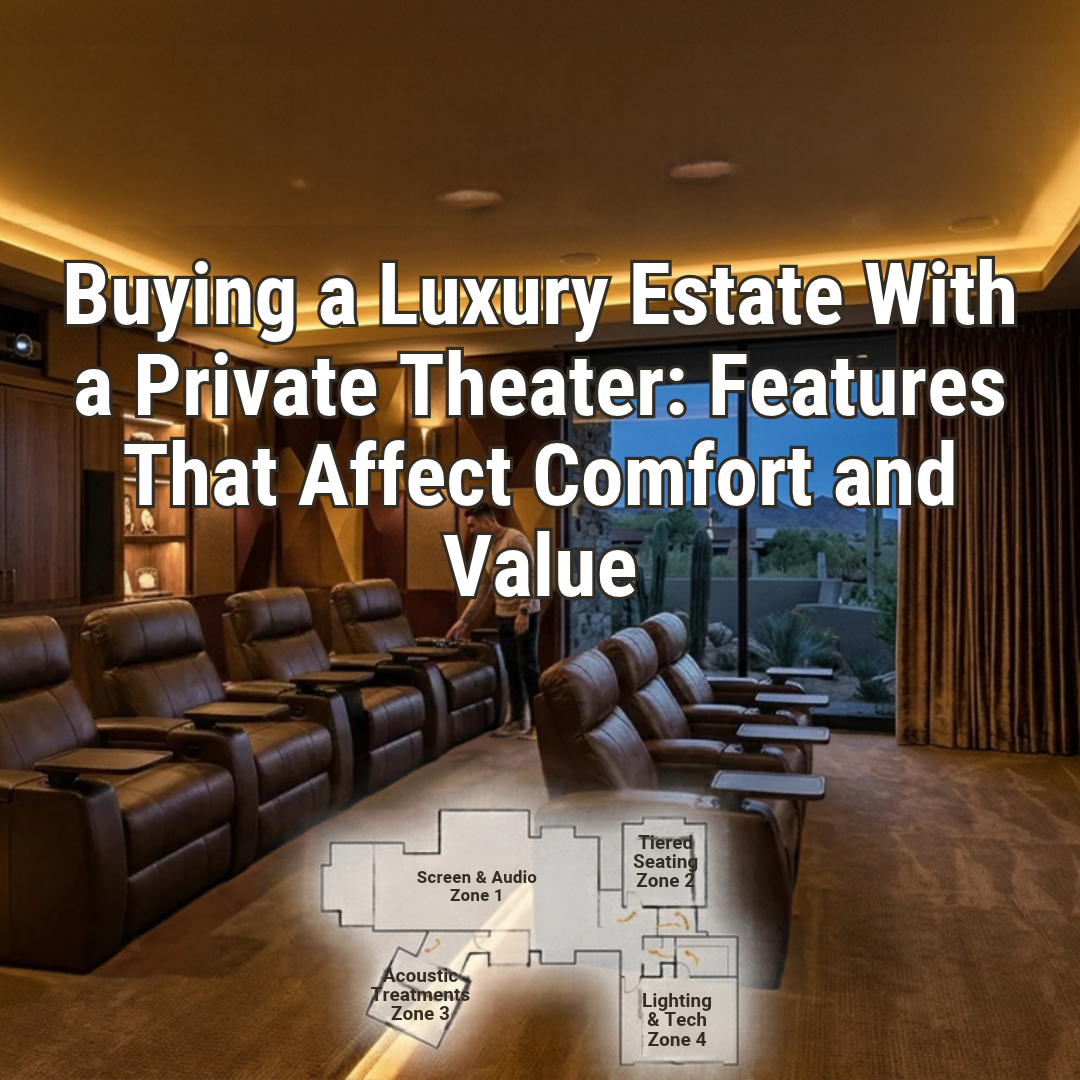
Imagine discovering an Arizona luxury estate with a private theater designed for movie nights, sporting events, family entertainment, and memorable gatherings with friends. The room features a large screen, plush reclining seats, immersive sound, controlled lighting, and an atmosphere that makes staying home feel like a special occasion.
For luxury homebuyers, a private theater can be an appealing feature. It may offer convenience, privacy, and a dedicated space for entertainment without leaving the property. In Scottsdale, Paradise Valley, North Scottsdale, and the East Valley, a thoughtfully designed theater can complement a home built around entertaining, relaxation, and modern living.
However, the presence of a theater does not automatically mean the room is comfortable, well maintained, or worth the asking price. The experience depends on how the room was designed, how its equipment performs, how effectively it manages sound and temperature, and whether the system can be maintained over time.
Buyers should also distinguish between a dedicated home cinema and a multipurpose media room. A theater designed for immersive viewing may have different requirements from a flexible room used for television, gaming, or casual gatherings.
Before purchasing a luxury estate with a private theater, it helps to understand which features contribute to everyday enjoyment, which may require additional investment, and how the room could influence the property's appeal to future buyers.
1. Room Design and Viewing Comfort
The room itself is the foundation of a successful private theater. Even expensive audiovisual equipment may deliver a disappointing experience if the space has awkward proportions, poor seating placement, or limited viewing angles.
Room dimensions influence screen placement, speaker positioning, seating capacity, and the way sound travels. A room that appears spacious when empty may feel crowded once reclining chairs, aisles, equipment cabinets, and other furnishings are in place.
During a property tour, consider whether the room comfortably accommodates its intended number of viewers. Check whether guests can enter and leave without disturbing everyone else, whether the seating provides clear views of the screen, and whether there is enough room for recliners to extend fully.
The screen should also be appropriate for the room's dimensions and seating arrangement. A larger display is not necessarily better if viewers must sit too close or turn their heads uncomfortably to follow the action.
For buyers considering a newly built estate or a major renovation, these decisions are worth addressing before construction begins. Adjusting room dimensions, speaker locations, or seating platforms after the finishes are installed can become more complicated and expensive.
2. Acoustic Design and Sound Isolation
Sound quality is one of the defining characteristics of a private cinema, but it involves more than installing powerful speakers.
Acoustic treatment helps manage sound reflections within the theater so dialogue, music, and sound effects are easier to hear comfortably. Sound isolation, by contrast, helps limit the amount of noise traveling between the theater and adjoining areas of the house.
Both matter in a luxury estate.
A theater with poorly controlled reflections may produce echoes or unclear dialogue. A room with inadequate sound isolation may allow action scenes, music, or sporting events to disturb people working, sleeping, or relaxing elsewhere in the home.
Pay attention to the theater's location relative to bedrooms, home offices, guest suites, and quiet living areas. Ask whether specialized wall and ceiling assemblies, sealed doors, or other sound-control measures were incorporated into the design.
Do not assume that thick carpeting, decorative wall panels, or a heavy door automatically provide effective sound isolation. The entire room assembly and the pathways through which sound can travel are important.
If the theater is a major selling point, consider having a qualified acoustic or audiovisual professional assess its performance. This may be particularly valuable when the room is part of a substantial custom installation or when sound transmission is noticeable during a showing.
3. Seating Layout and Long-Term Comfort
Luxury theater seating should look impressive while remaining comfortable during an entire film, a long sporting event, or an extended family gathering.
Reclining leather chairs may be attractive, but buyers should evaluate their condition, spacing, adjustability, and practicality. Worn upholstery, malfunctioning reclining mechanisms, unstable cup holders, or limited legroom can reduce the enjoyment of an otherwise beautiful room.
Look beyond the front row. If the theater has multiple seating levels, check whether the rear seats provide unobstructed views and whether the arrangement feels comfortable for people of different heights.
Other details can make a meaningful difference:
- Seat spacing: Viewers should have enough room to sit, recline, and move comfortably.
- Aisle access: Guests should be able to reach their seats without awkwardly climbing over furniture.
- Entry lighting: Low-level lighting can help people navigate safely when the main lights are dimmed.
- Accessibility: Consider whether household members and visitors can enter the room and use the seating comfortably.
- Maintenance: Upholstery and mechanical components should be in suitable condition, with replacement parts available when needed.
Buyers should also ask whether the seats, risers, and built-in cabinetry are included in the sale. If custom furnishings are central to the room's functionality, the purchase agreement should clearly identify what conveys with the property.
4. Lighting and Screen Performance
A private theater should allow viewers to focus on the screen without unnecessary glare or distracting light.
Dedicated cinemas often use dimmable fixtures, concealed lighting, low-level aisle illumination, and separate lighting scenes for different activities. These features can make it easier to transition from entertaining guests to watching a movie and then safely leaving the room.
Screen performance also depends on how effectively the room controls ambient light. Windows, glass doors, reflective finishes, and light entering from adjacent hallways can reduce the viewing experience, especially when using a projector.
If the theater includes windows, check whether the blackout treatments adequately block daylight and whether the controls operate properly. Inspect motorized shades for smooth movement and ask whether their motors or control systems have required servicing.
For projector-based systems, ask about the projector's age, operating hours, maintenance history, and replacement requirements. For televisions or direct-view displays, check for visible defects and confirm that the display supports the intended use.
A demonstration can reveal problems that photographs cannot. If possible, view the screen with the room lights on and off, test the controls, and observe whether reflections or outside light interfere with the image.
5. Cooling, Ventilation, and Arizona's Climate
Temperature control deserves particular attention when evaluating a private theater in Arizona.
Theater rooms are often enclosed to manage light and sound. They may also contain projectors, amplifiers, receivers, gaming equipment, networking devices, and other electronics that generate heat. Add several occupants and a closed door, and the room can become uncomfortable if the cooling and ventilation strategy is inadequate.
In Scottsdale, Paradise Valley, North Scottsdale, and the East Valley, buyers should pay attention to how the theater performs during periods of high outdoor temperatures. A room that feels comfortable during a short morning showing may behave differently during a full evening of use.
Ask whether the home's HVAC system was designed to account for the theater's occupancy and equipment load. Check whether air reaches the room effectively, whether the return-air arrangement is appropriate, and whether the system creates distracting airflow noise.
Also consider the equipment cabinet or rack. Electronics stored in a poorly ventilated enclosure may overheat or require more frequent servicing. Look for accessible ventilation paths and ask whether any dedicated cooling equipment is installed.
A qualified HVAC professional can help evaluate concerns about airflow, cooling capacity, and mechanical noise. Buyers should avoid assuming that a large central air-conditioning system automatically provides adequate conditions in every enclosed room.
6. Equipment Quality, Compatibility, and Upgrade Potential
The value of a private theater is influenced by the condition and compatibility of its components, not simply by how many devices are installed.
Depending on the system, equipment may include a projector or large display, a surround-sound processor, amplifiers, speakers, subwoofers, a streaming device, a control interface, and a network connection. Some estates may also have integrated lighting, motorized shades, or whole-home automation.
Ask the seller for an equipment inventory that identifies the make, model, approximate age, condition, and ownership status of the major components. Request available manuals, service records, warranties, and installation documentation.
It is also important to establish whether the system remains functional and supported. Older equipment may still perform well, but proprietary controls, discontinued components, outdated connections, or unavailable replacement parts can complicate repairs and upgrades.
Buyers should consider whether the theater can adapt to future technology without requiring major construction. Accessible wiring pathways, spare conduit, serviceable equipment racks, and organized cabling may provide useful flexibility.
Do not assign a premium to a theater solely because the seller lists expensive equipment. A professional inspection or demonstration can help establish what works, what needs attention, and what may need to be replaced.
7. Smart-Home Integration and Ease of Use
A private theater can be technically sophisticated and still be frustrating if the controls are confusing.
Some luxury homes integrate the theater with a centralized automation platform. A single interface may control the screen, sound system, lighting, shades, and other entertainment features. Other systems rely on multiple remotes, individual apps, or equipment-specific controls.
During a showing, ask the seller or listing representative to demonstrate the system from beginning to end. Can someone start a movie, adjust the volume, dim the lights, and turn everything off without navigating a complicated series of steps?
Check whether the system depends on a subscription, a particular service provider, or a discontinued platform. Ask whether the current owner has administrator access and whether the programming, user accounts, and necessary documentation can be transferred appropriately.
Buyers should also determine whether smart-home functions depend on the home's internet connection or local network. A network problem may affect streaming and connected controls even when the screen and speakers themselves are operational.
Ease of use matters because the best-designed entertainment room is one that household members and guests can operate confidently. A complicated system may require additional setup or professional reprogramming after the purchase.
8. Wiring, Electrical Capacity, and Equipment Safety
Behind the finished walls and cabinetry, a private theater relies on electrical infrastructure and low-voltage wiring to operate reliably.
Buyers should ask whether the installation was completed professionally and whether documentation is available for the electrical work, equipment connections, and any dedicated circuits. If there are visible signs of improvised wiring, overloaded outlets, damaged cords, or poorly secured equipment, further inspection is warranted.
An organized equipment rack can make maintenance easier. Components should have sufficient ventilation, accessible connections, and a layout that allows technicians to service the system without dismantling surrounding finishes.
Check whether the theater has appropriate power protection for sensitive electronics. If the home includes a generator, battery backup, or other backup-power arrangement, confirm which circuits are supported rather than assuming the theater remains operational during an outage.
Buyers should also ask about future replacement costs. A high-end system can involve more than purchasing a new screen or speaker; labor, calibration, wiring changes, control programming, and related equipment may also affect the total cost.
An appropriately qualified electrician or audiovisual specialist can help assess issues that are not readily apparent during a standard property tour.
9. Privacy, Layout, and Entertainment Flow
The theater's location within the estate affects how easily it fits into everyday life.
A room near a game room, bar, lounge, or entertainment area may support gatherings before and after a screening. A more secluded location may offer greater separation from the main living areas and bedrooms.
Neither arrangement is automatically better. The right choice depends on how the household expects to use the space.
For buyers who frequently entertain, consider whether guests can reach the theater without passing through private bedrooms or disrupting other activities. Check whether nearby bathrooms, refreshments, and seating areas are conveniently located.
For households that use the theater for gaming, family movie nights, or daytime entertainment, consider whether the space can accommodate those activities without feeling overly formal or restrictive.
Also examine the room's relationship to the rest of the property. A large estate may have several entertainment options, and the theater should complement rather than unnecessarily duplicate other spaces.
A well-planned layout can make the room more useful. However, the value of that layout depends on the buyer's needs, the property's overall design, and the practicality of the existing arrangement.
10. Maintenance Costs and Ownership Responsibilities
A private theater can create an enjoyable home experience, but its equipment and specialized finishes may require ongoing maintenance.
Potential expenses include projector lamps or other display-related components, replacement electronics, speaker repairs, seating mechanisms, motorized shades, automation service, and periodic calibration. Some systems may also require software updates or professional support.
Before closing, ask for available maintenance records and identify any components that are nearing the end of their expected service life. Confirm whether equipment warranties are transferable and whether any service agreements will continue after the sale.
It is useful to distinguish routine upkeep from larger replacement projects. Cleaning the seating and maintaining the room's finishes may be relatively straightforward, while replacing an integrated control system or upgrading outdated wiring may require specialized labor.
Buyers should also consider the availability of service providers familiar with the equipment. A highly customized system can be appealing, but its long-term convenience depends partly on whether it can be maintained without excessive difficulty.
A realistic ownership budget helps prevent the theater from becoming an unexpected financial burden after closing.
11. How a Private Theater May Affect Resale Appeal
A private theater can help distinguish a luxury estate from other properties, particularly when the room is well integrated into the home's design and offers a comfortable, reliable entertainment experience.
However, its effect on resale value is not guaranteed. Buyers differ in their priorities, and some may place greater importance on outdoor living, guest accommodations, a home office, a fitness room, or other amenities.
The theater's condition and flexibility may be just as important as its original installation cost. A clean, functional room with good sound isolation, comfortable seating, straightforward controls, and maintainable equipment may appeal to a wider range of buyers than an elaborate but outdated system.
Consider whether the room could serve another purpose if a future owner does not want a dedicated cinema. Depending on its dimensions, lighting, and layout, it might be adaptable as a media room, gaming space, or multipurpose entertainment area. Major acoustic construction, tiered seating, and specialized wiring may make conversion more involved, so flexibility should be evaluated realistically.
The overall estate remains the primary consideration. Location, property condition, architectural quality, outdoor amenities, and the broader local market all influence buyer demand. A theater should be considered one component of the property's overall appeal, not a guaranteed source of additional resale proceeds.
12. Due Diligence Before Purchasing
If a private theater is an important part of your decision, include it in your property evaluation rather than treating it as a decorative bonus.
Before finalizing a purchase, consider the following checklist:
- Test the screen or projector, speakers, controls, lighting, and shades where possible.
- Inspect seating condition, recliner operation, aisle access, and viewing angles.
- Ask about sound isolation and whether noise travels into adjoining rooms.
- Review the HVAC arrangement and observe whether the room becomes warm or stuffy during use.
- Request an equipment inventory, installation records, available warranties, and maintenance history.
- Check the equipment rack, ventilation, cable organization, and service access.
- Confirm which screens, speakers, furnishings, remotes, automation devices, and other components are included in the sale.
- Ask whether subscriptions, software licenses, or control-system programming require transfer or additional fees.
- Obtain specialist evaluations if equipment, acoustics, electrical work, or cooling performance raises concerns.
- Estimate the cost of any repairs, replacements, or upgrades that may be needed after closing.
For a new-build or substantially customized property, buyers may also want to review the theater's plans and equipment specifications before construction or design decisions become final.
The goal is not to require every luxury theater to meet the same technical standard. It is to understand what the specific room offers, how well it performs, and whether its condition and ongoing costs fit your expectations.
A Murphy Group Arizona Perspective
At The Murphy Group Arizona, evaluating a luxury estate involves looking beyond the most impressive features to understand how the property supports everyday living.
A private theater may be an excellent fit for buyers who value in-home entertainment, enjoy hosting guests, or want a dedicated place for family activities. But the screen, speakers, and seating tell only part of the story. Room comfort, cooling, sound isolation, ease of operation, equipment condition, and maintenance requirements also deserve attention.
When exploring properties in Scottsdale, Paradise Valley, North Scottsdale, or the East Valley, buyers should consider the theater alongside the home's broader features, layout, condition, and long-term suitability.
Mary Murphy and The Murphy Group Arizona can help buyers assess how a property's amenities fit their priorities and identify questions to discuss with qualified inspectors and specialists. The objective is to make an informed decision based on the estate as a whole, rather than allowing one impressive room to overshadow other important considerations.
The Bottom Line
Buying a luxury estate with a private theater can add convenience, entertainment options, and a distinctive feature to your home. The strongest experience comes from more than a large screen or premium equipment. It depends on comfortable seating, effective acoustic design, reliable cooling, controlled lighting, accessible equipment, and a system that remains practical to maintain.
Before purchasing, test the room where possible, review the equipment and service history, clarify what is included in the sale, and seek specialist advice when needed. Consider both the enjoyment the theater offers today and how its design may appeal to future owners.
A private cinema should complement the way you live while supporting the overall quality and functionality of the estate.
If you're exploring luxury homes in Scottsdale, Paradise Valley, North Scottsdale, or the East Valley, The Murphy Group Arizona can help you look beyond the listing photos and evaluate the features that matter to your lifestyle.
Explore Arizona luxury real estate at www.mgsellsarizona.com to discover properties and learn more about finding a home that fits your priorities.

Mary Murphy
Team Leader | The Murphy Group - AZ | eXp Luxury | PLACE
or another way