

Categories
Arizona Luxury, Arizona Real Estate, East Valley, East Valley Luxury, East Valley real estate, luxury home buying guide, North Scottsdale homes, Paradise Valley Luxury, Paradise Valley Real Estate, Scottsdale Housing Market, Scottsdale Luxury Real Estate, Scottsdale Real EstatePublished October 20, 2026
What Luxury Buyers Should Know About Homes With Extensive Hardscaping

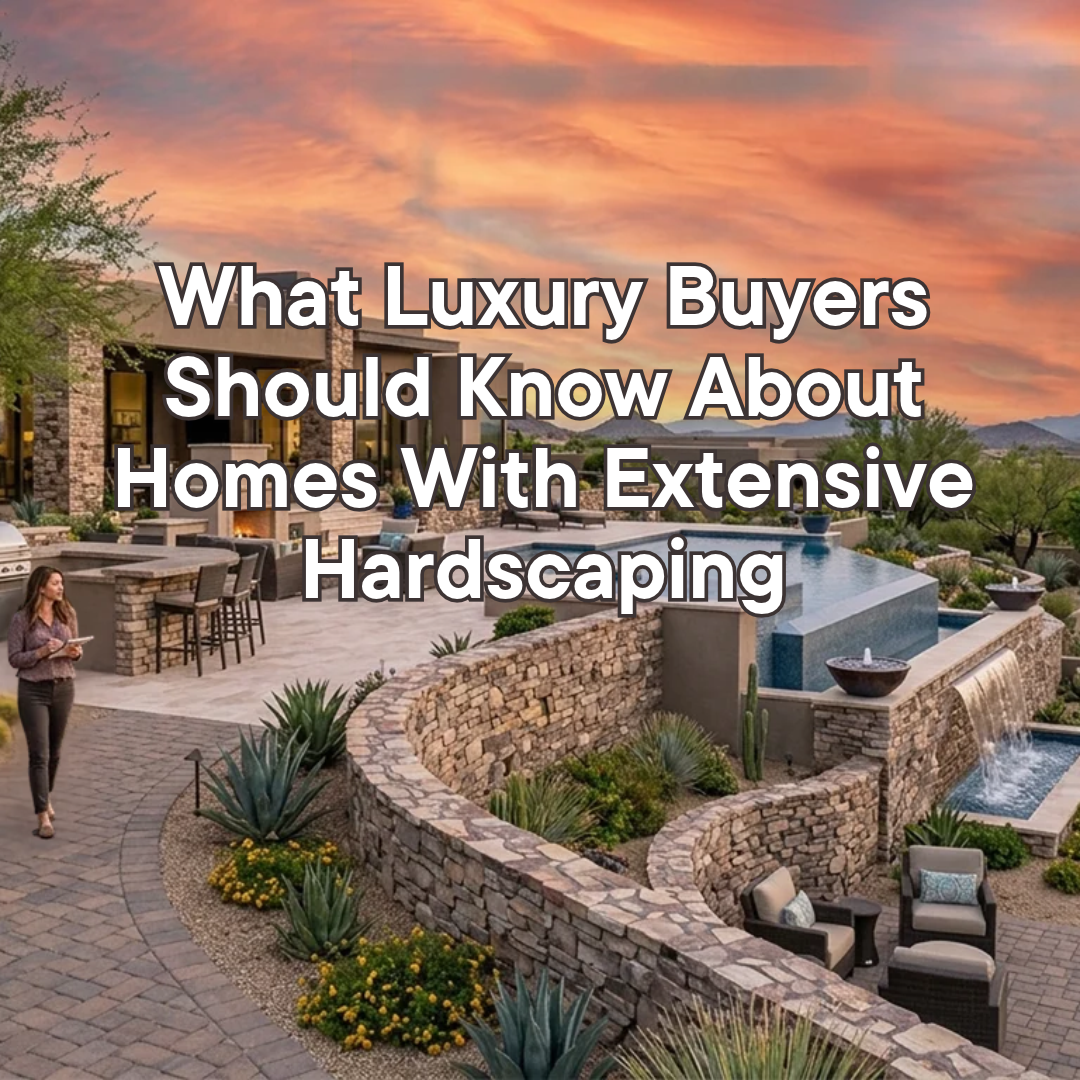
An Arizona luxury home can make a powerful first impression before you even step inside.
A sweeping stone driveway leads toward an impressive entrance. Expansive paver patios connect the home to outdoor entertaining spaces. Retaining walls define the landscape, elegant walkways guide visitors through the property, and carefully designed outdoor living areas create the feeling of a private resort.
These features can make a luxury property feel polished, functional, and architecturally complete.
But while extensive hardscaping can enhance a home's appearance and usability, it also deserves a closer look during the buying process.
Hardscaping includes the nonliving elements of a landscape, such as paved patios, stone pathways, driveways, retaining walls, outdoor steps, decorative rock, built-in seating, and other permanent outdoor structures. In Arizona, these features can be especially prominent because homeowners often use them to create outdoor living spaces that complement the desert environment.
The question for luxury buyers is not simply whether the hardscaping looks beautiful. It's whether it was designed, installed, and maintained to support the property over time.
Are the retaining walls structurally sound? Does water drain away from the home? Are the pavers shifting? Do large paved areas become uncomfortable during the hottest months? Will the outdoor layout accommodate your lifestyle without requiring expensive modifications?
Extensive hardscaping should be evaluated as both a design feature and a long-term property investment.
Here's what buyers should investigate before purchasing a luxury home with significant hardscape features in Scottsdale, Paradise Valley, North Scottsdale, or the East Valley.
1. Understand How Hardscaping Shapes the Property's Value
Hardscaping can contribute significantly to a luxury home's presentation and functionality.
A well-designed outdoor environment may create defined areas for dining, entertaining, relaxing, and enjoying the surrounding landscape. It can also establish visual continuity between the home's architecture and its outdoor spaces.
Depending on the property, hardscaping may include:
- Natural stone or paver driveways
- Large outdoor patios
- Decorative walkways
- Retaining walls and terraced gardens
- Outdoor kitchens and dining areas
- Pool decks and surrounding paved surfaces
- Built-in seating and fire-pit areas
- Stone steps and elevated platforms
- Courtyard flooring and entry features
- Decorative rock beds and landscape borders
However, the presence of expensive materials does not automatically mean the property offers superior long-term value.
The condition, craftsmanship, layout, drainage, and compatibility with the home's overall design all matter. A large patio may be impressive, but if it is poorly positioned or difficult to maintain, it may not provide the experience the next owner expects.
When evaluating a luxury home, consider whether the hardscaping makes the property more functional, complements its architecture, and supports the way you intend to use the outdoor spaces.
The goal is to assess the quality of the finished environment rather than judging it solely by its size or material cost.
2. Inspect Retaining Walls for Structural Concerns
Retaining walls are common on properties with sloped terrain, terraced landscaping, elevated patios, or significant changes in elevation.
These structures can create usable outdoor areas and add architectural definition. However, their condition deserves careful attention because retaining walls may also manage soil pressure and influence drainage.
During a walkthrough, look for visible signs that warrant further investigation, including:
- Noticeable leaning or bulging
- Large or widening cracks
- Displaced blocks or stones
- Separating wall sections
- Soil movement around the wall
- Water stains or persistent damp areas
- Damaged drainage outlets
- Uneven ground immediately above or below the structure
Not every crack indicates a serious structural problem, and some walls may show cosmetic wear without compromising their function. The important step is determining whether the observed condition is consistent with normal aging or suggests a larger issue.
Ask the seller for available installation records, permits where applicable, engineering documentation, warranties, and repair history.
If a retaining wall is substantial, supports a driveway or occupied outdoor area, or shows signs of movement, consider an evaluation by a qualified structural or geotechnical professional.
A retaining wall should be assessed for what it does, not just how it looks.
3. Investigate Drainage Around Patios, Walkways, and Paved Areas
One of the most important considerations for a luxury property with extensive hardscaping is drainage.
Large paved surfaces change how water moves across a site. If grading, drains, or other drainage features are not functioning properly, water may collect in unwanted areas or flow toward structures.
In Arizona, buyers should understand how the property handles both routine irrigation and rainfall, including intense storms that can produce substantial runoff over a short period.
Look for potential warning signs such as:
- Water stains near exterior walls
- Soil erosion along patio edges
- Sediment collecting on walkways
- Areas where water appears to pool
- Drain grates blocked by debris
- Pavers that have settled near drainage channels
- Water marks on retaining walls
- Visible damage around downspouts or drainage outlets
Ask whether the property has experienced drainage problems, flooding, erosion, or repairs related to runoff.
Also determine whether the hardscaping includes underground drains or other systems that require periodic cleaning and maintenance.
If you notice concerning grading or drainage patterns, ask a qualified inspector or drainage professional to evaluate them. Cosmetic improvements should never conceal an unresolved water-management issue.
4. Check for Shifting Pavers, Uneven Walkways, and Surface Deterioration
Pavers and stone surfaces can provide a sophisticated finish, but their performance depends partly on the quality of the base, installation, drainage, and ongoing maintenance.
Over time, some surfaces may develop uneven sections, loose joints, settlement, or movement.
Pay particular attention to:
- Pavers that rock or move underfoot
- Uneven transitions between paved areas
- Gaps that have widened between stones
- Cracked or broken pieces
- Depressions that collect water
- Loose edging or displaced borders
- Deteriorating joint material
- Uneven surfaces near steps or pool decks
These issues may be relatively straightforward to repair in some cases. In others, recurring movement may point to a problem with the underlying base, drainage, or soil conditions.
Ask the seller which areas have been repaired and whether the same sections have required repeated attention.
For an extensive paved driveway or patio, even a small problem across a large surface can create a meaningful repair expense. Consider the size of the affected area and whether the underlying cause has been identified.
A qualified hardscape contractor can help determine whether a surface needs localized repairs or more extensive reconstruction.
5. Evaluate How Much Heat the Hardscaping Retains
Arizona's climate makes material selection and surface exposure particularly important.
Stone, concrete, pavers, and other hardscape materials can become very hot when exposed to direct sunlight. The actual surface temperature depends on factors such as material, color, orientation, shade, and weather conditions.
A patio that looks beautiful during a morning showing may feel very different in the afternoon.
When evaluating the property, consider:
- Which patios receive direct afternoon sunlight
- Whether covered seating areas provide meaningful shade
- How much of the yard is paved versus planted
- Whether poolside surfaces are comfortable for bare feet
- Whether outdoor dining areas remain usable during warmer periods
- Whether trees, pergolas, or architectural overhangs provide shade
- Whether the materials suit the intended use of each area
If possible, revisit the property at a different time of day. A midday or afternoon visit can reveal how sunlight affects the main outdoor living areas.
Also consider whether you would need to add shade structures, trees, or other features to make the space more comfortable. These improvements may require design approvals, installation costs, and ongoing maintenance.
The best hardscape design balances appearance with the realities of Arizona's outdoor environment.
6. Review the Relationship Between Hardscaping and Landscaping
A luxury outdoor environment often combines hard surfaces with desert-adapted plants, trees, shrubs, and decorative rock.
The balance between these elements can influence the property's appearance, shade, drainage, maintenance needs, and overall usability.
Extensive hardscaping may reduce the amount of planted space requiring regular care, but it does not necessarily eliminate landscaping expenses.
For example, the property may still require maintenance for:
- Trees and shrubs planted beside paved areas
- Irrigation systems serving landscape borders
- Weeds growing between pavers or decorative stone
- Plants whose roots may affect nearby surfaces
- Debris collecting along walls and walkways
- Ground cover and edging materials
- Drainage channels near planted areas
Look closely at where trees and larger plants meet patios, retaining walls, and walkways. Roots and changing soil conditions may affect nearby hardscape features over time.
Ask whether the landscaping has a regular maintenance schedule and whether irrigation components are easy to access without disturbing the finished surfaces.
A well-planned property should make it reasonably clear how the hardscaping and landscaping work together rather than forcing the owner to choose between maintaining one and protecting the other.
7. Examine Outdoor Living Areas for Functionality
Luxury hardscaping is often designed around how homeowners want to use their outdoor spaces.
A large paved area might include a dining table, outdoor kitchen, fire feature, lounge furniture, or space for entertaining guests. Other properties may feature quiet courtyards, meditation areas, or walkways that connect different parts of the estate.
During the showing, think about how you would actually use these spaces.
Ask yourself:
- Is the dining area conveniently located near the kitchen?
- Is there enough room to move comfortably around outdoor furniture?
- Are walkways wide and accessible?
- Are steps and elevation changes easy to navigate?
- Does the layout provide privacy from neighboring properties?
- Is there adequate lighting for evening use?
- Are outdoor cooking and entertaining areas protected from excessive heat?
- Does the paved area feel proportionate to the property?
A large hardscape footprint is not necessarily better than a smaller, thoughtfully designed one.
For some buyers, an expansive entertaining terrace is a major advantage. Others may prefer more shade, softer landscaping, or a greater sense of connection with the desert surroundings.
Evaluate the layout against your lifestyle rather than assuming that more paved space automatically means greater usability.
8. Investigate Pool Decks and Water-Adjacent Surfaces
When a luxury property includes a swimming pool, the surrounding hardscape deserves particular attention.
Pool decks must support regular foot traffic, exposure to water, and the property's outdoor activities. Surface condition, drainage, material selection, and transitions around the pool all affect the experience.
Look for:
- Cracked or uneven deck surfaces
- Loose pavers
- Areas that retain standing water
- Deteriorated expansion joints
- Slippery surfaces when wet
- Damaged coping around the pool edge
- Separation between adjoining materials
- Trip hazards near steps or transitions
Ask whether the pool deck or surrounding hardscaping has been repaired or resurfaced, and request available documentation.
If the deck has significant cracks, movement, or other concerning defects, consult an appropriate pool or hardscape professional. If structural movement is suspected, further specialist evaluation may be warranted.
Also consider the relationship between the pool deck and nearby retaining walls, outdoor kitchens, or covered structures. Problems in one area may affect adjoining improvements.
The objective is to understand the condition of the entire outdoor environment, not just the pool equipment and water features.
9. Understand the Maintenance Requirements of Different Materials
Not all hardscaping materials require the same level of care.
Natural stone, concrete, porcelain pavers, brick, and manufactured paving products can differ in durability, surface texture, repair options, and maintenance requirements.
Some materials may need periodic sealing or specialized cleaning. Others may require joint repairs, replacement of damaged pieces, or attention to surface staining.
Before purchasing, identify the materials used in the property's main hardscape areas and ask for any available installation or maintenance documentation.
Questions worth asking include:
- What material was used for the driveway and patios?
- Are there manufacturer care instructions?
- Has the surface been sealed or treated?
- Are matching replacement materials available?
- How are stains and discoloration handled?
- Are repairs likely to affect the appearance of the entire surface?
- What maintenance has been performed in recent years?
If the home includes custom stonework or discontinued paving materials, determine whether matching replacements can be sourced.
For a luxury estate with extensive outdoor surfaces, a consistent maintenance approach can help preserve the property's appearance and reduce the likelihood of neglected areas becoming larger projects.
10. Check Outdoor Lighting, Electrical Features, and Built-In Elements
Hardscaping can include more than paving and stone walls. It may incorporate permanent lighting, built-in benches, fire features, outdoor kitchens, water features, and electrical connections.
These elements can enhance the property, but they introduce additional systems that may need inspection and maintenance.
During due diligence, identify which features are included in the sale and review their apparent condition.
Pay attention to:
- Loose or damaged landscape lighting
- Exposed or poorly protected wiring
- Malfunctioning outdoor outlets
- Damaged light fixtures embedded in paving
- Cracks around built-in features
- Fire features that need servicing
- Outdoor kitchen connections and appliances
- Water features with visible leaks or pump issues
Where gas, electrical, or other specialized systems are involved, use appropriately qualified professionals to evaluate them.
Ask for installation records, permits where required, and maintenance information for permanent outdoor amenities.
A visually impressive outdoor space can involve multiple systems behind the scenes. Understanding their condition can help you plan for future ownership costs.
11. Review Permits, Plans, and Previous Hardscape Modifications
Extensive hardscaping may have been installed in phases over several years.
The original owner may have added a driveway, later expanded the patio, built retaining walls, installed an outdoor kitchen, or changed the property's grading.
These changes can affect drainage, property boundaries, access, and structural performance.
Ask the seller for available records covering significant hardscape projects, including:
- Contractor invoices and warranties
- Design plans and engineering documents
- Permits or approvals where required
- Retaining-wall construction records
- Drainage plans
- Pool deck installation or renovation records
- HOA architectural approvals
- Documentation of repairs or modifications
Not every landscape improvement requires the same documentation, and requirements vary according to the work and location. If a substantial structure or modification lacks records, ask the appropriate local authority or qualified professional what additional verification is warranted.
If the property has been remodeled multiple times, compare the available plans with the existing conditions.
A clear project history can help you understand how the outdoor spaces were developed and whether any unresolved questions remain.
12. Investigate Easements and Property Boundaries Before Making Changes
Hardscaping often extends close to lot lines, utility corridors, drainage routes, or shared community spaces.
A paved walkway or decorative retaining wall may appear to be a private feature while occupying an area subject to an easement or other restrictions.
Before planning additions or modifications, confirm the location of the property boundaries and review the relevant title documents and survey.
Pay particular attention to:
- Utility easements
- Drainage easements
- Access easements
- Shared driveways or pathways
- Retaining walls near neighboring parcels
- Paving that crosses a property boundary
- Hardscape features in HOA-managed common areas
Easements do not necessarily prevent all improvements, but they may limit what can be built or require access for maintenance.
If you plan to expand a patio, install a wall, or change a driveway, investigate any restrictions before finalizing the design.
Resolving these questions before purchase can help prevent disputes and reduce the risk of investing in improvements that later need to be changed.
13. Estimate Future Repair and Replacement Costs
One of the most useful steps in evaluating a luxury property is looking beyond the current appearance and considering the potential cost of ownership.
Extensive hardscaping may represent a significant investment already made by the seller. However, it can also create future maintenance or replacement obligations.
Potential expenses include:
- Paver resetting and joint repairs
- Concrete repair or replacement
- Retaining-wall repairs
- Drainage improvements
- Stone cleaning and sealing
- Pool deck resurfacing
- Landscape lighting repairs
- Irrigation repairs beneath or beside paved areas
- Replacement of damaged custom materials
The actual cost depends on the materials, installation quality, extent of the work, site access, and underlying conditions.
If you notice defects, obtain estimates from qualified contractors before your inspection or negotiation period ends, where practical.
Also ask whether the seller has warranties that may still apply and whether those warranties can be transferred to the next owner.
A well-maintained hardscape can be a valuable feature, but buyers should understand the condition of the improvements and budget realistically for future upkeep.
14. Consider Whether the Hardscaping Fits Your Long-Term Plans
The outdoor layout that appeals to the current owner may not match your plans.
You might want more shade, additional planting areas, a larger outdoor dining space, or a simpler landscape that requires less maintenance. Alternatively, you may love the existing hardscaping but want to add features that make the property more functional.
Before purchasing, determine which changes are practical and what they may involve.
Consider:
- Whether existing surfaces can accommodate new furniture or amenities
- Whether the layout can be modified without affecting drainage
- Whether the HOA permits the planned changes
- Whether additional structures require permits
- Whether new planting areas can be added without affecting walls or paving
- Whether custom materials can be matched
- Whether the investment is justified by your intended use
The more extensive the existing hardscaping, the more important it becomes to understand the cost and feasibility of changing it.
A property may be ideal as it stands, or it may require a carefully planned redesign. Both can be reasonable choices when the implications are understood before closing.
A Murphy Group Arizona Perspective
“A luxury property's outdoor spaces should be evaluated with the same care as its interior. Beautiful stonework, patios, and retaining walls can enhance the ownership experience, but their condition, functionality, and maintenance needs are just as important as their appearance.”
— Mary Murphy, The Murphy Group Arizona
For buyers exploring luxury real estate in Arizona, extensive hardscaping can offer a strong combination of design and function. The key is understanding how those features were built, how they perform, and what they may require in the years ahead.
The Bottom Line
A luxury home with extensive hardscaping can offer impressive curb appeal, sophisticated outdoor living areas, and a landscape designed for entertaining and relaxation.
But before making an offer, look beyond the stone, pavers, and finished surfaces.
Evaluate the property's drainage, retaining walls, surface condition, heat exposure, outdoor amenities, maintenance requirements, and future repair needs. Review available permits and project records, and confirm that the hardscaping respects property boundaries and any applicable easements or HOA requirements.
Most importantly, consider whether the outdoor layout fits the way you intend to live.
The best luxury property is not simply the one with the most impressive outdoor features. It is the one whose design, condition, and long-term upkeep align with your expectations.
Explore Arizona Luxury Real Estate With The Murphy Group Arizona
If you're considering a luxury home in Scottsdale, Paradise Valley, North Scottsdale, or the East Valley, The Murphy Group Arizona can help you look beyond the listing photos and consider the property, neighborhood, and long-term ownership experience.
From custom outdoor living spaces and extensive hardscaping to property infrastructure, privacy, landscaping, and lifestyle considerations, a thoughtful approach to due diligence can help you make a more informed decision.
Explore Arizona luxury real estate with The Murphy Group Arizona and discover your next exceptional property.
Website: www.mgsellsarizona.com

Mary Murphy
Team Leader | The Murphy Group - AZ | eXp Luxury | PLACE
or another way