

Categories
Arizona Luxury, Arizona Real Estate, Scottsdale Luxury Real Estate, Scottsdale Real Estate, Paradise Valley Luxury, Paradise Valley Real Estate, North Scottsdale homes, Luxury Estate Maintenance, Arizona Emergency Preparednes, Luxury Home Security, East Valley Luxury, East Valley real estatePublished October 13, 2026
The Luxury Estate’s Emergency Preparedness Plan: What Every Arizona Homeowner Should Consider

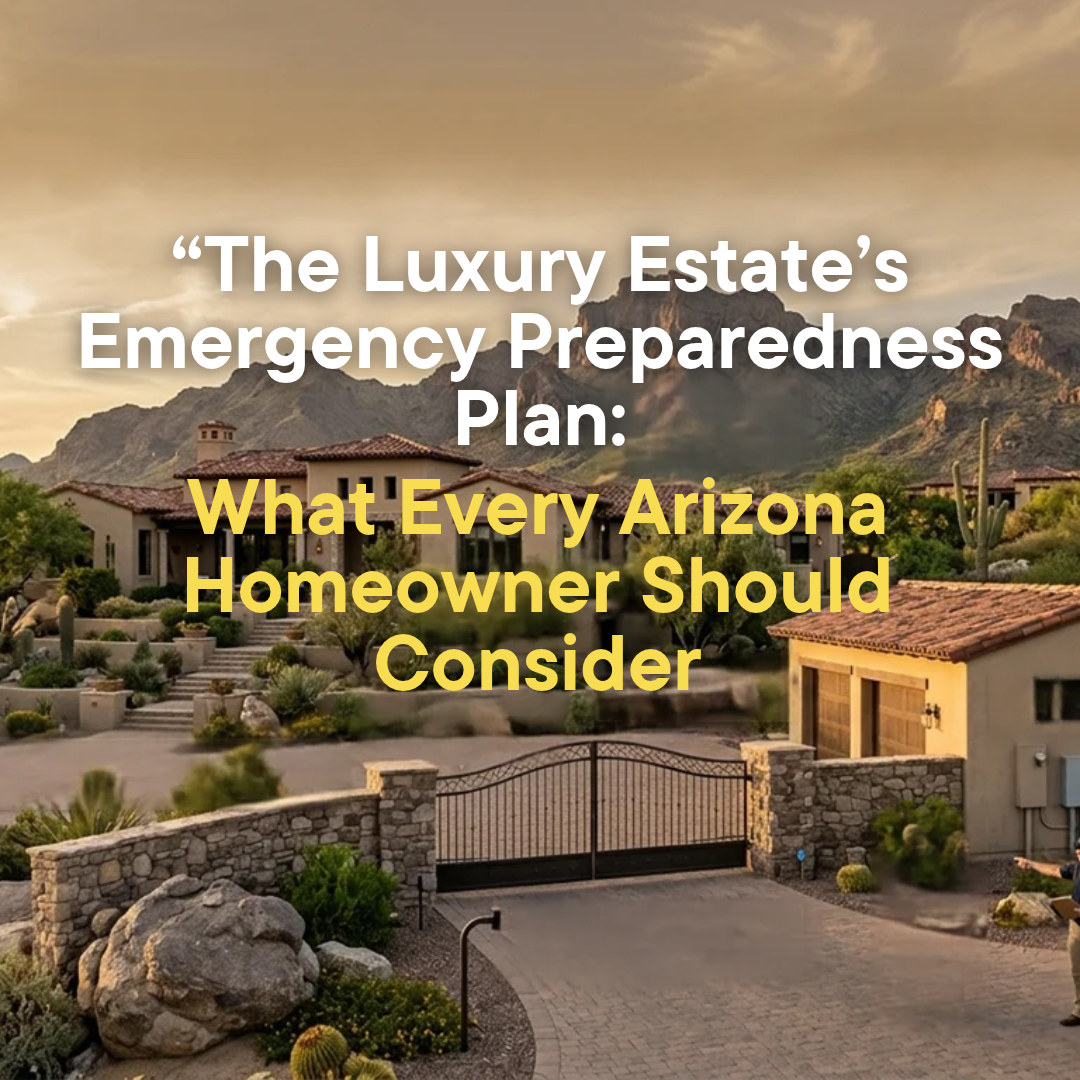
Imagine owning an Arizona luxury estate designed for comfort, privacy, and uninterrupted enjoyment.
The property features expansive living spaces, a resort-style swimming pool, beautifully landscaped grounds, smart-home technology, guest accommodations, and outdoor entertainment areas. Every detail has been carefully considered to create a home that feels like a private retreat.
But what happens when the power goes out during extreme summer heat? What if a monsoon storm floods the driveway, a wildfire threatens the surrounding area, or a water-system failure disrupts the property's daily operations?
Even a well-maintained luxury estate can face emergencies that affect its occupants, infrastructure, security, and ability to function safely.
In Arizona, emergency preparedness deserves particular attention because hazards vary significantly by location. Desert communities may face prolonged extreme heat, monsoon thunderstorms, flash flooding, dust storms, and wildfire risks. Properties in higher-elevation areas may face additional cold-weather or winter-storm concerns. Arizona's official emergency information network encourages residents to understand the hazards specific to their communities and prepare accordingly.
For luxury homeowners, preparation involves more than assembling an emergency kit. Large properties may include multiple buildings, automated gates, private wells, extensive electrical systems, pools, detached garages, landscaping, and specialized equipment that requires its own contingency planning.
A comprehensive emergency preparedness plan helps protect the people, property, and essential systems that make a luxury estate function.
Here's what Arizona luxury homeowners should consider when preparing for unexpected events.
1. Identify the Emergency Risks Specific to Your Property
Every property has a different risk profile.
A luxury home in Scottsdale may face different immediate concerns from an estate near a forested area, a hillside property, or a residence located near a drainage channel.
The first step is identifying the hazards that could affect your particular location and determining how the property's design, surrounding terrain, and infrastructure influence those risks.
Potential hazards include:
- Extreme heat and prolonged power outages
- Wildfires and smoke exposure
- Monsoon thunderstorms, high winds, and lightning
- Flash flooding and drainage problems
- Dust storms and reduced visibility
- Water-supply interruptions
- Electrical, plumbing, or mechanical failures
- Security incidents and emergencies requiring evacuation
Arizona's Emergency Information Network provides preparedness resources and a Natural Hazards Viewer that homeowners can use to investigate potential hazards in their communities.
During your assessment, consider the property's elevation, surrounding vegetation, access roads, drainage patterns, proximity to emergency services, and availability of alternative routes.
For an estate with substantial acreage, evaluate different sections of the property separately. A detached guesthouse, equipment building, or gated entrance may face risks that are not immediately apparent from the main residence.
The goal is to develop a property-specific plan rather than relying on a generic emergency checklist.
2. Create a Reliable Extreme-Heat and Power-Outage Plan
Arizona's extreme summer temperatures make cooling one of the most important considerations in an estate's emergency plan.
A luxury home may have multiple HVAC systems, expansive glass walls, high ceilings, guest accommodations, and large areas that require substantial cooling. During a prolonged power outage, these features can make maintaining safe indoor temperatures more challenging.
Ready.gov advises households to prepare for extreme heat, identify alternative cooling locations, and avoid relying on fans as the primary cooling method when temperatures are dangerously high. <Cite refs={["turn885049search0","turn885049search5"]}/>
Before an emergency occurs, evaluate the following:
- Backup power: Determine which systems need electricity during an outage and whether a standby generator or battery system can support them.
- Cooling priorities: Identify the safest rooms or areas where occupants can seek relief if the main HVAC system fails.
- Alternative shelter: Identify accessible cooling locations outside the property if indoor temperatures become unsafe.
- Electrical safety: Understand how backup power operates and ensure generators are installed and used according to applicable safety requirements.
- Temperature monitoring: Consider monitoring indoor temperatures in the main residence, guest casita, and other occupied buildings.
- Emergency contacts: Keep contact information for HVAC contractors, electricians, and backup-power service providers.
A whole-home generator may offer substantial convenience, but its capacity, fuel supply, maintenance requirements, and operating duration should be evaluated before relying on it during an extended outage.
The important question is not simply whether the estate has backup power. It is whether that power can sustain the systems occupants actually need during an emergency.
3. Develop a Wildfire Preparedness and Evacuation Strategy
Wildfire risk is an important consideration for properties near desert vegetation, open land, foothills, or forested areas.
Even when a home is not directly adjacent to a forest, nearby vegetation, wind conditions, and regional fire activity may influence its exposure.
Arizona's official emergency information resources recommend understanding local wildfire hazards and following the state's Ready, Set, Go! preparedness guidance.
For a luxury estate, wildfire preparedness should address both the residence and the surrounding property.
Consider these steps:
- Maintain defensible space around buildings where appropriate.
- Remove accumulated dry vegetation and combustible debris.
- Inspect trees and landscaping for potential fire hazards.
- Keep access roads and gates clear for emergency vehicles.
- Identify more than one evacuation route when feasible.
- Establish a family meeting point outside the affected area.
- Prepare a go-bag containing essential documents, medications, chargers, and necessary supplies.
- Identify where household members and pets will go if evacuation becomes necessary.
If the estate includes detached structures, evaluate whether occupants can reach them safely during an emergency and whether those buildings require separate evacuation instructions.
Automated gates deserve special attention. Confirm that occupants can operate them safely if electricity or communications fail, and that emergency responders can access the property under the applicable arrangements.
Do not wait until smoke is visible from the house to begin preparing to leave. Follow official evacuation orders and instructions promptly.
4. Prepare for Monsoon Storms, Flash Flooding, and Dust Storms
Arizona's monsoon season can bring thunderstorms, strong winds, lightning, dust storms, and flash flooding. These hazards can affect properties even when rainfall at the residence itself appears limited.
Luxury estates with large paved areas, hillside landscaping, retaining walls, decorative water features, or long private driveways should pay particular attention to drainage and access.
Before storm season, inspect:
- Roof coverings, gutters, and downspouts
- Storm drains and drainage channels
- Retaining walls and areas vulnerable to erosion
- Basement or below-grade spaces, where present
- Driveways, gates, and access roads
- Outdoor furniture, umbrellas, and loose decorative objects
- Trees and branches near structures or power lines
- Irrigation systems and landscape drainage
Consider whether runoff from neighboring land could affect the property. A home may have adequate drainage under ordinary conditions but experience problems during unusually intense rainfall.
If the property has recurring drainage issues, consult an appropriately qualified drainage or engineering professional before the next major storm.
For estates with outdoor kitchens, pergolas, poolside furniture, or large entertaining areas, establish a procedure for securing exposed items when severe weather is forecast.
During flash-flood conditions, never attempt to drive through flooded roads or washes. Follow official warnings and avoid entering areas where floodwater could conceal dangerous conditions.
5. Protect the Estate's Water Supply
Water is essential for drinking, sanitation, cooling-related needs, landscaping, and many other household activities.
A luxury estate may rely on municipal water, a private well, a shared well, or a combination of arrangements. The emergency implications depend on the property's actual infrastructure.
If the water supply fails, the household may lose access to drinking water, functioning plumbing, irrigation, and other essential services.
To prepare, establish:
- A stored supply of safe drinking water
- A plan for replenishing supplies
- Knowledge of the property's water shutoff locations
- Contact information for the water provider or well contractor
- A maintenance schedule for pumps and related equipment
- A plan for protecting pipes and equipment from damage
- An understanding of any water-storage system and its limitations
Arizona's emergency preparedness guidance recommends preparing emergency supplies for at least 72 hours, including water and provisions for pets.
For a large household or an estate with multiple occupied buildings, estimate water needs based on the number of occupants and the duration of the planned emergency supply.
If the home relies on a private well, remember that an electrical outage can interrupt pumping unless the system has an appropriate backup arrangement. Stored water may provide a temporary supply, but its capacity and intended use should be understood.
Do not assume that pool water, decorative water features, or untreated well water is safe for drinking. Identify a dependable source of potable water and follow public-health guidance if the supply becomes contaminated or its safety is uncertain.
6. Evaluate the Pool, Spa, and Outdoor Amenities
Resort-style amenities are often central to the appeal of an Arizona luxury estate. However, swimming pools, spas, fountains, outdoor kitchens, and elaborate irrigation systems introduce additional maintenance and safety considerations during emergencies.
A power outage may affect pool pumps, filtration, lighting, automated covers, access controls, and other equipment. A storm may introduce debris or damage outdoor fixtures.
Include these amenities in the property's emergency plan.
Consider:
- Knowing how to shut off pool and spa equipment safely
- Securing outdoor furniture before severe weather
- Maintaining barriers and access controls around pools
- Identifying electrical equipment that must remain protected from water
- Knowing how to respond to damaged plumbing or irrigation lines
- Keeping walkways clear of debris after a storm
- Arranging inspections before restarting damaged equipment
If the property has automated pool systems, keep the relevant operating instructions accessible even if the home's internet connection is unavailable.
Do not enter flooded equipment areas or handle potentially damaged electrical systems until they have been assessed safely.
After severe weather, inspect the outdoor areas before resuming normal use.
7. Protect Smart-Home Systems and Security Infrastructure
Modern luxury estates may use integrated technology to control lighting, HVAC systems, cameras, alarm systems, access gates, irrigation, and environmental monitoring.
These systems can improve convenience, but their emergency performance depends on power, communications, equipment configuration, and backup arrangements.
Review which functions continue to operate if the internet, cellular service, or electricity becomes unavailable.
Important questions include:
- Does the security system have battery backup?
- Can gates be operated manually if necessary?
- Are critical alarms dependent on a cloud service?
- Can occupants access essential controls without a smartphone?
- Are backup communications available?
- Can the home be monitored remotely during an outage?
- Are equipment manuals and service contacts available offline?
For estates with multiple buildings, ensure that the main residence, guest casita, garage, and other occupied spaces are accounted for in the security plan.
Consider maintaining a secure, accessible record of emergency contacts, system instructions, and essential shutoff locations.
Avoid keeping sensitive access credentials in an unsecured document. Use an appropriate secure method for storing passwords and access information.
If you employ property managers, household staff, or security personnel, make sure they understand the emergency procedures relevant to their responsibilities.
8. Account for Guest Casitas and Other Detached Buildings
A luxury estate may include separate guest accommodations, staff quarters, workshops, detached garages, pool houses, or other structures.
During an emergency, occupants in these buildings may not hear an alarm or immediately recognize that conditions have changed.
Include every occupied structure in the preparedness plan.
For each building, establish:
- How occupants will receive emergency alerts
- The nearest safe exit
- The route to the property's meeting point
- How to contact other household members
- Where emergency supplies are located
- How to respond if power or communications fail
Check whether smoke alarms, carbon monoxide alarms where applicable, and other required safety equipment are installed and maintained appropriately.
If the guest casita is occupied by relatives, visitors, or tenants, provide clear instructions before an emergency occurs.
A detached building may also have separate HVAC, electrical, water, or wastewater systems. Determine which failures could affect its occupants and whether the building remains safe to occupy during an extended outage.
The goal is to ensure that everyone on the property understands what to do, regardless of which building they occupy when an emergency begins.
9. Prepare for Medical Emergencies and Household Safety
An estate's emergency plan should account for medical incidents as well as natural hazards.
A fall, sudden illness, heat-related emergency, or injury near a pool may require immediate assistance. Large properties can present additional challenges if emergency responders must navigate long driveways, gates, multiple structures, or remote areas.
Prepare by identifying:
- The property's full address and best entrance for responders
- Emergency contact information
- The locations of first-aid supplies
- Any available automated external defibrillator (AED)
- Relevant household emergency procedures
- The location of essential medications and medical equipment
- A plan for communicating with emergency services during a power outage
Ensure that household members and staff know how to contact emergency services and provide the property address clearly.
If a household member depends on electrically powered medical equipment, discuss a suitable backup plan with the equipment provider and healthcare professional.
Extreme heat deserves particular attention. Ready.gov identifies confusion, fainting, and other serious symptoms as potential signs of heat-related illness and advises calling 911 when heat stroke is suspected.
Do not delay emergency medical assistance while attempting to manage a serious incident independently.
10. Create an Emergency Supply and Go-Bag System
A well-stocked emergency supply system can help occupants manage the first hours or days of an unexpected disruption.
For a luxury estate, supplies should be organized so household members can locate what they need quickly, even if a particular building becomes inaccessible.
Consider maintaining:
- Drinking water and nonperishable food
- Flashlights and spare batteries
- Battery packs and charging cables
- A battery-powered or hand-crank radio
- First-aid supplies
- Essential medications
- Hygiene and sanitation supplies
- Copies of important documents
- Cash in small denominations
- Sturdy footwear and appropriate protective clothing
- Supplies for infants, older adults, or other household needs
- Food, water, carriers, leashes, and medication for pets
Keep a portable go-bag ready for situations where the household must leave quickly.
For an estate with several occupied buildings, place essential supplies where occupants can access them without crossing an unsafe area.
Check stored items periodically for expiration dates, battery condition, and damaged packaging.
A preparedness kit should reflect the household's size, specific needs, and likely hazards rather than relying on a single generic list.
11. Review Insurance and Document the Property
An emergency can cause damage that requires repairs, temporary accommodation, or the replacement of valuable possessions.
Luxury estates may contain custom cabinetry, fine art, collectibles, specialty equipment, extensive landscaping, and architectural features that are not adequately documented in ordinary household records.
Review your insurance arrangements and maintain an up-to-date record of the property.
Useful steps include:
- Reviewing dwelling and personal-property coverage
- Understanding deductibles and exclusions
- Confirming how detached structures are treated
- Reviewing coverage for pools, outdoor kitchens, and other improvements
- Asking about wildfire, flood, and other location-specific exposures
- Documenting high-value possessions
- Retaining receipts, appraisals, and relevant maintenance records
- Storing copies of essential documents securely off-site or in an accessible digital location
Do not assume that a standard homeowners policy covers every type of flood damage, wildfire-related expense, or loss of use. Coverage depends on the actual policy and any endorsements.
Consult your insurance professional to understand the protection available for the specific property.
Photographs and video taken before an incident can also help document the condition of the home and its contents.
Update the records after major renovations, additions, or significant purchases.
12. Establish a Communication and Evacuation Plan
During an emergency, household members may be in different parts of the property or away from home entirely.
A communication plan reduces uncertainty by establishing how people will exchange information, where they will meet, and what to do if normal communication methods fail.
Ready.gov and Arizona emergency preparedness resources recommend planning family communications and identifying meeting locations in advance.
Your plan should identify:
- A primary and secondary meeting location
- An out-of-area contact person
- Alternative communication methods
- More than one practical evacuation route where possible
- The location of essential documents and supplies
- Responsibilities for children, older relatives, and pets
- Procedures for notifying household staff or guests
- A process for confirming that everyone has reached safety
For large estates, consider drawing a simple site map that shows the main residence, detached structures, gates, emergency equipment, and designated meeting point.
Keep a copy somewhere accessible without relying on the home's internet connection.
If local authorities issue an evacuation order, follow their instructions promptly. Do not remain on the property solely to protect belongings or wait for a preferred route if officials direct you to leave.
13. Protect the Property While It Is Unoccupied
Some luxury homeowners travel frequently or maintain a second residence. When a property is unoccupied, a small problem can develop into significant damage before anyone notices.
A failed air-conditioning system during extreme heat, a leaking pipe, an electrical fault, or storm damage can affect the home even when no one is present.
Before extended absences, establish an appropriate property-monitoring plan.
Depending on the home's systems, consider:
- Monitoring indoor temperature and humidity
- Installing water-leak detection devices
- Maintaining security and fire-detection systems
- Arranging periodic property inspections
- Maintaining essential HVAC systems
- Providing a trusted contact with emergency instructions
- Confirming how service providers can access the property
- Reviewing the home's shutdown and maintenance procedures
If a whole-home automation system is used, confirm which alerts remain operational during internet or power interruptions.
Ask your insurer whether the policy includes specific conditions for an unoccupied or vacant property. Extended absences may affect coverage requirements depending on the policy.
For estates with pools, private wells, extensive landscaping, or multiple buildings, assign responsibility for checking each critical system.
A reliable monitoring arrangement can help identify developing problems before they become major emergencies.
14. Build Relationships With Qualified Emergency-Service Providers
A luxury estate may contain specialized systems that require professional assistance when something goes wrong.
Having reliable service contacts identified in advance can save time during an emergency.
Consider maintaining an updated list of:
- HVAC contractors
- Licensed electricians
- Plumbers
- Roofers and drainage specialists
- Pool-service professionals
- Generator and battery-system technicians
- Security-system providers
- Well or septic contractors, if applicable
- Property managers and insurance representatives
For each provider, record the services they perform, their regular contact information, and any relevant maintenance agreements.
Identify which systems require periodic inspections and keep records of completed maintenance.
Do not assume a preferred contractor will be available during a widespread emergency. Where practical, identify an alternative provider for critical systems.
Emergency responders and public agencies should remain the primary source of instructions during active hazards. Private contractors are best used for appropriate repairs, inspections, and recovery work once conditions permit.
15. Test the Plan Before an Emergency Occurs
An emergency plan is useful only if household members understand how to follow it.
Once the plan has been documented, walk through the property and practice the procedures that occupants may need to perform.
For example:
- Practice evacuating from the main residence and detached buildings.
- Confirm that everyone knows the property's meeting location.
- Test emergency lighting and communication devices.
- Review how to locate water and electrical shutoffs.
- Verify that backup systems receive their required maintenance.
- Check that emergency supplies are accessible.
- Review gate access and evacuation arrangements.
- Update emergency contacts when household circumstances change.
Avoid testing generators, electrical equipment, or other systems in ways that could create a hazard. Use qualified professionals where appropriate.
Review the plan periodically, especially before Arizona's hotter months and monsoon season, and after major renovations or changes in occupancy.
For a property with household staff or a property manager, provide role-specific instructions and make sure the latest plan is available to the people who need it.
Preparedness is not a one-time project. It is an ongoing part of responsible property ownership.
A Murphy Group Perspective
“A luxury estate is more than a beautiful residence. It is a complex property with systems, amenities, and people that depend on one another. Thinking through emergencies before they occur helps homeowners protect their investment while making safety and continuity part of the ownership experience.”
— Mary Murphy, The Murphy Group
For Arizona luxury homeowners, emergency preparedness is an important part of long-term property stewardship. From backup cooling and water supplies to evacuation routes and insurance documentation, a thoughtful plan can help reduce uncertainty when unexpected events occur.
The Bottom Line
An Arizona luxury estate's emergency preparedness plan should address more than natural disasters. It should account for the people, buildings, infrastructure, and essential services that keep the property safe and functional.
Before an emergency occurs, consider:
- Local hazards: Understand the risks specific to the property's location.
- Extreme heat: Plan for cooling interruptions and identify safe alternative locations.
- Wildfire preparedness: Maintain appropriate defensible space and establish evacuation procedures.
- Monsoon protection: Inspect drainage, roofs, access roads, and outdoor structures.
- Water security: Maintain emergency drinking-water supplies and understand the property's water system.
- Backup power: Determine which critical systems require electricity and how they will operate during an outage.
- Detached structures: Include guest casitas, garages, and other occupied buildings in the plan.
- Smart-home systems: Understand how alarms, gates, and monitoring equipment behave when power or communications fail.
- Medical and household safety: Keep supplies, emergency contacts, and procedures accessible.
- Insurance and documentation: Review coverage and maintain records of valuable property and improvements.
- Communication and evacuation: Establish meeting points, contacts, and practical evacuation routes.
- Ongoing maintenance: Test, review, and update the plan regularly.
A luxury home can offer exceptional comfort and convenience, but no property is immune to unexpected events.
The strongest preparedness plan is one developed before it is needed, tailored to the property's actual risks, and understood by everyone responsible for the home.
Explore Arizona Luxury Real Estate With The Murphy Group
If you're considering a luxury home in Scottsdale, Paradise Valley, North Scottsdale, or the East Valley, The Murphy Group can help you look beyond the listing photos and consider the property's infrastructure, maintenance needs, and long-term ownership experience.
From backup systems and water supplies to landscaping, access, and property due diligence, a thoughtful approach can help you ask better questions before making a major investment.
Explore Arizona luxury real estate at mgsellsarizona.com.

Mary Murphy
Team Leader | The Murphy Group - AZ | eXp Luxury | PLACE
or another way