

Categories
Arizona Luxury, Arizona Real Estate, Luxury Home Trends Arizona, Home Buying TipsPublished April 28, 2026
Is Arizona Still Affordable in 2026? What Buyers Need to Know

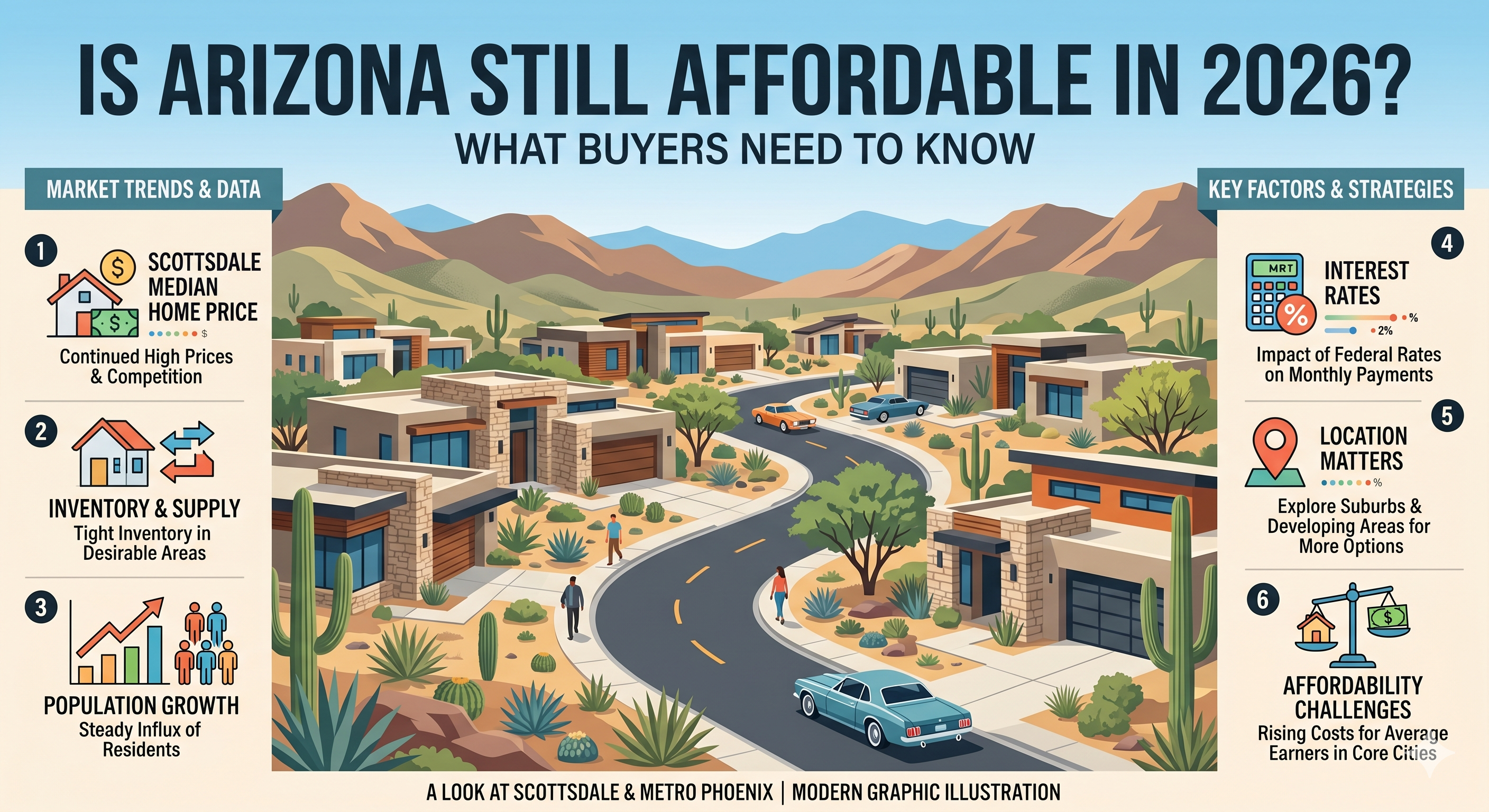
The question isn’t just whether Arizona is affordable in 2026—
👉 It’s affordable compared to what, and for whom?
In high-demand luxury markets like Scottsdale and Paradise Valley, affordability has shifted from absolute pricing to value perception, financing conditions, and long-term cost of ownership.
As Mary Murphy of The Murphy Group explains:
“Arizona hasn’t become unaffordable—it’s become more selective. Buyers are more strategic about what they buy and why.”
🧠 1. Home Prices Have Stabilized, Not Collapsed
Arizona didn’t experience a crash—but a leveling.
In Scottsdale:
- Median home values sit in the $800K+ range depending on property type
- Luxury homes continue to trade, but with longer timelines and more negotiation
- Price growth has slowed compared to the rapid increases of earlier years
👉 Translation: prices are high, but no longer accelerating aggressively.
📊 2. Affordability Is Now About Monthly Payments
Even if prices stabilize, affordability is shaped by:
- Higher mortgage rates
- Insurance and property tax increases
- Utility and maintenance costs
Recent market analysis shows buyers are spending a larger share of income on housing than pre-2020 norms, keeping affordability under pressure nationwide
👉 In 2026, the “cost of entry” is less about price—and more about carrying cost.
🏡 3. Scottsdale & Paradise Valley Are Still High-Demand Markets
These are not “discount” markets—and they never were.
Demand remains supported by:
- Relocation from higher-cost states
- Strong luxury lifestyle appeal
- Limited land supply in premium neighborhoods
Even in a cooler market cycle, competition persists for well-located, move-in-ready homes.
🔄 4. Buyers Have More Leverage Than Before
Compared to peak frenzy years:
- More inventory is available
- Days on market are longer
- Price reductions are more common in some segments
👉 This means buyers can negotiate—but only when homes are priced or positioned incorrectly.
💰 5. “Affordable” Depends on the Segment
Arizona is not one single market—it’s layered:
- Entry-level homes: still competitive, especially near metro areas
- Move-up homes: more negotiation flexibility
- Luxury ($2M+): selective demand, longer selling cycles
Luxury buyers are more price-sensitive now—but still active when value aligns.
🌵 6. Lifestyle Value Still Justifies Premium Pricing
Even with higher costs, buyers continue choosing Arizona for:
- Year-round sunshine
- Outdoor living lifestyle
- Golf, wellness, and resort amenities
- Privacy and space compared to coastal metros
In many cases, buyers are trading affordability for lifestyle quality.
⚠️ 7. The Real Risk Isn’t Price—It’s Misalignment
The biggest mistake buyers make in 2026:
- Overpaying for the wrong property
- Ignoring long-term operating costs
- Expecting 2021-style appreciation
Today’s market rewards precision, not urgency.
💼 How The Murphy Group Helps Buyers Navigate Affordability
The Murphy Group helps clients separate price from true value.
Their approach includes:
- Evaluating total cost of ownership (not just purchase price)
- Comparing neighborhoods based on long-term value trends
- Identifying over- and under-valued opportunities
- Aligning purchases with lifestyle and exit strategy
As Mary Murphy notes:
“Affordability isn’t just about what you can buy—it’s about what you can sustain comfortably over time.”
📊 The Bottom Line
Arizona in 2026 is not cheap—but it is more balanced and more strategic.
Buyers today benefit from:
👉 More negotiation power
👉 Greater inventory selection
👉 Better long-term decision-making conditions
But they also face:
👉 Higher baseline prices than pre-2020
👉 Elevated carrying costs
👉 A more selective luxury market
📲 Thinking About Buying in Arizona?
Understanding real affordability means looking beyond list prices and into long-term value.
👉 Start here: www.mgsellsarizona.com

Mary Murphy
Team Leader | The Murphy Group - AZ | eXp Luxury | PLACE
or another way